


Industriële Batterij Zonnepanelen: The Key to Energy Independence for Factories
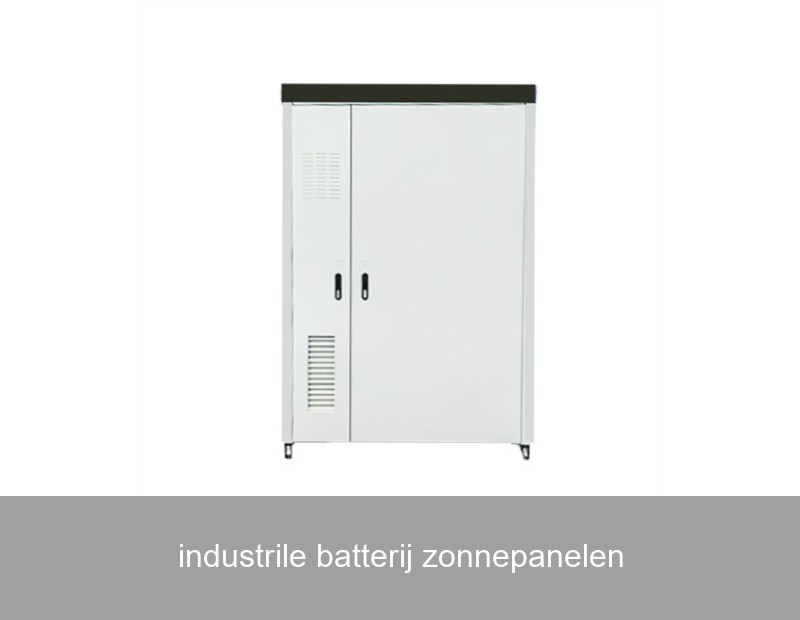
Imagine your factory humming with activity, machines powered not just by the grid, but by the sun overhead. Now, imagine storing that surplus solar energy to run your night shift or to shield your operations from a costly power outage. This isn't a distant future; it's the present reality made possible by industriële batterij zonnepanelen—industrial solar battery systems. For forward-thinking businesses across Europe and the US, combining large-scale solar arrays with advanced battery storage is no longer just an environmental statement; it's a strategic financial decision, a pillar of operational resilience, and a critical step towards true energy autonomy.
The Industrial Energy Challenge: Volatility, Costs, and Carbon Footprint
Industrial facilities are energy giants. They consume massive amounts of power, often with demand profiles that create significant "demand charges" from utilities—fees based on your highest rate of power use. Furthermore, global energy market volatility, as seen in recent years, can turn electricity from a fixed cost into a budgetary wildcard. Add to this the increasing pressure from stakeholders, customers, and regulations to reduce carbon emissions, and the challenge becomes clear: how do you ensure reliable, affordable, and sustainable power 24/7?
The traditional answer was the grid, supplemented by diesel generators for backup. But this model is increasingly risky and expensive. This is where a paradigm shift occurs. The solution lies not just in generating your own power, but in intelligently managing it. This is the core value of integrating industriële batterij zonnepanelen.

Image Source: Unsplash - A large-scale industrial solar installation.
What is an Industrial Solar Battery System?
At its heart, an industrial solar-plus-storage system is a sophisticated energy management ecosystem. It consists of three core components:
- Solar PV Array: A large-scale installation of photovoltaic panels, typically on rooftops, carports, or adjacent land, that converts sunlight into direct current (DC) electricity.
- Inverter(s): This crucial technology converts the DC electricity from the panels and the batteries into the alternating current (AC) used by your factory equipment.
- Industrial Battery Energy Storage System (BESS): This is the heart of the intelligence. It's not a single battery but a high-capacity, modular system designed for thousands of deep-cycle charges and discharges. Modern systems like lithium-ion phosphate (LFP) batteries are safe, long-lasting, and managed by sophisticated software.
The magic happens in the system's Energy Management System (EMS). This software brain makes real-time decisions: directing solar power to the factory, charging the batteries, discharging them during peak price periods, or providing seamless backup during a grid failure.
How It Works: A Typical Day
| Time of Day | Solar Generation | Battery Action | Power for Factory |
|---|---|---|---|
| Morning (Sunrise) | Increasing | Charging from excess solar | Solar + Grid (if needed) |
| Midday (Peak Sun) | High | Charging fully; may provide power if demand is very high | Primarily Solar |
| Evening (Peak Grid Rates) | Low/None | Discharging to avoid buying expensive grid power | Primarily Battery |
| Night / Grid Outage | None | Discharging to provide backup power for critical loads | Battery (Backup Mode) |
Key Benefits for Your Business: Beyond Going Green
Investing in industriële batterij zonnepanelen delivers a compelling return on investment (ROI) across multiple dimensions:
- Substantial Cost Savings: Reduce your energy bill by maximizing solar self-consumption and, crucially, slashing demand charges. By discharging the battery during your facility's short periods of highest power draw, you can flatten your demand profile, leading to dramatic savings. A study by the National Renewable Energy Lab (NREL) highlights the effectiveness of storage for demand charge management.
- Unmatched Resilience: Power interruptions can cost tens of thousands per hour in lost production and spoiled materials. A BESS provides instantaneous backup power (often called "bridging power") to keep critical processes online until the grid returns or generators kick in, seamlessly.
- Sustainability & ESG Goals: Dramatically reduce your scope 2 carbon emissions by maximizing clean, on-site generation. This directly supports Corporate Social Responsibility (CSR) reports and helps comply with tightening environmental regulations.
- Future-Proofing: Participate in grid services (where markets allow) to generate additional revenue. Prepare for electrification of fleet and heating, knowing you have the on-site energy infrastructure to support it.
Real-World Proof: A Dutch Case Study
Let's look at a concrete example from the Netherlands, a leader in Europe's energy transition. A mid-sized food processing plant in North Brabant faced high and unpredictable energy costs, threatening its competitiveness. Their goals were clear: cut costs, ensure uninterrupted cold storage, and meet corporate decarbonization targets.
The Solution: The facility partnered with Highjoule to design and deploy a fully integrated industriële batterij zonnepanelen system. This included:
- A 750 kWp rooftop solar array.
- A 500 kWh Highjoule HES Series containerized battery storage system, utilizing stable LFP chemistry.
- Highjoule's proprietary iQ-Energy Management Platform for intelligent control.
The Results (18-month post-installation):
- Energy Cost Reduction: A 68% decrease in overall electricity costs, driven largely by an 80% reduction in demand charges.
- Self-Consumption: Increased the use of on-site solar power from ~40% to over 90%.
- Reliability: The system has already provided seamless backup during two grid disturbances, preventing an estimated €120,000 in potential spoilage losses.
- Emission Cuts: Achieved a 410-ton reduction in annual CO2 emissions.
This case exemplifies the tangible, multi-faceted ROI that modern industrial energy systems deliver. You can read more about grid-interactive storage in commercial applications from the U.S. Department of Energy's Solar Energy Technologies Office.

Image Source: Unsplash - An engineer inspecting a containerized BESS unit.
Choosing the Right Partner: Why Highjoule Stands Apart
Implementing an industrial-scale system is a significant undertaking. Success hinges on the partner you choose. This is where Highjoule's nearly two decades of expertise becomes critical. Founded in 2005, we are a global leader in advanced, intelligent energy storage solutions.
For your industriële batterij zonnepanelen project, Highjoule delivers more than just hardware:
- End-to-End Expertise: We provide a single point of responsibility, from initial feasibility analysis and system design to engineering, procurement, construction, and long-term performance monitoring.
- Proven Technology: Our HES (Hybrid Energy Storage) and MPS (Modular Power Station) product lines are engineered for industrial duty cycles. They are scalable, safe (featuring multi-layer protection systems), and built to last.
- Intelligent Software: The Highjoule iQ Platform is the brain of the operation. It uses AI-driven forecasting to optimize energy flows based on weather, production schedules, and real-time electricity prices, ensuring you always get the maximum financial return.
- Global Support, Local Presence: With a strong operational footprint in both Europe and North America, we offer localized service and support, ensuring your system performs optimally for its entire lifespan.
We don't just sell a battery; we deliver a guaranteed energy outcome—be it cost savings, resilience, or sustainability.
Future-Proofing Your Industrial Energy Strategy
The energy landscape is transforming at a breakneck pace. Electrification, carbon pricing, and decentralized energy markets are becoming the norm. An industrial facility without a plan for on-site generation and storage is leaving itself exposed to financial and operational risks.
The integration of industriële batterij zonnepanelen represents the most pragmatic and powerful step you can take today. It turns your factory from a passive energy consumer into an active, intelligent energy hub.

Image Source: Unsplash - A modern, sustainable industrial facility.
What is the first operational process in your facility that would benefit most from the guaranteed, clean power provided by a dedicated solar and battery system?
 Inquiry
 Online Chat