


Unlocking Grid Independence: The Rise of the 2 kV Solar Energy Storage Cabinet
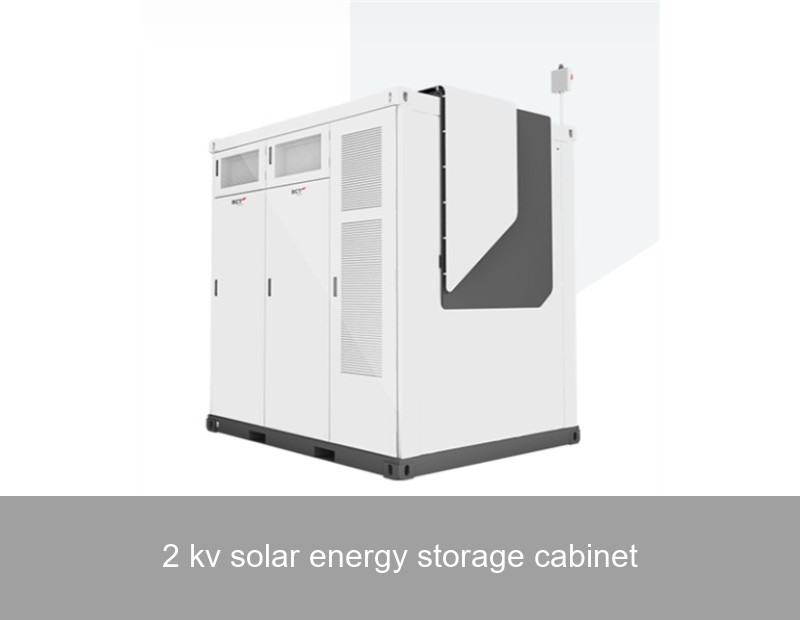
Imagine a world where your business or community isn't at the mercy of the next grid outage or volatile energy price spike. This isn't a distant future; it's happening today, driven by a powerful evolution in energy technology. At the heart of this shift is a key component gaining significant traction: the 2 kV solar energy storage cabinet. But what exactly is it, and why is its higher voltage architecture becoming a game-changer for commercial and industrial energy resilience? Let's dive in.
Table of Contents
What is a 2 kV Solar Energy Storage Cabinet?
Think of a solar energy storage cabinet as the intelligent heart of a modern power system. It's a compact, containerized unit that houses the battery racks, advanced power conversion systems (PCS), thermal management, and safety controls. The "2 kV" refers to the direct current (DC) voltage of the battery system inside. Unlike traditional 1000V or 1500V systems, a 2 kV platform operates at a higher electrical pressure.
This isn't just an incremental upgrade. Moving to a 2 kV architecture is a fundamental design shift that addresses core challenges in large-scale solar-plus-storage projects. It's particularly relevant for applications demanding high power output, long-duration storage, and seamless integration with utility-scale solar farms or demanding commercial facilities.

Image: Modern energy storage cabinets require robust design for safety and performance. Credit: Unsplash / ThisisEngineering
Why Higher Voltage (2 kV) Matters: Efficiency & Cost
The shift to higher voltage in solar storage follows a simple electrical principle: for the same power, higher voltage means lower current. This has profound practical implications.
- Reduced Energy Losses: Lower current reduces resistive losses (I²R losses) in cables and connections. This means more of the solar energy you capture actually makes it to your loads, boosting overall system efficiency by 1-3% over the system's lifetime. In a multi-megawatt installation, that's a massive amount of preserved energy.
- Lower Balance-of-System (BOS) Costs: With lower current, you can use cables with a smaller cross-section and require less copper. This significantly cuts material costs. Furthermore, fewer parallel connections are needed, simplifying installation and reducing points of potential failure.
- Increased Power Density: A 2 kV cabinet can manage more power within the same footprint. This is crucial for space-constrained sites, allowing for greater energy capacity without expanding the physical footprint of the storage system.
According to a landmark study by the National Renewable Energy Laboratory (NREL), increasing DC system voltages is a key pathway to achieving the U.S. Department of Energy's cost targets for long-duration storage. The data clearly points to higher voltage architectures as a cornerstone of economical, grid-scale storage.
A Real-World Case: Powering Through the Peaks in Southern Europe
Let's look at a concrete example. A large food processing plant in Spain faced dual challenges: exorbitant demand charges during its operational peaks and an unreliable local grid that threatened production halts. Their existing 1 MW solar array wasn't enough to cover these intensive consumption spikes.
The Solution: The facility integrated a 2.4 MWh, 2 kV solar energy storage cabinet system alongside their existing PV. The high-voltage design was chosen specifically for its efficiency in handling the rapid, high-power discharges needed to shave peak demand.
| Metric | Before Installation | After Installation |
|---|---|---|
| Peak Demand from Grid | 1.8 MW | 1.2 MW |
| Monthly Demand Charges | ~€28,000 | ~€16,000 |
| Grid Outage Resilience | 0 hours (process shutdown) | Up to 2 hours of critical load backup |
| Solar Self-Consumption | 65% | Over 95% |
The 2 kV cabinet's efficient power conversion allowed the system to respond instantly to load changes, saving the facility approximately €144,000 annually on demand charges alone, while virtually eliminating costly production stoppages. This case underscores how the right storage technology directly impacts the bottom line.
The Highjoule Solution: Engineered for Reliability at 2 kV and Beyond
Designing a safe and reliable 2 kV system is not a trivial task. It requires deep expertise in high-voltage battery management, safety isolation, and system integration. This is where Highjoule's experience, honed since 2005, becomes critical.
Our H-Ion CUBE Max series of commercial and industrial energy storage cabinets is engineered from the ground up for high-voltage applications. We don't just adapt lower-voltage designs; we build systems where 2 kV operation is a core, optimized design principle.
- Proactive Safety Architecture: Our cabinets feature multi-layer protection, including cell-level fusing, module-level disconnect, and cabinet-level DC breakers. Advanced thermal propagation prevention and gas detection systems are integrated, ensuring safety is paramount. You can learn more about lithium-ion battery safety standards from the UL Safety Science organization.
- Intelligent Management: The Highjoule H-BMS (Battery Management System) performs active cell balancing and state-of-health monitoring at the 2 kV string level, maximizing lifespan and performance.
- Seamless Grid Integration: Our cabinets are designed to work seamlessly with our own or third-party inverters and energy management systems (EMS), providing grid-forming capabilities for true microgrid independence.

Image: Centralized control is key for managing complex storage systems. Credit: Unsplash / American Public Power Association
For a project in Germany, Highjoule provided a containerized solution housing multiple 2 kV cabinets, creating a 6 MWh storage buffer for a community microgrid. The system's high efficiency was crucial in maximizing the use of locally generated wind power, reducing grid dependence by over 70% for the participating households and businesses.
Beyond the Cabinet: The Future of Your Energy System
The 2 kV solar energy storage cabinet is more than just hardware; it's an enabling platform for a new energy paradigm. As we move towards grids dominated by variable renewables, the need for fast-responding, high-power, and long-duration storage will only grow.
The next evolution is already on the horizon: intelligent software that turns these storage assets into revenue-generating tools. Through participation in grid services markets—like frequency regulation or virtual power plants (VPPs)—a storage system can transition from a cost-saving measure to a profit center. The high efficiency of a 2 kV system makes it particularly competitive in these markets where every percentage point of round-trip efficiency counts towards profitability.
Choosing a partner for such a critical investment requires evaluating not just the product specs, but the provider's system integration expertise and long-term support. Highjoule's global service network provides lifecycle support, from initial feasibility and design to ongoing performance optimization and maintenance, ensuring your storage investment delivers value for decades.
Your Energy Resilience Journey
The transition to resilient, self-sufficient power is not a one-size-fits-all journey. Whether you're a hospital administrator concerned about backup power, a factory manager targeting operational cost savings, or a developer building the next generation of sustainable communities, the technology is ready.
What specific energy challenge—be it unpredictable costs, reliability concerns, or sustainability goals—is pushing your organization to reconsider how you generate, store, and consume power today?
 Inquiry
 Online Chat