


Understanding the 2 Megawatt Solar Plant Cost: A Comprehensive Breakdown
If you're exploring solar energy for your business, community, or large-scale project, you've likely asked the pivotal question: what is the real cost of a 2 megawatt solar plant? It's a smart starting point. A 2 MW solar installation is a significant undertaking, often powering hundreds of homes or a medium-to-large industrial facility. But the price tag isn't just a single number on a quote. It's a complex equation involving hardware, software, installation, and long-term value. In this guide, we'll demystify the costs, explore the factors that drive them, and show how integrating advanced energy storage, like solutions from Highjoule, transforms the financial and operational picture. Let's dive in.
Table of Contents
- The Phenomenon: The Shift to Utility-Scale Solar
- The Data: A Detailed 2 MW Solar Plant Cost Breakdown
- The Case: The Game-Changing Role of Battery Storage
- Highjoule's Integrated Solution: Beyond Generation to Intelligent Management
- A Real-World Case Study: Data from a European Agri-Business
- Key Insights and Future Considerations
The Phenomenon: The Shift to Utility-Scale Solar
The global energy landscape is undergoing a seismic shift. Driven by climate goals, energy security concerns, and compelling economics, businesses and municipalities are moving beyond rooftop solar to multi-megawatt ground-mounted plants. A 2 megawatt solar power plant sits perfectly in this sweet spot—large enough to benefit from economies of scale, yet agile enough for commercial and industrial (C&I) applications. But the initial excitement often meets the hard reality of budgeting. Understanding the cost components is the first step toward a viable project.

Image Source: Unsplash - A typical utility-scale solar installation.
The Data: A Detailed 2 MW Solar Plant Cost Breakdown
So, let's talk numbers. As of 2023-2024, the total installed cost for a 2 MW solar plant in markets like the U.S. and Europe typically ranges between $1.8 million to $3.2 million USD. This translates to roughly $0.90 to $1.60 per watt. Why such a range? It's all in the details. Here’s a typical cost structure table:
| Cost Component | Percentage of Total Cost | Key Factors & Notes |
|---|---|---|
| Photovoltaic (PV) Modules | 25% - 35% | Panel efficiency (mono PERC, bifacial), brand, and supply chain dynamics. |
| Inverters & Balance of System (BOS) | 15% - 20% | Central vs. string inverters, wiring, combiners, and monitoring hardware. |
| Structural & Electrical Installation | 20% - 30% | Site preparation, racking, labor costs, grid connection fees, and transformer costs. |
| Soft Costs | 15% - 25% | Engineering, permitting, interconnection studies, and financing costs. |
| Contingency & Profit Margin | 5% - 10% | Project management and buffer for unforeseen expenses. |
It's crucial to remember that these figures represent the capital expenditure (CAPEX). The true measure of success, however, is the levelized cost of energy (LCOE)—the average cost per kWh over the system's lifetime. According to Lazard's 2023 Levelized Cost of Energy Analysis, utility-scale solar LCOE has fallen dramatically, making it highly competitive. But here's the catch: solar alone generates power only when the sun shines. This intermittency can limit its value and create grid integration challenges. This is where the conversation evolves from simple cost to intelligent value creation.
The Case: The Game-Changing Role of Battery Storage
Imagine your new 2 MW solar plant produces a surplus at midday. Without storage, that excess energy might be sold back to the grid at a low wholesale rate. Now, imagine being able to store that energy and dispatch it during the expensive evening peak, during a grid outage, or when the sun isn't shining. This isn't just imagination; it's the new standard for a resilient and profitable energy asset. Adding a Battery Energy Storage System (BESS) transforms a solar plant from a one-trick pony into a 24/7 power resource.
The additional cost for a co-located storage system varies based on duration (e.g., 2-hour, 4-hour storage). However, the value it unlocks—peak shaving, demand charge reduction, backup power, and grid services revenue—can drastically improve the return on investment (ROI) and payback period. It turns a cost center into a revenue-generating, strategic asset.
Highjoule's Integrated Solution: Beyond Generation to Intelligent Management
This is precisely where Highjoule, a global leader in advanced energy storage since 2005, adds immense value. We don't just provide batteries; we deliver integrated, intelligent power solutions. For a project like a 2 MW solar plant, our approach ensures every kilowatt-hour is optimized for maximum financial and operational return.
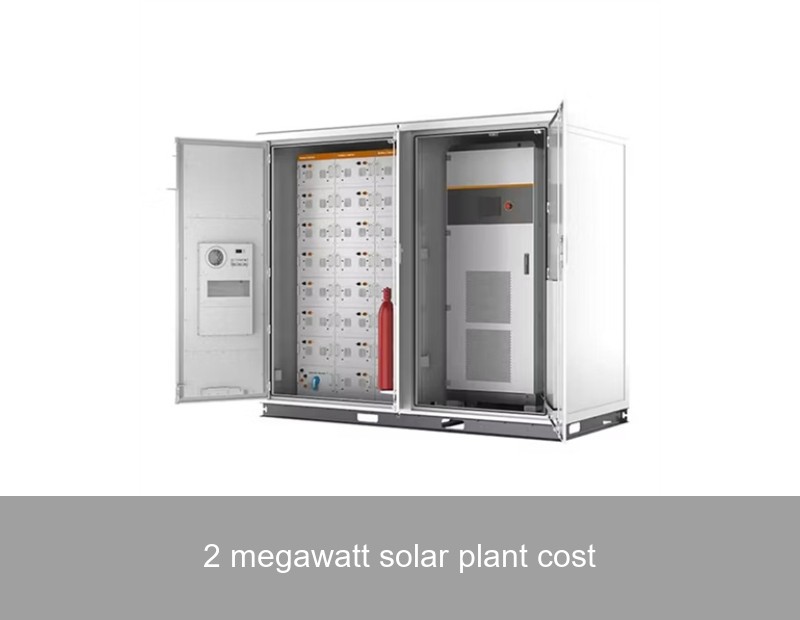
Our flagship HJ Titan Series battery energy storage systems are designed for C&I and microgrid applications. They feature:
- High Energy Density & Scalability: A compact footprint allows for easy integration into existing solar plant layouts, with modular designs that scale from hundreds of kWh to multiple MWh.
- Advanced Battery Management System (BMS): Ensures safety, longevity, and optimal performance of the lithium-ion battery cells under all conditions.
- Intelligent Energy Management System (EMS): The true brain of the operation. Our EMS uses predictive algorithms and real-time data to autonomously decide when to charge, store, or discharge energy. It maximizes self-consumption of solar power, reduces demand charges, and can even participate in grid-balancing programs.
- Robust Safety & Compliance: Built to meet the strictest international standards (UL, IEC, etc.) for fire safety and grid interconnection.
By partnering with Highjoule, developers and asset owners don't just add storage; they add a layer of intelligent energy arbitrage and grid resilience that fundamentally improves the economics of their 2 megawatt solar plant cost calculation.

Image Source: Unsplash - A containerized battery storage system for industrial use.
A Real-World Case Study: Data from a European Agri-Business
Let's make this concrete. A large fruit processing cooperative in Southern Spain was facing volatile energy prices and needed to stabilize operations. They installed a 2.1 MWp solar farm. While it reduced daytime grid consumption, evening processing shifts still relied on expensive grid power, and midday solar curtailment was an issue.
The Solution: They integrated a 1 MWh Highjoule HJ Titan BESS, controlled by our intelligent EMS.
The Results (12-month post-installation):
- Self-Consumption Rate Increased: From 68% to 92%.
- Demand Charges Reduced: By 40% through peak shaving.
- Grid Revenue Generated: The system provided frequency regulation services to the Spanish grid, creating an additional revenue stream.
- Payback Period: The combined solar+storage system's payback was calculated to be under 7 years, significantly better than solar alone in their tariff structure.
This case, documented in a IRENA innovation landscape report on renewable energy integration, illustrates the transformative impact of pairing solar with smart storage. The initial 2 megawatt solar plant cost was augmented by the storage investment, but the total lifecycle value soared.
Key Insights and Future Considerations
When evaluating your project's cost, think in terms of a total energy solution, not just a solar array. Key takeaways include:
- Storage is No Longer Optional: For true energy independence and optimal economics, solar-plus-storage is becoming the default for new C&I projects.
- Software is as Important as Hardware: The intelligence that manages the energy flow (like Highjoule's EMS) is critical for capturing value.
- Location-Specific Factors Dominate: Local labor rates, permitting hurdles, grid interconnection rules, and available incentives (like the U.S. Investment Tax Credit for solar+storage) can cause final costs to vary more than hardware prices. Always consult with local experts.
- Think Long-Term: Consider 20+ year operations. High-quality components and a reliable partner like Highjoule reduce lifetime operational costs and ensure system performance.
For more detailed, region-specific cost data, resources like the National Renewable Energy Laboratory (NREL) Annual Technology Baseline are invaluable.
Ready to Calculate Your Project's True Potential?
The journey to a successful 2 MW solar-plus-storage plant starts with a nuanced understanding of costs and a vision for long-term value. What specific energy challenge—be it peak demand charges, grid instability, or sustainability targets—is driving your organization to explore solar, and how could intelligent storage transform that challenge into an opportunity?
 Inquiry
 Online Chat