


Understanding the 200 kW Solar Panel Price: A Comprehensive Guide for Businesses
When your business starts exploring commercial-scale solar, one of the first and most critical figures you encounter is the 200 kW solar panel price. It's a significant benchmark, representing a system size that's ideal for medium to large commercial facilities, industrial operations, or agricultural use. But here's the crucial insight savvy business owners quickly discover: the headline price of the panels themselves is just one piece of a much larger puzzle. The true value and return on investment come from the complete system's performance, intelligence, and long-term reliability. In this guide, we'll demystify the costs, explore the factors that matter most, and show you how to think beyond the initial sticker price to build a resilient, cost-saving energy asset.
Table of Contents
The 200 kW Solar System Price Breakdown
Let's address the core question directly. In markets like the United States and Europe in 2024, the total installed price for a commercial 200 kW solar system typically ranges between $280,000 and $420,000 USD (or €260,000 to €390,000). This translates to roughly $1.40 to $2.10 per watt before incentives. Why such a wide range? The final figure is a sum of several components.
- Solar Panels (Modules): This is the "200 kW solar panel price" component, typically accounting for 20-30% of the total cost. Panel prices vary based on technology (monocrystalline, bifacial) and efficiency ratings.
- Inverters & Balance of System (BOS): This includes inverters that convert DC to AC power, mounting racks, wiring, conduits, and combiners. This is where quality engineering shines, impacting safety and efficiency.
- Installation Labor & Soft Costs: Permitting, engineering design, interconnection fees, and the labor for installation constitute a significant portion. Regional labor rates and regulatory complexity heavily influence this.
- Optional Add-ons: The true modern energy solution often includes energy storage systems (ESS). Adding a battery system, like those from Highjoule, increases the initial investment but unlocks unparalleled energy independence and resilience.
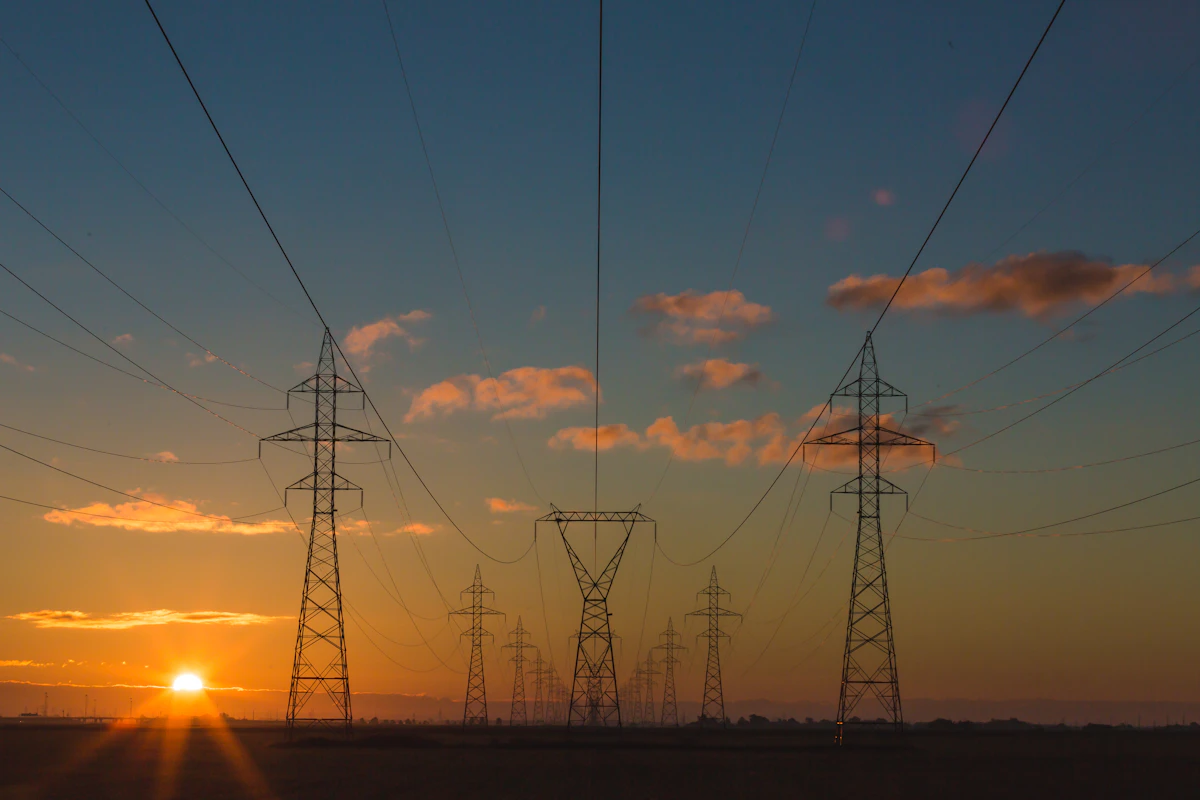
Commercial solar panel installation on a large warehouse roof. A 200kW system requires significant roof space and professional design. (Photo by American Public Power Association on Unsplash)
Key Factors Influencing Your Total Investment
Understanding these variables will help you evaluate quotes more effectively:
| Factor | Impact on Price & Performance |
|---|---|
| System Design & Roof Complexity | A simple, flat, unobstructed roof lowers installation costs. Multiple roof planes, penetrations, or required structural upgrades increase them. |
| Panel Efficiency & Brand | Higher-efficiency panels (22%+) cost more per watt but produce more power in limited space, potentially reducing overall system size needed. |
| Inverter Technology | Central vs. string vs. microinverters have different cost profiles and affect monitoring granularity and future expansion flexibility. |
| Local Regulations & Grid Interconnection | Fees and study requirements from utilities can vary dramatically. Some regions in Europe have more streamlined processes than others. |
| Integration with Storage | Adding a battery system like the Highjoule HPS Series is an additional investment but is increasingly considered essential for maximizing self-consumption and providing backup power. |
A Real-World Case Study: Precision Engineering in Stuttgart, Germany
Let's move from theory to practice. A mid-sized precision machining company near Stuttgart wanted to lock in energy costs and reduce its carbon footprint. Their facility had a 12,000 sq ft south-facing roof. They received three quotes for a ~200 kW system, all within a 10% price range.
The Challenge: High afternoon energy demand that extended beyond solar production hours, and exposure to time-of-use electricity rates.
The Solution: They chose a provider that proposed a 195 kW solar array coupled with a Highjoule HPS-100 battery energy storage system (100 kWh capacity). The integrated system was designed not just to offset daytime use but to strategically dispatch stored energy during peak tariff periods from 5-8 PM.
- Total Project Cost: €385,000 (solar + storage).
- Estimated Annual Solar Production: 182,000 kWh.
- Financial Incentive: Utilized Germany's favorable depreciation rules for commercial assets and a regional sustainability grant.
- Result: The system is projected to reduce the company's grid electricity purchases by 78%. By avoiding peak charges, their simple payback period is calculated at 6.2 years. Furthermore, the Highjoule system's GridGuard™ feature provides seamless backup for critical CNC machines during grid disturbances, preventing costly production halts—a value beyond pure kilowatt-hour savings.
Thinking Beyond Panels: The Highjoule Integrated Approach
As the case study shows, the most effective commercial energy solutions today are not just about solar panels. They are about intelligent, integrated systems. This is where Highjoule distinguishes itself. We don't just supply components; we provide end-to-end smart energy platforms.
For a 200 kW installation, our engineers focus on the holistic system lifecycle:
- High-Performance Storage: Our HPS Series battery systems use lithium iron phosphate (LFP) chemistry, known for its safety, longevity (10,000+ cycles), and stable performance. They are the perfect partner to solar, storing excess midday energy for later use.
- Advanced Energy Management (EMS): The brain of the operation. Our NeuroGrid™ EMS software doesn't just monitor; it predicts, learns, and autonomously optimizes energy flow between solar, storage, the grid, and your loads. It maximizes self-consumption and can be programmed for demand charge reduction or peak shaving.
- Future-Proof Design: Our systems are modular. You can start with solar and easily add storage later, or expand battery capacity as your needs evolve. This protects your initial investment from obsolescence.

Integrated battery storage, like Highjoule's HPS Series, turns solar into a 24/7 power solution. (Photo by Michael Fousert on Unsplash)
Financial Considerations and Incentives
The financial landscape for commercial solar in the US and EU is highly favorable. In the United States, the Investment Tax Credit (ITC) currently offers a 30% federal tax credit on the total installed system cost, including associated storage. Many states offer additional rebates or performance-based incentives (source: U.S. Department of Energy).
In the European Union, while feed-in tariffs have largely evolved, mechanisms like power purchase agreements (PPAs), accelerated depreciation, and grants for storage integration are common. Countries like Italy and Germany have specific programs supporting solar-plus-storage for businesses to enhance grid stability (source: EU JRC PVGIS Policy & Finance).
The key is to model your project's net present value (NPV) and internal rate of return (IRR) based on your specific electricity rates, consumption profile, and available incentives. A quality provider like Highjoule will provide this detailed financial analysis.
Making the Right Decision for Your Business
So, when you're comparing that 200 kW solar panel price, ask yourself and your potential providers these deeper questions:
- Is this proposal just for panels, or does it include a detailed plan for integration with my building's electrical system and future energy needs?
- How does the system design optimize for my specific load profile and local utility rate structure?
- What is the roadmap for adding storage, and how interoperable are the proposed components?
- What is the long-term service and performance guarantee, and how is system health monitored?
The cheapest panel price can lead to a system that underperforms or lacks flexibility. The right partnership delivers a system that acts as a strategic financial and operational asset for decades.
Ready to see what an integrated 200 kW solar-plus-storage solution, designed with Highjoule's intelligence and reliability, could look like for your facility's unique energy profile and financial goals?
 Inquiry
 Online Chat