


Understanding the 20kW Solar Battery Price: A Smart Investment for Energy Independence
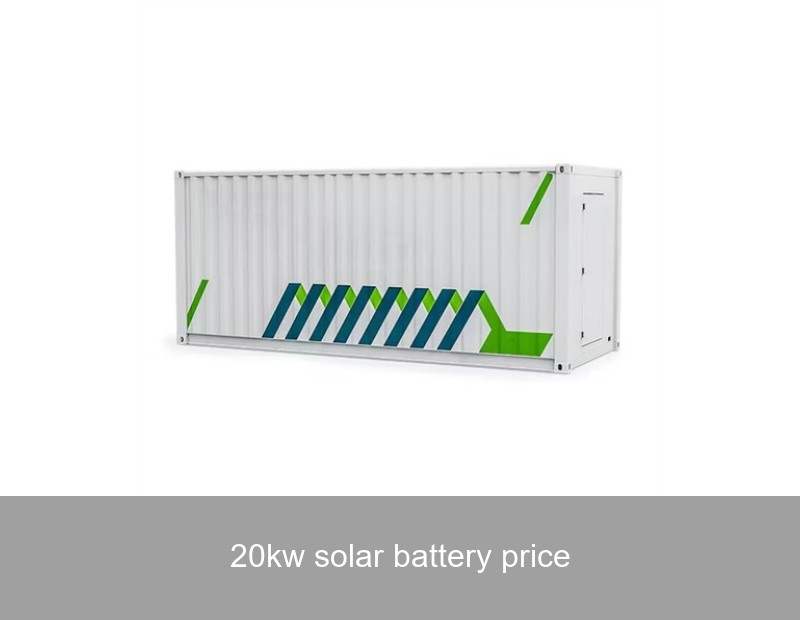
If you're considering a significant step towards energy independence, you've likely encountered the term "20kW solar battery." It's a powerful solution for homeowners and businesses alike, but the upfront 20kw solar battery price can be a point of hesitation. Is it just an expensive piece of hardware, or is it a strategic investment that pays for itself? The truth lies beyond the initial sticker shock. In this guide, we'll demystify the costs, explore the value, and show you how a 20kW battery system transforms your relationship with energy.
Table of Contents
- The Real Price Breakdown: More Than Just a Battery
- From Cost to Value: The Financial Logic of a 20kW System
- A Real-World Case: The California Homeowner's Story
- Key Factors Influencing Your Final 20kW Solar Battery Price
- The Highjoule Advantage: Intelligent Systems for Maximum ROI
- Is Your Home Ready for This Level of Energy Control?
The Real Price Breakdown: More Than Just a Battery
Let's address the elephant in the room first. When people search for "20kw solar battery price," they often expect a single number. However, the quoted price typically encompasses a complete energy storage system, not just the battery cells. Think of it like buying a car; you're paying for the engine, the chassis, the safety systems, and the intelligence under the hood.
A complete 20kW/20kWh (power/energy capacity) system usually includes:
- The Battery Modules: The core lithium-ion (often LFP) cells that store the energy.
- The Battery Management System (BMS): The brain that ensures safety, longevity, and performance.
- The Hybrid Inverter or Power Conversion System (PCS): The device that manages energy flow between solar panels, the battery, and your home's electrical panel.
- Critical Load Panel & Integration Kit: Hardware for seamless integration with your existing electrical system.
- Professional Installation & Permitting: Labor, engineering, and fees to ensure a safe, code-compliant setup.
In markets like the U.S. and Germany, the all-inclusive price for a quality 20kW system can range from $15,000 to $25,000+ before incentives. This variation isn't random; it's tied to the technology, brand reputation, and system intelligence you choose.
Technology Matters: LFP vs. NMC
Most modern systems use Lithium Iron Phosphate (LFP) or Nickel Manganese Cobalt (NMC) chemistry. LFP batteries, like those used in Highjoule's H-Series residential units, are renowned for exceptional safety, a longer cycle life (often over 6,000 cycles), and stability. While sometimes slightly higher in initial cost, their longevity often makes them more cost-effective over 15+ years. NMC might offer slightly higher energy density but can have different thermal characteristics.

Image: A modern home battery installation. The technology inside directly impacts safety, lifespan, and your long-term cost.
From Cost to Value: The Financial Logic of a 20kW System
Viewing the 20kw solar battery price as a pure expense misses the bigger picture. It's a capital investment with multiple, simultaneous revenue streams and risk mitigations for your property.
| Value Driver | How It Works | Financial Impact |
|---|---|---|
| Maximized Self-Consumption | Store excess daytime solar energy to use at night, avoiding grid purchase. | Can reduce your electricity bill by 70-90%, depending on usage and rates. |
| Peak Shaving | Use battery power during periods of highest, most expensive grid demand. | Directly cuts cost in areas with Time-of-Use (TOU) or demand charges (crucial for businesses). |
| Backup Power | Provides electricity during grid outages, keeping essentials running. | Protects against food spoilage, work disruption, and safety risks; value is in resilience. |
| Grid Services & Incentives | Some utilities pay for grid support (virtual power plants). Combined with tax credits. | In the U.S., the federal ITC can reduce system cost by 30%. Additional local rebates may apply. |
Suddenly, that initial price tag starts to work for you in four different ways. The payback period in regions with high electricity costs or unreliable grids can be surprisingly short—often between 6 to 10 years on a system with a 15-year warranty.
A Real-World Case: The California Homeowner's Story
Let's look at real data. Consider a homeowner in Northern California with a 10kW solar array and high TOU rates from PG&E.
- Phenomenon: Their peak grid rate (4-9 PM) was over $0.45/kWh, while their solar overproduction credit was only $0.10/kWh.
- Data: They installed a 20kW/25kWh Highjoule H-2 battery system. Total installed cost: $22,500. After the 30% federal ITC, net cost was $15,750.
- Case: The system was programmed for full self-consumption and peak shaving. It shifted 90% of their evening load to stored solar. It also provided seamless backup during three public safety power shutoff events.
- Insight: Their monthly electric bill dropped from an average of $220 to a $10 minimum service charge. Annual savings: ~$2,500. This simple payback period is roughly 6.3 years. For the remaining 10+ years of the warranty, the electricity is virtually free, and their home is protected from outages. The system's intelligent software automatically updates to optimize for changing utility rates.
This case shows the 20kw solar battery price transitioning from a cost to a generator of guaranteed future savings and security.
Key Factors Influencing Your Final 20kW Solar Battery Price
Why does the price range so widely? Several factors are at play:
- Brand & System Intelligence: Established brands like Highjoule invest heavily in proprietary Battery Management Software (BMS) and grid-responsive software. This "smart" layer maximizes ROI, justifying a premium over a basic, "dumb" battery pack.
- Installation Complexity: Is your electrical panel modern? Is the battery location far from the main panel? These affect labor costs.
- Local Market & Incentives: Installation costs vary by region. More importantly, local rebates (like in California or through some utilities in Germany) can dramatically reduce net cost. Always check the DSIRE database for the latest U.S. incentives.
- Scalability & Future-Proofing: Can you add more battery capacity later? Modular systems might have a higher entry point but offer lower long-term expansion costs.
The Highjoule Advantage: Intelligent Systems for Maximum ROI
At Highjoule, we understand that the true measure of a system isn't its upfront price, but its total lifetime value. Since 2005, we've engineered storage solutions that are not just hardware, but intelligent energy platforms. Our approach to a 20kW-class system focuses on delivering a faster, more reliable return on your investment.
Our H-Series residential battery is built with UL-certified LFP chemistry and features our patented Adaptive Cycle Management (ACM) software. While others might just store and release energy, our system learns your usage patterns and dynamically adjusts its operation to:
- Prioritize solar self-consumption automatically.
- Aggressively shave peak demand during the most expensive utility windows.
- Preserve optimal backup power based on weather forecasts (like storm alerts).
- Seamlessly integrate with future grid service programs for potential earnings.

Image: Intelligent energy management is key to unlocking the full value of your battery investment.
Furthermore, our Highjoule EnergyOS platform provides you with clear, actionable insights into your energy generation, consumption, and savings. You're not just buying a battery; you're gaining a comprehensive energy strategy managed by a global leader with nearly two decades of expertise in commercial, industrial, and residential storage.
Beyond the Home: Highjoule's Broader Impact
Our technology scales from the home to the community. The same core intelligence in our residential systems powers our C&I (Commercial & Industrial) and microgrid solutions, helping businesses achieve sustainability goals, lock in energy costs, and ensure operational continuity. This cross-sector experience means our residential products are engineered with the robustness and grid-awareness of much larger systems.
Is Your Home Ready for This Level of Energy Control?
The conversation about 20kw solar battery price is ultimately a conversation about your priorities. Is it financial predictability in the face of rising utility rates? Is it the security of an uninterrupted power supply for your family? Or is it taking tangible action towards a sustainable energy future?
The initial investment is significant, but when framed as a long-term asset that cuts recurring costs, provides insurance, and increases property resilience, the equation changes. With strategic incentives and the right intelligent technology, the path to energy independence is more accessible than ever.
What specific energy challenge—be it soaring peak rates, frequent outages, or simply a desire to maximize your solar panels—is motivating you to look at a 20kW battery solution today?
 Inquiry
 Online Chat