


The 24V Hybrid Solar Battery: Your Key to Uninterrupted, Intelligent Power
the sun is shining, your solar panels are humming, but the grid goes down. In a traditional setup, you might be left in the dark, your excess solar energy wasted. But what if your system could seamlessly switch, storing that sunshine for later and keeping your essential loads running? This isn't futuristic thinking—it's the practical reality enabled by the 24v hybrid solar battery. This versatile power hub is becoming the cornerstone for homeowners, small businesses, and off-grid enthusiasts across Europe and the US who seek energy independence without compromising on reliability or intelligence.
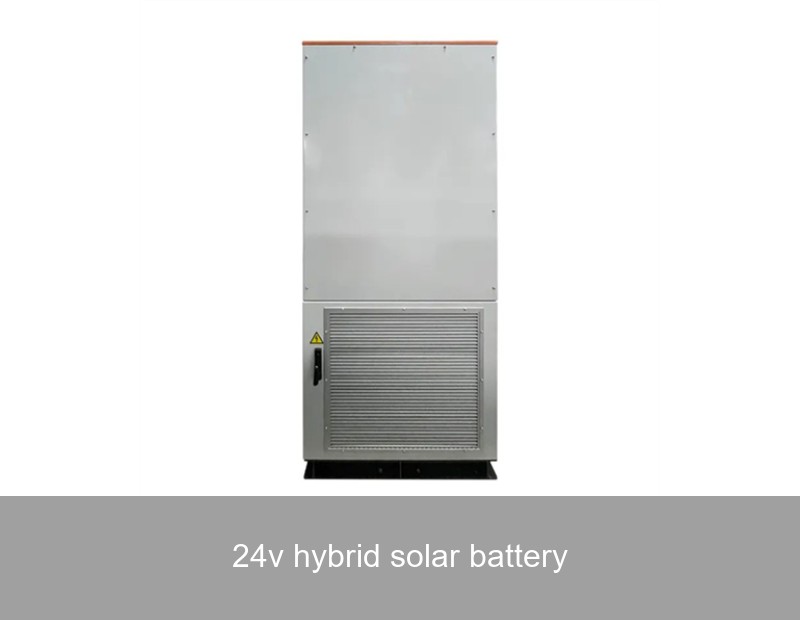
A 24v hybrid solar battery system is more than just a battery bank. It's an integrated ecosystem that combines solar generation, battery storage, and grid connectivity, all managed by a smart hybrid inverter. The "24V" refers to the direct current (DC) voltage of the battery bank, a sweet spot that balances power, safety, and cost for small to medium-scale applications. Unlike simpler setups, a hybrid system allows you to use solar power in real-time, store the surplus in your batteries, and still have the grid as a backup—all automatically.

Credit: A modern residential energy storage setup. Image by Possessed Photography via Unsplash.
Why 24V Hybrid Systems Are Gaining Traction: Data-Driven Resilience
The shift towards systems like the 24v hybrid solar battery isn't just a trend; it's a response to tangible challenges. Grid instability, rising electricity costs, and a growing desire for sustainable living are powerful drivers. Let's look at the data:
- Grid Reliability: In the US, the average customer experienced just over 7 hours of power interruptions in 2021, with major events often causing much longer outages (U.S. Department of Energy). In Europe, concerns over energy security have accelerated the search for self-sufficiency.
- Economic Sense: With solar PV costs falling over 80% in the last decade (IEA), the focus has shifted to maximizing the value of every kilowatt-hour produced. Storing cheap solar energy to avoid buying expensive grid power at peak times delivers a compelling return on investment.
- The 24V Advantage: For energy needs typically ranging from 2kWh to 10kWh daily, a 24V system offers a perfect balance. It's more efficient and requires thinner cables than a 12V system for the same power, yet it's more affordable and simpler to install than a 48V system for these scales. This makes it ideal for cabins, workshops, large RVs, and residential backup for critical circuits.
Key Components of a Robust 24V Hybrid System
Understanding the pieces of the puzzle helps you appreciate the sophistication of a modern 24v hybrid solar battery setup.
| Component | Role | Key Consideration |
|---|---|---|
| Hybrid Inverter/Charger | The brain of the operation. Converts DC from solar/batteries to AC for your home, manages charging from solar/grid, and enables seamless switching during outages. | Look for high efficiency (>95%), true seamless transfer, and smart energy management software. |
| 24V Lithium Battery Bank | The heart. Stores energy chemically for later use. Lithium Iron Phosphate (LiFePO4) is now the gold standard for safety and longevity. | Depth of Discharge (DoD), cycle life, and integrated Battery Management System (BMS) are critical. |
| Solar PV Array | The generator. Converts sunlight into DC electricity. | Must be appropriately sized to both cover daytime loads and recharge the battery bank. |
| Monitoring & Control | The nervous system. Provides real-time data on production, consumption, and storage via an app or display. | User-friendly interface and the ability to set preferences (e.g., "save battery for outages only"). |
Real-World Case Study: Powering Resilience in a Berlin Cabin
Let's move from theory to practice. Consider a real-world application we at Highjoule supported: a family-owned weekend cabin on the outskirts of Berlin, Germany. The challenge was unreliable grid power, especially in winter, and a desire to reduce their environmental footprint.
- System Specs: A 24V hybrid system was installed, centered around a 5.12kWh Highjoule CubeFlex LiFePO4 battery bank and a 3kW hybrid inverter. This was paired with a 4kW solar array on the south-facing roof.
- Performance & Data: In its first year, the system met 92% of the cabin's annual energy demand. During a widespread 32-hour grid outage in December, the cabin maintained power for lights, refrigeration, the router, and a small heating pump. The monitoring data showed the battery supplied power for 28 hours before the grid returned and solar recharging began.
- Owner's Insight: "The peace of mind is priceless. We're not just waiting for the grid to come back on; we're in control. The system automatically did what it was supposed to do, and we barely noticed the blackout."
Choosing the Right Battery Technology: Why LiFePO4 Dominates
The core of your 24v hybrid solar battery system is, unsurprisingly, the battery. While lead-acid was once the default, Lithium Iron Phosphate (LiFePO4) chemistry has revolutionized the market. Here’s a quick comparison relevant to a 24V setup:
- Cycle Life: A quality LiFePO4 battery, like those in the Highjoule CubeFlex series, offers 6,000+ cycles to 80% Depth of Discharge. A lead-acid battery might offer 1,200 cycles at 50% DoD. This means the lithium battery will last years, even decades, longer.
- Safety: LiFePO4 is inherently stable, with a much higher thermal runaway temperature than other lithium-ion types. It's a non-negotiable feature for peace of mind in your home or business.
- Efficiency & Space: LiFePO4 batteries can be discharged deeper (90%+ usable capacity) and charge faster with less energy loss. They also pack more energy into a much smaller, lighter footprint.

Credit: Modern LiFePO4 batteries offer modular, compact design. Image by American Public Power Association via Unsplash.
Highjoule: Engineering Your Confidence in Energy
At Highjoule, we've been at the forefront of this energy transition since 2005. We understand that a 24v hybrid solar battery isn't just a product—it's the foundation of your energy resilience. Our solutions are designed with intelligence, efficiency, and longevity at their core.
For applications perfectly suited to a 24V architecture, our CubeFlex Modular Battery Series stands out. Built with automotive-grade LiFePO4 cells, each 24V, 5.12kWh module is a powerhouse. They are stackable and scalable, allowing you to start with what you need and expand your capacity as your energy goals grow. Paired with our HelioSmart Hybrid Inverters, which feature advanced grid-assist and off-grid logic, you get a seamlessly integrated system. Our proprietary EnergyOS monitoring platform lets you visualize and control your energy flow, optimizing for self-consumption or backup readiness with a few taps on your smartphone.
Whether it's for a remote European farmstead, a California home seeking backup against public safety power shutoffs, or a small business looking to lock in energy costs, Highjoule provides more than hardware. We provide a tailored, intelligent power solution.
Installation & Safety Essentials: A Professional Touch
While the components are becoming more user-friendly, the design and installation of a 24v hybrid solar battery system require professional expertise. Correct cable sizing, fuse and breaker selection, ventilation, and communication wiring are crucial for safety and performance. A certified installer will ensure your system complies with local electrical codes (like NEC in the US or IEC standards in Europe) and is configured correctly from day one. This is not a DIY project for the uninitiated.
The Future of Hybrid Solar: Beyond Basic Backup
The evolution of the 24v hybrid solar battery system points toward even greater intelligence. We're moving towards systems that can automatically sell excess power back to the grid (feed-in tariff programs), participate in virtual power plants (VPPs) to stabilize the community grid, and integrate with smart home systems to shift loads (like EV charging) to times of abundant solar production.
Credit: The goal: a self-sufficient, solar-powered home. Image by Andreas Gücklhorn via Unsplash.
The question is no longer if a hybrid solar system is valuable, but how you want to tailor it to your life. Are you looking to simply keep the lights on during the next storm, or are you ready to actively manage your energy footprint and costs, taking a definitive step towards true energy independence?
What energy challenge in your home or business could a reliable, intelligent 24V power solution solve for you today?
 Inquiry
 Online Chat