


Understanding 3 Phase Solar Panel Price: A Guide to Smart Commercial Solar Investment
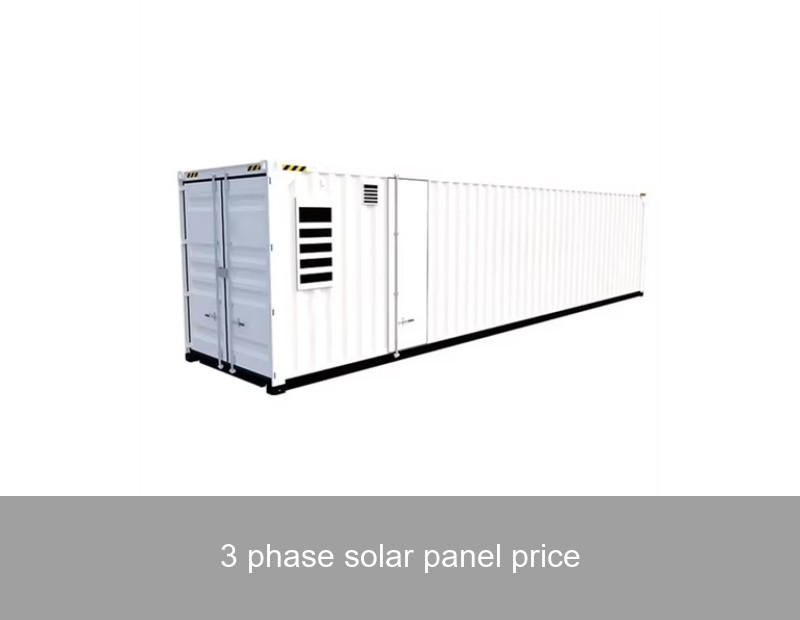
If you're a business owner, facility manager, or managing a larger residential property in Europe or the US, you've likely heard about the benefits of solar power. But when your electricity needs are significant and your building runs on a three-phase power supply, the conversation shifts. You're not just looking at a few panels on a roof; you're evaluating a 3 phase solar panel system—a robust energy solution designed for higher power demands. The initial question on everyone's mind is inevitably about cost. However, focusing solely on the "3 phase solar panel price" per watt is like buying a car based only on the sticker price, ignoring fuel efficiency, reliability, and long-term maintenance. The true value lies in the system's performance, durability, and the intelligence behind it. This article will break down the factors influencing the price and showcase how advanced technology from leaders like Highjoule transforms a capital expenditure into a strategic, long-term asset.
Table of Contents
- The Real Cost: Beyond the Price Per Panel
- Key Factors Influencing Your 3-Phase Solar System Quote
- Case Study: A German Manufacturing Plant's Journey
- The Highjoule Advantage: Where Price Meets Performance
- Future-Proofing Your Investment
The Real Cost: Beyond the Price Per Panel
Let's address the elephant in the room first. A commercial or industrial-grade 3-phase solar system has a higher upfront cost than a standard residential single-phase setup. Why? It's built for a different mission. We're talking about higher-capacity, three-phase inverters, more robust mounting structures for large rooftops or ground mounts, complex electrical integration with your main distribution board, and often, a sophisticated energy management system. The "3 phase solar panel price" you receive as a quote is actually a bundle of several critical components:
- Solar Panels (PV Modules): The efficiency and brand of the panels themselves. High-efficiency panels cost more but produce more power in limited space.
- 3-Phase Inverter(s): The heart of the system. This device converts the DC power from your panels into the AC power your business uses. Its quality and capacity are major price drivers.
- Balance of System (BOS): This includes wiring, conduits, safety disconnects, monitoring hardware, and importantly, the mounting structure.
- Installation & Labor: Professional design, engineering, permitting, and installation by certified electricians, especially for complex grid-tie systems.
- The Hidden Game-Changer: Energy Storage. This is where the calculus changes dramatically. Adding a battery energy storage system (BESS) increases initial cost but unlocks massive long-term savings and resilience.

According to data from the International Energy Agency (IEA), solar PV remains one of the most competitive sources of new electricity generation in most of the world. For businesses, the metric that truly matters is the Levelized Cost of Energy (LCOE)—the average net present cost of electricity generation over the system's lifetime. A slightly higher initial "3 phase solar panel price" with superior components often results in a lower, more favorable LCOE.
Key Factors Influencing Your 3-Phase Solar System Quote
To understand your specific quote, consider this ladder of factors that installers evaluate:
| Factor | Impact on Price & System Design |
|---|---|
| Energy Consumption & Load Profile | Your business's daytime energy usage (kWh) and peak demand (kW) directly determine system size. A detailed load analysis is the first step. |
| Roof/Site Condition | Roof material, age, angle, shading, and available space affect installation complexity and mounting hardware choices. |
| Local Grid Policies & Incentives | Net metering rules, feed-in tariffs (common in Europe), and tax credits (like the US Investment Tax Credit) can significantly reduce net cost. Always consult a local expert. |
| Technology Choice | Panel efficiency (monocrystalline vs. polycrystalline), inverter type (centralized vs. string vs. micro), and the inclusion of storage are the biggest technical price determinants. |
For instance, a factory with a large, flat roof in Spain will have a different optimal system and financial model compared to a cold-storage facility in Michigan with a high, consistent base load. The goal is not the cheapest per-watt system, but the most economically optimal one for your unique context.
Case Study: A German Manufacturing Plant's Strategic Shift
Let's look at a real-world example from our operations in Europe. A mid-sized automotive parts manufacturer near Stuttgart, Germany, was facing rising grid electricity costs and pressure to meet corporate sustainability targets. Their initial request was for a standard 250 kW grid-tie solar system to offset daytime use.
Initial Challenge: The quoted "3 phase solar panel price" for a basic system was competitive. However, our Highjoule energy audit revealed a critical insight: the plant had high energy consumption even during non-production hours (for lighting, security, and some machinery in standby). Furthermore, they were on a time-of-use tariff with high evening rates.
Our Solution: We proposed an integrated Highjoule Solar + Storage solution. The design included:
- A 280 kWp solar array using high-efficiency bifacial panels.
- A Highjoule H-Stack Commercial Battery System with 400 kWh of usable capacity.
- Our proprietary Energy Management System (EMS) for intelligent, forecast-based control.
The Result: While the initial investment was 40% higher than the basic solar-only quote, the financial and operational outcomes were transformative:
- Self-Consumption Rate: Increased from an estimated 35% (solar-only) to over 85%.
- Grid Independence: The system now powers critical loads during two short grid outages, avoiding production stoppages.
- ROI: Due to aggressive peak shaving and arbitrage (storing solar energy and using it during high-price periods), the payback period was calculated at just 6.2 years—faster than the solar-only option. The plant now meets 72% of its annual electricity needs from its own renewable source.

The Highjoule Advantage: Where Price Meets Performance
At Highjoule, founded in 2005, we believe the discussion should never start and end with the "3 phase solar panel price." Our role as a global provider is to deliver value through intelligent system design. For commercial and industrial clients, our integrated solutions are where the magic happens.
Our H-Stack Commercial BESS is not just a battery box. It's a modular, scalable system built with lithium iron phosphate (LFP) chemistry, known for its safety, longevity (over 6,000 cycles), and stable performance. When paired with our AI-driven EMS, it doesn't just store energy—it makes strategic decisions. The system learns your consumption patterns, incorporates weather forecasts for solar production, and even considers real-time electricity price signals (where available) to decide when to charge, discharge, or hold.
This intelligence directly impacts your bottom line. It maximizes self-consumption of your solar energy, reduces demand charges (a significant portion of commercial bills), and provides invaluable backup power. By offering this integrated hardware and software package, we ensure that every dollar spent on the solar panels is amplified by the smart storage system working alongside it.
Services That Complete the Picture
Our expertise extends beyond hardware. We provide:
- Feasibility & Energy Audits: Deep-dive analysis to size your system correctly from day one.
- Turnkey Project Management: From permitting and grid connection approval to installation and commissioning.
- Ongoing Monitoring & Support: Remote system monitoring and proactive maintenance to ensure optimal performance for decades.
This holistic approach de-risks your investment and guarantees that the system performs as promised, making the total cost of ownership predictable and favorable. You can learn more about grid integration challenges from the U.S. Department of Energy.
Future-Proofing Your Investment
The energy landscape is evolving rapidly. Electrification of transport and heating is increasing demand. Grids are becoming more dynamic. A solar system purchased today must be adaptable. When evaluating your "3 phase solar panel price," ask your provider about scalability and software updates. Can you easily add more battery modules later? Will the EMS software receive updates to leverage new grid service programs?
Highjoule systems are designed with this flexibility in mind. Our modular architecture allows for capacity expansion, and our cloud-based EMS receives continuous improvements, ensuring your system gets smarter over time and can participate in future energy markets, like virtual power plants (VPPs).

So, the pivotal question for any business leader is no longer simply "What is the 3 phase solar panel price?" The more strategic questions to start with are: "What is the total value of energy independence and predictable costs for my business over the next 25 years?" and "How can my energy infrastructure become a strategic asset rather than just an overhead cost?"
What is the single biggest uncertainty in your current electricity costs that a smart, predictable solar-plus-storage system could solve for your operation?
 Inquiry
 Online Chat