


Understanding the 3.75 kVA Solar Battery Price: A Smart Investment for Energy Independence
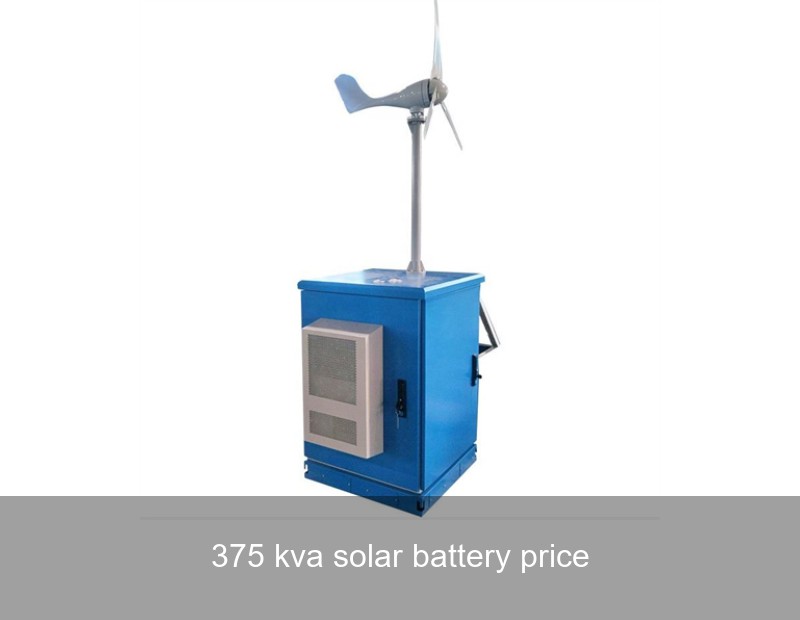
If you're exploring solar power for your home or business, you've likely encountered the term "3.75 kVA." It's a common capacity for residential solar battery systems, and naturally, one of the first questions is: what factors into the 3.75 kVA solar battery price? The answer isn't a single number. It's a journey into understanding value beyond the initial cost. As energy prices soar and grid reliability becomes a concern, particularly in Europe and the US, the true price of a battery system is measured not just in currency, but in long-term savings, resilience, and sustainability. Let's demystify the costs and reveal what makes a modern energy storage system a wise investment.
Table of Contents
What is a 3.75 kVA Solar Battery System?
Let's break down the terminology. "kVA" (kilovolt-ampere) is a unit of apparent power, often used interchangeably with kW (kilowatt) for these systems in a residential context. A 3.75 kVA battery inverter can deliver a continuous power output of roughly 3.75 kW. This capacity is crucial because it determines what appliances you can run simultaneously during a grid outage. Think of it as the size of your energy "faucet." A 3.75 kVA system is typically paired with a usable battery energy storage of 5 kWh to 15 kWh, which is the "tank" that stores the solar energy. This size is a popular sweet spot for many homes, capable of powering essential loads like refrigeration, lighting, communication devices, and even some heating or cooling systems for several hours.
Key Factors Influencing the 3.75 kVA Solar Battery Price
When you request a quote, the final figure is a composite of several components. Understanding these helps you compare offers intelligently.
| Cost Component | Description | Impact on Final Price |
|---|---|---|
| Battery Cells & Chemistry | The core technology (e.g., Lithium Iron Phosphate - LFP, NMC). LFP is renowned for longer lifespan and superior safety. | High. LFP may have a higher upfront cost but offers better long-term value. |
| Inverter/Charger | The brain of the system, converting DC to AC and managing energy flow. Hybrid inverters are essential for solar + storage. | Significant. Quality here ensures efficiency and reliability. |
| System Integration & Software | The intelligence that optimizes self-consumption, manages grid interactions, and provides user monitoring. | Moderate to High. This is where smart systems truly differentiate themselves. |
| Installation & Labor | Costs vary widely by region, system complexity, and electrical setup. | Variable. Can be 20-30% of total project cost. |
| Permits & Incentives | Local building permits, grid connection fees, and available tax credits or rebates (like the US ITC or various EU grants). | Can substantially reduce net cost. |
For a quality, professionally installed 3.75 kVA solar battery system in markets like Germany or California, you might be looking at a broad range. However, focusing solely on the lowest 3.75 kVA solar battery price can be misleading. A cheaper system with inferior cells or basic software may degrade faster or fail to optimize your savings, costing you more over a 10-year period.
Value Beyond the Price Tag: The Highjoule Difference
This is where expertise and engineering excellence matter. At Highjoule, with nearly two decades of experience since 2005, we design systems where the whole is greater than the sum of its parts. Our approach to the 3.75 kVA segment isn't just about meeting a specification; it's about delivering a holistic energy solution.
Our HES-Series Hybrid Energy Systems are a prime example. Designed for residential and small commercial applications, they integrate a high-efficiency hybrid inverter with our proprietary LFP battery packs. But the real magic is in the Highjoule Energy OS, our intelligent software platform. It doesn't just store and release energy; it learns your consumption patterns, forecasts weather, and dynamically decides the most economical moment to store solar energy, draw from the grid, or dispatch power back to the grid when rates are high.

Image Source: Unsplash (Representative image of a modern home battery installation)
Consider this: Two homes with identical solar arrays and a 3.75 kVA battery. A basic system might increase your solar self-consumption to 50%. A Highjoule system, with its predictive algorithms, can push that to 70-80% or more, dramatically slashing your electricity bill. When you factor in time-of-use rates in places like California or Italy, this intelligent management can shave years off the payback period, making the initial 3.75 kVA solar battery price a more impactful investment.
A Real-World Case Study: Resilience in California
Let's move from theory to hard data. In 2022, a community in Sonoma County, California, faced recurring Public Safety Power Shutoffs (PSPS) due to wildfire risk. A local bakery, a small business crucial to the community, decided to invest in energy resilience. They installed a 3.75 kVA Highjoule HES system paired with a 10 kWh battery and their existing solar panels.
- Challenge: Prevent spoilage of refrigerated ingredients and maintain partial operations during multi-day grid outages.
- Solution: The system was configured for "critical load" backup, powering walk-in coolers, point-of-sale systems, and essential lighting.
- Result: During a 36-hour outage in October 2022, the bakery remained operational. They estimated prevented loss of inventory and revenue at over $2,800. Furthermore, the system's daily energy arbitrage (storing solar, avoiding peak grid power) saves them approximately $65 per month on their electricity bill.
This case illustrates the multi-faceted return on investment. The 3.75 kVA solar battery price was not merely an expense but insurance and a profit-protection tool. You can explore more on the importance of grid resilience from the U.S. Department of Energy.
Making the Right Choice for Your Needs
So, how should you evaluate your options? Start by asking the right questions:
- What are my primary goals? (Bill savings, backup power, carbon footprint reduction?)
- What is the total lifecycle cost? (Including warranty, expected degradation, and efficiency losses over 10 years.)
- Is the system scalable? Can I easily add more battery capacity later if my needs change?
- How intelligent is the energy management? Can it adapt to changing tariffs and my lifestyle?
Highjoule systems are built with this future-facing mindset. Our modular design allows for capacity expansion, and our software receives regular updates that add new features and optimize performance, protecting your investment for the long haul. For authoritative, independent information on battery storage, homeowners can refer to resources like the Solar Energy Industries Association (SEIA).

Image Source: Unsplash (Representative image of a family monitoring energy data)
Your Next Step Towards Energy Independence
The conversation about the 3.75 kVA solar battery price is ultimately a conversation about value, control, and sustainability. In an era of volatile energy markets, taking control of your power isn't just a technical upgrade—it's a strategic decision for your household or business finances.
What specific energy challenge in your home or business would solving with a reliable, intelligent battery system make the most immediate difference to?
 Inquiry
 Online Chat