


3 Phase Solar System in South Africa: The Ultimate Guide for Stable Power
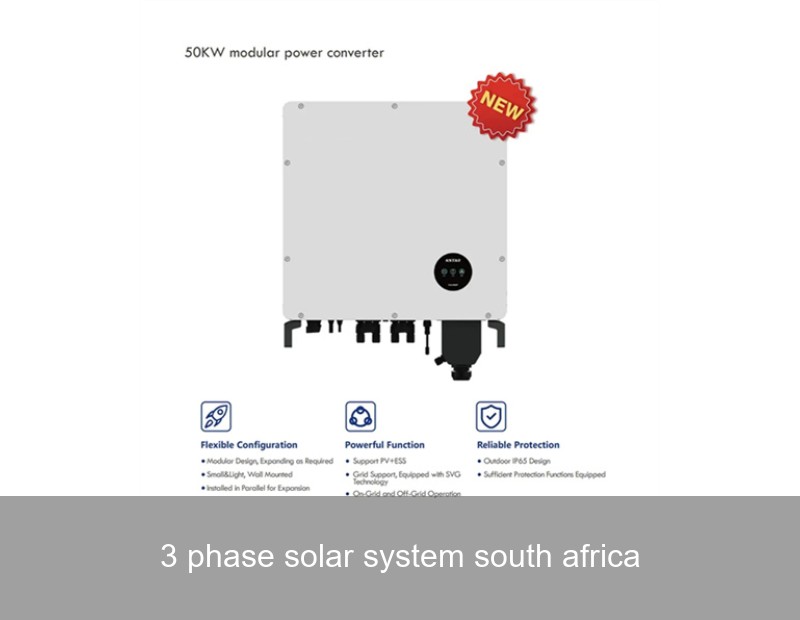
If you're running a business, farm, or a larger home in South Africa, you've likely experienced the profound impact of load-shedding. The hum of appliances suddenly cuts to silence, operations grind to a halt, and productivity drops. In this environment, simply having a solar system isn't always enough. For properties with higher energy demands, a 3 phase solar system in South Africa is becoming the gold standard solution. Unlike single-phase systems, a three-phase setup distributes power more evenly and can handle the heavy-duty equipment common in commercial, industrial, and agricultural settings. It's not just about going solar; it's about ensuring that solar power is robust, reliable, and capable of powering your entire operation seamlessly. This article delves into why this specific solution is critical for energy resilience in South Africa and how advanced technology from leaders like Highjoule is making it more accessible and intelligent than ever.
Table of Contents
- The Phase Problem: Why Single-Phase Isn't Enough
- How a 3-Phase Solar & Battery System Works
- South Africa Case Study: A Winery's Success Story
- Key Components of a Robust 3-Phase System
- Highjoule's Role: Smart Energy Management for 3-Phase
- Making the Switch: Is a 3-Phase System Right for You?
The Phase Problem: Why Single-Phase Isn't Enough
Most standard South African homes are connected to the grid via a single-phase power supply. This means all your electrical load—from your fridge to your geyser—runs on one alternating current (AC) waveform. It works well for moderate, distributed loads. However, think about a manufacturing workshop with large motors, a dairy farm with milking machines and cooling, or a guest house with multiple air conditioners and heat pumps. These applications require significant, consistent power, often concentrated on a single piece of equipment.
A single-phase inverter, typically maxing out around 5-8kW for residential models, can struggle with these high-demand, "lumpy" loads. It can lead to phase imbalance—where one phase is overloaded while others are underutilized—causing inefficiencies, potential damage to equipment, and even inverter tripping during load-shedding when you need power the most. The data is clear: as energy demands rise, the limitations of single-phase become a operational risk. A report by the Council for Scientific and Industrial Research (CSIR) highlights the increasing frequency and intensity of load-shedding, pushing businesses towards more resilient, self-sufficient power solutions that can handle their full operational scope.

Image: A three-phase distribution board is essential for managing high-power loads evenly. Source: Unsplash
How a 3-Phase Solar & Battery System Works
So, what's the alternative? A three-phase electrical supply, which is standard for larger properties, splits the power into three separate AC waveforms, each offset by 120 degrees. Imagine it as a three-lane highway compared to a single-lane road. The traffic (electrical load) can be distributed evenly across all lanes, allowing for a much smoother, higher-capacity flow.
A 3 phase solar system in South Africa integrates with this setup in two primary configurations:
- Three Single-Phase Inverters: One inverter is connected to each phase. This is a common and flexible approach, often allowing for easier expansion.
- A Dedicated Three-Phase Inverter: A single unit that manages all three phases simultaneously, offering sophisticated control to ensure perfect balance.
When coupled with a three-phase-capable battery storage system, the setup becomes a powerhouse. During the day, solar generation powers loads and charges the battery across all phases. During an outage, the system can island itself from the grid and provide balanced, clean power to all three phases, ensuring that every piece of equipment, from the office computers to the factory floor's compressor, stays online.
A South African Case Study: Securing a Winery's Future
Let's look at a real-world example. A prominent winery in the Western Cape faced a severe threat from load-shedding. Their critical processes—refrigeration for fermentation tanks, irrigation pumps, and bottling lines—required stable, three-phase power. A two-hour outage could ruin an entire batch of wine, representing a massive financial loss.
The Solution & Results: The winery installed a tailored 3-phase solar and battery storage system. The system included:
| Component | Specification | Purpose |
|---|---|---|
| Solar PV Array | 145kWp | Primary energy generation |
| Battery Storage | 120kWh Lithium-ion | Backup power & energy shifting |
| Inverters | 3 x 30kW Hybrid Inverters | Phase-balanced DC to AC conversion |
| Energy Management System | Advanced System Controller | Orchestrates energy flow & grid interaction |
Within the first year of operation, the winery achieved:
- 98% Reduction in grid dependency during daylight hours.
- Zero production losses due to load-shedding. The system seamlessly took over during outages.
- 30% reduction in overall energy costs by maximizing solar self-consumption and reducing peak demand charges from the utility.
This case, documented in part by the Green Business Guide, illustrates that a well-designed 3-phase system isn't an expense; it's a direct safeguard for revenue and operational continuity.
Key Components of a Robust 3-Phase System
Building a system that delivers these results requires more than just panels and a battery. It demands integrated, intelligent components.
- Three-Phase Hybrid Inverters: The heart of the system. They must not only convert solar DC power to AC but also synchronize perfectly with the grid (or each other) to maintain phase balance. Look for models with high surge capacity to start heavy motors.
- Three-Phase Battery System: Modern lithium-ion batteries, like those using Lithium Iron Phosphate (LFP) chemistry, are often configured in "stackable" modules. For three-phase, multiple battery units are connected to work in unison, discharging power evenly across all phases.
- Advanced Energy Management System (EMS): This is the brain. A sophisticated EMS monitors load on each phase in real-time. It can dynamically direct solar power or battery discharge to the phase that needs it most, preventing imbalance. It also handles complex decisions: when to charge from the grid on a cheap tariff, when to sell excess solar back, and how to prioritize loads during a backup event.
Highjoule's Role: Smart Energy Management for 3-Phase
This is where Highjoule's expertise becomes pivotal. Since 2005, we have specialized in providing intelligent, efficient storage solutions for precisely these complex scenarios. For a 3 phase solar system in South Africa, our approach goes beyond hardware.
Highjoule's HPS Series of containerized and modular battery energy storage systems (BESS) are engineered for commercial and industrial scale. They integrate seamlessly with three-phase infrastructure and are managed by our proprietary JouleMind AI platform. Think of JouleMind as an autopilot for your energy. It doesn't just react; it predicts. By analyzing weather forecasts, your historical consumption patterns, and utility tariff schedules, it optimizes the flow of energy across all three phases to minimize costs and maximize self-sufficiency.
For the winery in our case study, a Highjoule system with JouleMind would ensure the refrigeration load on Phase 2 is supported by battery power from Phase 1 and 3 if needed, all while ensuring the overall battery health and longevity. We provide a complete solution: from initial site assessment and system design, through to installation, grid compliance support, and 24/7 remote monitoring. Our goal is to deliver not just backup power, but true energy independence and financial predictability.

Image: Commercial-scale solar installations often require three-phase integration. Source: Unsplash
Making the Switch: Is a 3-Phase System Right for You?
How do you know if you need to step up to a three-phase solar solution? Ask yourself these questions:
- Does my property already have a three-phase grid connection?
- Do I operate heavy machinery (e.g., lathes, mills, industrial pumps, large compressors)?
- Do I experience issues like lights dimming when a large appliance starts, even before load-shedding?
- Is my monthly electricity bill consistently high, with significant demand charges?
If you answered "yes" to most of these, a three-phase system is likely the correct, future-proof investment. The next step is a professional energy audit. This assessment will map your load profile across each phase, identify your peak demands, and model the optimal solar and battery size for your needs and budget.
Looking Ahead: The Grid of the Future
As South Africa's energy landscape evolves, three-phase systems will play a crucial role in building microgrids—localized grids that can disconnect from the national utility and operate autonomously. A factory with a robust 3-phase solar and battery system can potentially power not only itself but also support critical community services during prolonged outages. The technology, as championed by providers like Highjoule, is turning energy consumers into proactive "prosumers," who generate, store, and manage their own power intelligently.
What would complete energy security mean for your business's bottom line and peace of mind? Could your operation become a hub of resilience in your community?
 Inquiry
 Online Chat