


Understanding the 300 kW Solar Battery Price: A Smart Investment for Commercial Energy Independence
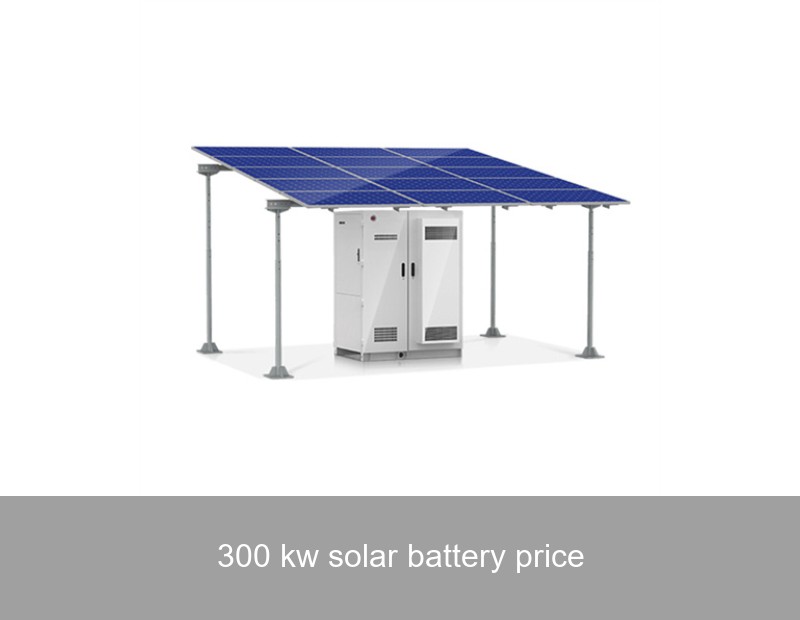
If you're a business owner, facility manager, or energy consultant looking at commercial-scale solar, one question inevitably rises to the top: "What's the price for a 300 kW solar battery system?" It’s a crucial question, but focusing solely on the upfront cost can be misleading. The real story is about value, resilience, and long-term savings. In today's energy landscape, especially in markets like Europe and the U.S. with volatile electricity prices and increasing grid demands, a 300 kW battery energy storage system (BESS) isn't just an expense—it's a strategic asset. This article will break down the factors influencing a 300 kw solar battery price, showcase its real-world impact, and help you understand why partnering with an experienced provider like Highjoule is key to maximizing your return.
What Really Drives the 300 kW Solar Battery Price?
You might search for a single number, but the price tag for a commercial 300 kW system is a composite of several high-quality components and intelligent engineering. Think of it not as buying a commodity, but as investing in a tailored power plant for your facility.
- Battery Chemistry & Quality: The core of the system. Lithium Iron Phosphate (LFP) is the dominant choice for commercial storage due to its safety, longevity (typically 6,000+ cycles), and stability. While slightly higher in initial cost than older chemistries, its total cost of ownership is far superior.
- Power Rating (kW) vs. Energy Capacity (kWh): This is critical. "300 kW" refers to the power—how much electricity the system can deliver at once. You must also pair it with an energy capacity (e.g., 600 kWh, 900 kWh). A 300 kW / 600 kWh system will cost less than a 300 kW / 1200 kWh system, as the latter uses more battery cells.
- Power Conversion System (PCS): This includes the inverters and transformers that manage AC/DC conversion. High-efficiency, bi-directional inverters are a significant cost component but are essential for performance and grid interaction.
- System Integration & Controls: The "brain" of the operation. Advanced energy management software (EMS) that can automate charging/discharging based on time-of-use rates, weather forecasts, and load patterns adds value and cost.
- Balance of System (BOS): This encompasses everything else: thermal management (cooling), safety systems, switchgear, enclosures, and comprehensive monitoring hardware.
- Installation & Grid Interconnection: Site-specific electrical work, permitting, and utility interconnection fees can vary dramatically by region (e.g., California vs. Texas, or Germany vs. Poland).
Given these variables, a ballpark figure for a fully installed, commercial-grade 300 kW solar battery system in the U.S. or Europe typically ranges from $120,000 to $250,000+. The wide range underscores why a detailed assessment is non-negotiable.
Looking Beyond the Sticker Price: The PAS Framework
Let's apply a Problem-Agitate-Solution (PAS) lens to move from cost to investment rationale.
Problem: Commercial Energy Costs are Unpredictable and Rising
Businesses across Europe and North America are grappling with two painful realities: steadily rising retail electricity rates and crippling demand charges. Demand charges, fees based on your highest power draw in a billing period, can constitute 30-50% of a commercial utility bill. A single spike in operation can cost thousands.
Agitate: The Financial Drain of Grid Dependency
Without control, you're at the mercy of the grid. Power outages disrupt operations and revenue. Price surges during peak hours (5-8 PM) erode profit margins. Furthermore, as electrification and renewable mandates grow, grid stability can become an issue, making proactive energy management a business continuity issue, not just a cost issue.
Solution: The 300 kW Battery as a Strategic Financial Tool
This is where a properly sized 300 kW battery system shifts from a capital cost to a revenue-protecting asset. Its primary functions directly attack the problems above:
- Peak Shaving: The system discharges during your facility's high-usage periods, capping the power drawn from the grid and slashing demand charges.
- Energy Arbitrage: Buy and store cheap electricity at night (or when solar is overproducing), use it during expensive peak hours.
- Backup Power: Provides seamless, instantaneous power for critical loads during grid outages.
- Grid Services (in some markets): In programs like Frequency Regulation, businesses can earn revenue by allowing the grid operator to use their battery's rapid response capabilities.

Image Source: Unsplash - A commercial solar and battery storage setup.
A Real-World Case: Peak Shaving in a German Manufacturing Plant
Let's ground this in data. A medium-sized automotive parts manufacturer in Bavaria, Germany, faced an annual electricity bill of over €450,000, with demand charges and high time-of-use rates being major contributors. Their facility had a peak load of around 800 kW and already had a 400 kW rooftop solar array.
The Project: Highjoule designed and deployed a 300 kW / 675 kWh LFP battery storage system integrated with their existing solar PV and building management system.
The Strategy: The Highjoule IntelliGrid EMS was programmed with a dual focus: 1) Charge from excess solar production and from the grid during low-tariff overnight hours. 2) Discharge precisely during the plant's operational peaks (machinery startup, midday) and during the evening grid peak period (17:00-20:00).
The Results (First 12 Months):
| Metric | Result |
|---|---|
| Reduction in Peak Demand Draw | 22% |
| Annual Demand Charge Savings | €28,500 |
| Energy Cost Savings (Arbitrage) | €15,200 |
| Total Annual Savings | €43,700 |
| Increased Solar Self-Consumption | From 35% to 68% |
This project delivered a simple payback period of under 6 years, not including any potential German subsidy programs they qualified for. More importantly, it provided them with 4 hours of backup power for critical quality control and IT systems, insulating them from the region's increasing grid instability. Fraunhofer ISE studies consistently show such savings are achievable with well-engineered systems.
How Highjoule Delivers Value in Your Energy Storage Project
Since 2005, Highjoule has been at the forefront of advanced energy storage, moving beyond simple hardware supply to become a solution architect. When you evaluate the 300 kw solar battery price with Highjoule, you're evaluating a partnership for long-term performance.
- Highjoule H-Series Commercial Systems: Our modular H-Series units are scalable around the 300 kW need. Built with premium LFP cells, they offer a compact footprint, liquid cooling for optimal lifespan, and are UL 9540 / IEC 62619 certified for global safety standards.
- Proprietary IntelliGrid Energy Management Platform: This is where the ROI is engineered. Our AI-driven platform doesn't just react; it forecasts weather, load patterns, and electricity prices to optimize every charge-discharge cycle for maximum financial return.
- Full-Scope Service: We provide end-to-end support—from initial feasibility analysis and financial modeling to system design, installation oversight, grid interconnection support, and long-term performance monitoring and maintenance. We navigate the complex regulatory landscapes of Europe and the U.S. for you.
In essence, we ensure the system you pay for delivers the savings and resilience it promises. For deeper technical insights into modern battery systems, resources like the U.S. Department of Energy's solar storage page provide excellent background.

Image Source: Unsplash - Engineer monitoring an energy storage system.
Making an Informed Decision on Your Investment
So, how do you move forward? Start by shifting the internal conversation from "What does it cost?" to "What is it worth?" Request a detailed feasibility study that models your specific load profile, local utility rates, and solar generation. A quality provider will give you a transparent breakdown of the 300 kw solar battery price alongside a clear projection of savings, payback period, and ancillary benefits like carbon footprint reduction and resilience.
The market is evolving rapidly. With policies like the U.S. Inflation Reduction Act (IRA) offering significant tax credits for standalone storage, and similar incentives across Europe, the financial equation is more favorable than ever.
Your Next Step
What single energy cost metric—be it a demand charge spike, an outage event, or a volatile time-of-use rate—would you most want a 300 kW battery system to solve for your business? Identifying that primary pain point is the perfect place to start a conversation with a solutions provider like Highjoule.
 Inquiry
 Online Chat