


Batterie 100kW: How Much Does a 100kW Battery Storage System Really Cost?
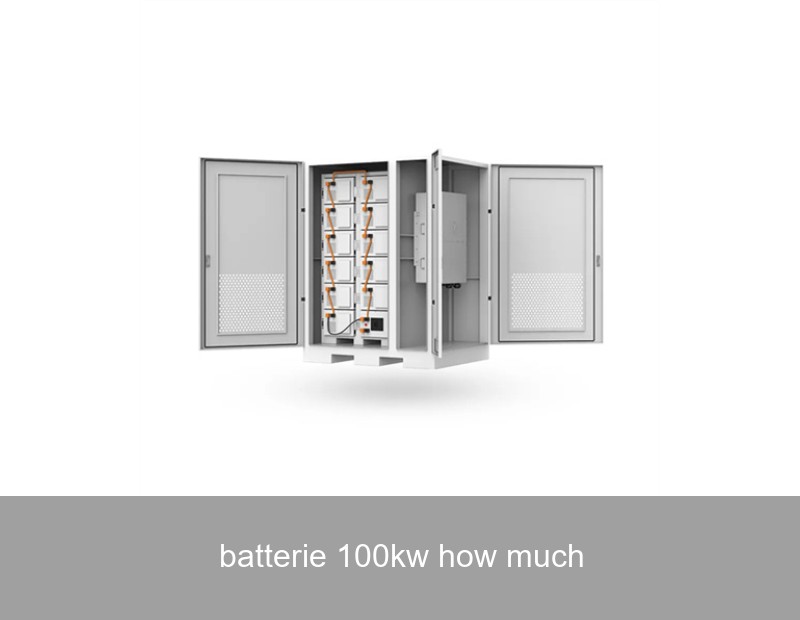
If you're a business owner, facility manager, or even a homeowner with significant energy needs, you've likely asked the question: "A batterie 100kw – how much will it set me back?" It's a smart question, but the answer isn't a simple price tag. The cost of a 100kW battery energy storage system (BESS) is an investment equation, blending hardware, software, and long-term value. As energy prices remain volatile and the push for sustainability intensifies, understanding the true cost of a robust 100kW solution is the first step toward energy independence and resilience.
Table of Contents
Breaking Down the "Batterie 100kW How Much" Question
Let's be clear upfront: a complete, installed 100kW battery storage system typically ranges from $120,000 to $250,000+ in markets like the US and Europe. Why such a wide range? Think of it like asking, "How much does a house cost?" Location, materials, and features all play a huge role. A 100kW system refers primarily to its power rating—how much electricity it can deliver at once (in kilowatts, kW). The often more critical figure is its energy capacity (in kilowatt-hours, kWh), which determines how long it can supply that power. A common configuration might be a 100kW / 200kWh system, providing 100kW of power for 2 hours.
For a company like Highjoule, with nearly two decades of experience, we see clients achieve the best return when they shift from asking about upfront cost to analyzing total cost of ownership and value generation. A premium system from a provider like Highjoule isn't just a battery box; it's an integrated smart energy platform.
The Core Components of Cost
To understand the investment, you need to know what you're paying for:
- Battery Cells & Modules: The chemical heart (e.g., Lithium Iron Phosphate - LFP). LFP is now the dominant choice for commercial/industrial use due to its safety, longevity, and cost-effectiveness.
- Battery Management System (BMS): The "brain" that ensures safety, balance, and health. A sophisticated BMS, like the one embedded in every Highjoule system, is critical for maximizing cycle life.
- Power Conversion System (PCS/Inverter): Converts DC battery power to AC for your building. Its efficiency rating directly impacts your savings.
- Energy Management System (EMS): The strategic controller. This software intelligently decides when to charge, discharge, or hold based on tariffs, weather, and consumption patterns.
- Thermal Management & Enclosure: Crucial for safety and performance in varying climates.
- Installation & Integration: Labor, electrical work, grid interconnection fees, and potential electrical panel upgrades.
- Permits & Software Licensing: Often overlooked but necessary for compliance and advanced functionality.
Key Factors That Determine Your 100kW Battery System Cost
Several variables will move the needle on your specific quote.
| Factor | Impact on Cost | Highjoule's Approach |
|---|---|---|
| Battery Chemistry (LFP vs. NMC) | LFP generally has a lower cost per cycle and is safer, impacting long-term TCO. | We utilize top-tier LFP chemistry exclusively for its superior safety profile and 6,000+ cycle life in our commercial systems. |
| System Capacity (kWh) | A 100kW/400kWh system costs significantly more than a 100kW/150kWh system. | Our experts model your load profiles to right-size the capacity, avoiding over- or under-investment. |
| Grid Interconnection Complexity | Faster permitting regions vs. those with complex utility requirements can change soft costs by 10-25%. | With global experience, we navigate local codes and utility protocols in the US and EU to streamline the process. |
| Incentives & Rebates | Can reduce net cost by 20-50%. e.g., US ITC (30-70%), EU funding programs. | Our team provides guidance on applicable incentives, like the Investment Tax Credit (ITC), to maximize your financial return. |

Image: A professional installation is key to system performance and safety. (Source: Unsplash, representative image)
Beyond the Price Tag: The Value of a Smart 100kW System
Focusing solely on the initial "batterie 100kw how much" sticker price misses the forest for the trees. The real metric is value creation over 15+ years. A Highjoule system is designed to generate revenue and savings from day one through:
- Demand Charge Reduction: For many businesses, demand charges can be 30-70% of their electricity bill. A 100kW system can shave peak demand, leading to immediate, recurring savings. This is often the fastest payback application.
- Energy Arbitrage: Charge the battery when electricity is cheap (e.g., at night or during sunny hours with solar) and use it when prices are high.
- Backup Power & Resilience: While not all systems are configured for full backup, a 100kW system can keep critical loads operational during an outage, avoiding costly downtime.
- Renewables Integration: Maximize self-consumption of solar PV. Instead of selling excess solar back to the grid at low rates, store it for your own use later.
This is where Highjoule's Intelligent Energy Operating System (IEOS) becomes a game-changer. It doesn't just store energy; it continuously optimizes these value streams, making autonomous decisions to ensure your system pays for itself as quickly as possible.
A Real-World Case: Commercial Solar + Storage in Germany
Let's move from theory to data. A mid-sized dairy processing plant in Bavaria, Germany, faced high evening energy costs and wanted to increase the self-consumption of its existing 250kW rooftop solar array. Their primary question was about cost, but the analysis focused on value.
The Solution: Highjoule installed a 100kW / 215kHz LFP battery system integrated with their solar PV and controlled by our IEOS. The system was configured for time-of-use shifting and peak shaving.
The Results (First 12 Months):
- Energy Cost Savings: 28% reduction in grid electricity purchases.
- Self-Consumption Rate: Increased from 35% to over 80%.
- Peak Demand Reduction: Reduced grid peak draw by 95kW, cutting demand charges significantly.
- Simple Payback Period: With the combination of savings and available German funding programs, the calculated payback is under 7 years on a system with a 15-year warranty.
This case illustrates how the "batterie 100kw how much" conversation evolved into a detailed financial model showcasing a strong internal rate of return (IRR), making the investment an easy boardroom decision.

Image: Industrial solar plus storage, like the German dairy case, maximizes ROI. (Source: Unsplash, representative image)
Making Your Investment: Next Steps and Considerations
So, you're ready to move beyond the initial cost question. What now? Your journey should be methodical.
1. Conduct a Detailed Energy Audit
You can't manage what you don't measure. Analyze at least 12 months of utility bills. Identify your average and peak demand (kW), consumption patterns, and rate structure. Highjoule's consulting team often starts here to build a baseline model.
2. Define Your Primary Objectives
Is your goal hard financial ROI, sustainability, resilience, or a mix? Your priority will guide the system design—whether it's optimized for demand charge management, solar self-consumption, or backup power.
3. Evaluate Total Solutions, Not Just Hardware
Look for a provider with proven software, long-term support, and system-level warranties. A cheap battery module without intelligent control or reliable service is a liability. Highjoule's offering as a complete system provider ensures all components are designed to work in harmony, with single-point accountability.
4. Explore Financing and Incentives
Many providers, including Highjoule, partner with financing institutions. Leasing or Power Purchase Agreement (PPA) models can enable a $0-down installation, with payments covered by the generated savings. Diligently research local incentives; they dramatically alter the net economics.
The Highjoule Difference in Your 100kW Project
When you partner with Highjoule, you're not just buying a battery; you're acquiring an intelligent energy asset. Our systems are built with industry-leading LFP cells, feature our proprietary IEOS for maximum profitability, and come backed by a global service network. From the initial feasibility study to commissioning and ongoing optimization, we ensure your 100kW storage system delivers on its financial and operational promises.
Ready to transform the question from "batterie 100kw how much does it cost?" to "How much value can a 100kW system generate for my specific operation?" The best way to start is with a conversation based on your data.
What does your last utility bill reveal about your potential for savings with a smart energy storage system?
 Inquiry
 Online Chat