


What is the Cost of an Energy Storage Cabinet Kit? A Comprehensive Guide for 2024
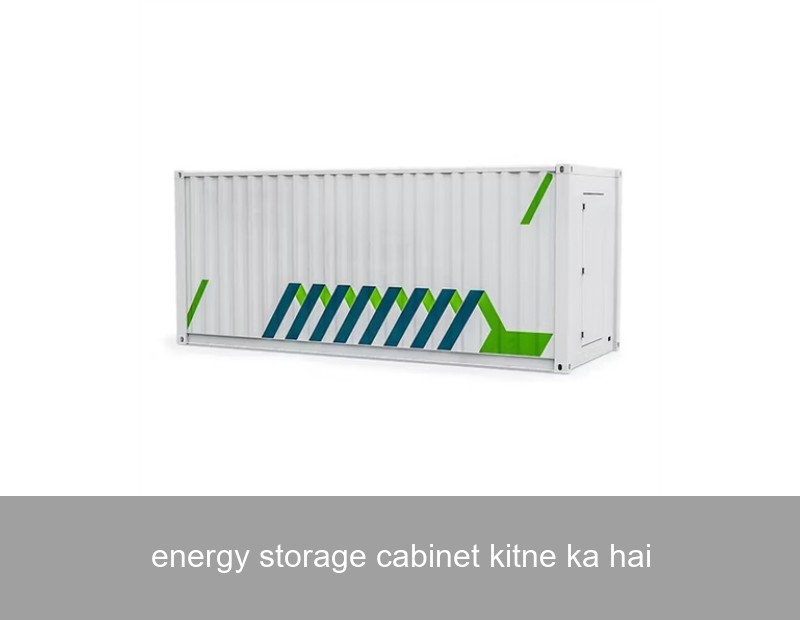
If you're exploring energy independence or looking to maximize your solar investment, you've likely asked the question: "Energy storage cabinet kitne ka hai?" or, in other words, "What is the price of an energy storage cabinet kit?". It’s a smart question, but the answer isn't a single number. The cost of a battery energy storage system (BESS) cabinet is influenced by a complex interplay of capacity, technology, application, and the intelligence behind it. As a global leader in advanced energy storage since 2005, Highjoule understands that your investment is about more than just hardware—it's about long-term value, reliability, and a sustainable energy future for your home or business.
The Price Breakdown: What You're Really Paying For
Let's demystify the cost. An energy storage cabinet kit is more than just a box of batteries. It's an integrated system. When you see a price quote, it typically encompasses several core components:
- Battery Cells & Modules: The core energy reservoir (e.g., Lithium Iron Phosphate - LFP).
- Battery Management System (BMS): The "brain" that ensures safety, longevity, and performance.
- Power Conversion System (PCS): The inverter/charger that manages AC/DC conversion.
- Thermal Management System: Crucial cooling or heating components for optimal operation.
- Safety Enclosures & Cabinetry: The physical cabinet, built to strict safety standards.
- Energy Management Software (EMS): The intelligence for monitoring, control, and optimization.
According to market analyses, the average price for a complete residential energy storage system in the US and Europe can range from $800 to $1,500 per usable kilowatt-hour (kWh), with total system costs often falling between $10,000 and $25,000 installed, depending on size and complexity. For commercial and industrial (C&I) applications, economies of scale apply, but requirements are more stringent, affecting the price per kWh differently.
Key Factors Influencing Energy Storage Cabinet Kit Cost
Understanding these variables will help you decode any quotation you receive.
| Factor | Impact on Cost | Consideration |
|---|---|---|
| System Capacity (kWh) | Directly proportional. More kWh = higher cost. | Size based on your daily energy consumption and backup goals. |
| Power Rating (kW) | Higher power output requires more robust components. | Determines how many appliances you can run simultaneously. |
| Battery Chemistry | LFP is typically more cost-effective for long-life cycles than older NMC. | LFP offers superior safety, longevity (6,000+ cycles), and is a core technology in Highjoule systems. |
| Grid Services & Intelligence | Adds cost for advanced software and grid-interactive hardware. | Enables revenue streams like peak shaving and grid support. |
| Installation Complexity | Can vary by 20-30% of hardware cost. | Depends on site location, existing electrical setup, and permitting. |
How Battery Technology Impacts Your Investment
The heart of the system is the battery. While the upfront energy storage cabinet kit cost is important, the levelized cost of storage (LCOS)—the total cost over the system's lifetime divided by energy delivered—is the true metric of value. Lithium Iron Phosphate (LFP) chemistry, which Highjoule employs across its product lines, has become the industry benchmark. It offers a compelling combination of safety (non-flammable chemistry), long cycle life (often exceeding 6,000 cycles), and stable performance, leading to a lower LCOS despite a potentially slightly higher initial price point than some alternatives.

Image Source: Unsplash (Representative image of a modern battery installation)
A Real-World Case Study: Commercial Savings in Action
Let's move from theory to practice. Consider a mid-sized dairy processing plant in Bavaria, Germany, facing high demand charges from the local utility and seeking to reduce its carbon footprint.
- Challenge: Erratic energy demand spikes led to monthly demand charges exceeding €15,000. The facility also wanted to leverage its existing rooftop solar more effectively.
- Solution: Installation of a Highjoule C&I IntelliStack 300 energy storage cabinet system with a capacity of 300 kWh and a 150 kW power rating, integrated with their solar PV and controlled by Highjoule's AI-driven EnerMesh™ platform.
- Result: The system was programmed for peak shaving, automatically discharging during periods of high grid demand. Within the first year:
- Demand charges were reduced by 40%, saving over €72,000 annually.
- Solar self-consumption increased from 35% to over 80%.
- The system provided seamless backup power for critical refrigeration units.
This case demonstrates that the question "energy storage cabinet kitne ka hai" is best answered by calculating return on investment (ROI). For this plant, the payback period was under 5 years, with decades of continued operation expected.
Looking Beyond Price: The Highjoule Value Proposition
At Highjoule, we build systems where cost is one component of a larger value equation. Our solutions for residential, commercial, industrial, and microgrid applications are designed to deliver:
- Unmatched Safety: Our multi-layered protection system starts at the cell level (using stable LFP chemistry) and extends through the BMS, enclosure, and software.
- Intelligent Control: The EnerMesh™ platform doesn't just store energy; it optimizes it. It can learn your consumption patterns, integrate weather forecasts, and even participate in grid-balancing programs where available, creating potential revenue.
- Scalability & Modularity: Starting with a Highjoule ResiCore 10 home system? You can often add more cabinet modules later as your needs grow. Our C&I IntelliStack series is inherently modular.
- Global Support & Warranty: With a 10-year performance warranty standard on our residential products and robust support for C&I clients, we invest in your long-term peace of mind.

Image Source: Unsplash (Representative image of a sleek residential battery installation)
Making the Right Decision for Your Needs
So, how do you navigate this landscape? Start by defining your goals: Is it emergency backup, maximizing solar self-consumption, reducing demand charges, or achieving full energy independence? Next, consult with a qualified installer who can assess your energy profile. Reputable sources like the Solar Energy Industries Association (SEIA) offer excellent primers on storage.
Remember, the cheapest energy storage cabinet kit upfront can become the most expensive over 15 years if it degrades quickly or lacks the intelligence to adapt to changing tariffs and your needs.
Your Next Step
Instead of just searching for a price tag, what if you started a conversation about your specific energy profile and goals? What single energy challenge—be it a unreliable grid, rising bills, or sustainability targets—is most pressing for you to solve with a storage solution?
 Inquiry
 Online Chat