


Understanding 440W Solar Panel Specifications: Your Guide to High-Efficiency Power
Have you noticed how solar panels on rooftops are getting sleeker yet seemingly more powerful? That's not an illusion. The solar industry is in a constant race for higher efficiency, and the 440W solar panel is a prime example of this evolution, sitting firmly in the high-performance tier for residential and commercial installations. But what do the technical specifications of a 440W panel truly mean for your energy independence and return on investment? As a Highjoule product technology expert, I'll demystify these specs and show you how they integrate into a truly intelligent energy system. After all, a panel is just one piece of the puzzle; its real potential is unlocked when paired with smart, compatible storage and management solutions.
Decoding the 440W Solar Panel Spec Sheet
When you look at a 440W solar panel's datasheet, it's more than just a number. It's a story of engineering designed to maximize energy harvest from every ray of sunlight. Let's break down the key specifications you'll encounter and what they practically mean.
| Specification | Typical Value for a 440W Panel | What It Means for You |
|---|---|---|
| Power (Pmax) | 440 Watts | The maximum power output under ideal lab conditions (STC). It's the benchmark for panel size and system sizing. |
| Cell Technology | Monocrystalline, often with PERC, half-cut, or shingled cells | Monocrystalline offers the highest efficiency. Technologies like half-cut cells reduce resistance and improve performance in partial shade. |
| Efficiency | Approx. 20.5% - 21.5% | The percentage of sunlight converted to electricity. Higher efficiency means more power from the same roof area. |
| Temperature Coefficient (Pmax) | ~ -0.34% / °C | How much power output decreases as the panel heats up. A lower (closer to zero) coefficient means better performance on hot days. |
| Dimensions | ~ 1765mm x 1048mm x 35mm (varies by manufacturer) | Physical size for installation planning. High-wattage panels like these optimize roof space. |
For instance, the temperature coefficient is a critical yet often overlooked spec. In sunny Arizona or Southern Spain, a panel with a poorer temperature coefficient could lose significantly more output on a 95°F (35°C) day compared to one with a superior coefficient. This directly impacts your summer yield.
The Role of Advanced Cell Technology
Most modern 440W panels utilize half-cut or shingled cell designs. By cutting standard cells in half, electrical resistance is lowered, and the panel becomes more resistant to shading. If one section is shaded, the other can often continue operating near full capacity. This leads to more consistent energy production throughout the day, especially in urban environments with chimneys or tree limbs.
Why Efficiency Matters More Than Ever
The push for panels like the 440W model isn't just about bragging rights. It's driven by real-world economic and spatial constraints. In many European cities, roof space is at a premium. A homeowner in Amsterdam with a classic, gabled roof can't simply add more panels; they need to maximize the output of every available square meter. Higher efficiency panels directly address this, allowing for greater total system capacity within a limited area.
According to the National Renewable Energy Laboratory (NREL), average panel efficiencies have climbed steadily from around 15% to over 21% in the last decade. This trend means today's 440W panel might occupy the same space as a 350W panel from just a few years ago, delivering a substantial boost in energy generation without requiring more roof real estate.

Image Source: Unsplash - High-efficiency panels maximize limited roof space.
From Specs to Savings: A Real-World Case Study
Let's translate these specifications into tangible results. Consider a medium-sized commercial operation in Bavaria, Germany: a dairy farm with substantial refrigeration and milking parlor energy needs. The goal was to offset daytime energy costs and ensure backup power.
- Challenge: Limited south-facing barn roof space. Needed to maximize generation to cover high base load.
- Solution: Installation of 72 x 440W high-efficiency monocrystalline panels (31.68 kWp total system).
- Key Specs Utilized: The 21.2% panel efficiency was crucial to fit the required capacity on the available roof. The low temperature coefficient ensured stable output during sporadic summer heat.
- Integration: These panels were connected to a Highjoule HES-30 commercial energy storage system. This wasn't just about storing excess energy; the Highjoule system's intelligent energy management dynamically shifted loads, using solar power directly for refrigeration during peak production and charging the battery for use during the evening milking process.
- Result: The system now provides over 65% of the farm's annual electricity needs. Crucially, during a regional grid outage, the Highjoule storage system seamlessly kept the refrigeration units running, preventing spoilage and demonstrating the value of a holistic system beyond just panel specifications.
Beyond the Panel: The System Integration Imperative
This is where the conversation must evolve. A 440W panel is a powerful component, but its true intelligence is realized within a balanced system. Think of it as a star athlete—their performance is maximized by the team and the game plan around them.
At Highjoule, with our deep expertise in battery energy storage systems (BESS), we view solar panels as the primary fuel source for a smarter energy ecosystem. Our Residential and Commercial Energy Storage Systems are designed with high-voltage, high-efficiency solar input in mind. They can efficiently handle the robust DC input from an array of 440W panels, minimizing conversion losses.
Our AI-powered energy management platform takes this further. It doesn't just see "solar production"; it forecasts generation based on weather, analyzes your consumption patterns, and decides in real-time whether to send solar energy to your appliances, to storage, or back to the grid for optimal financial return. This is especially critical with time-of-use rates common in parts of California and Italy, where when you use or store energy is as important as how much you produce.

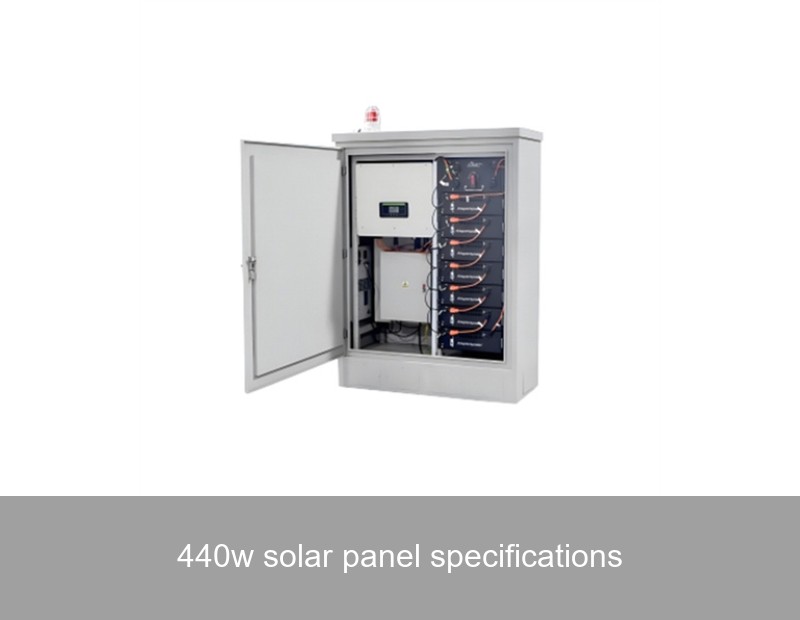
Image Source: Unsplash - A modern battery storage system is the brain of a resilient solar installation.
Choosing the Right 440W Panels for Your Project
So, how do you select the best 440W panels? Look beyond the wattage label.
- Prioritize Degradation & Warranty: A panel's long-term performance is key. Look for a low annual degradation rate (e.g., <0.5%) and a strong performance warranty (e.g., 92% output after 25 years).
- Match the Inverter: Ensure your solar inverter or microinverters are compatible with the panel's voltage and current (Vmpp & Impp). Mismatches can lead to significant efficiency losses.
- Consider the Full Ecosystem: Are you planning for storage now or in the future? Choosing panels that are a known, compatible match for storage systems like those from Highjoule can simplify installation and optimize performance from day one. Our technical teams regularly validate compatibility with leading panel manufacturers to ensure seamless integration.
- Demand Authenticity: Source panels from reputable distributors. The market has issues with counterfeit or mislabelled modules. Verify manufacturer certifications and warranty authenticity.
The specifications of a 440W solar panel tell a compelling story of technological progress. But the most successful energy projects are those that view these panels as the starting point, not the finish line. By integrating high-efficiency generation with intelligent storage and adaptive management, you move from simply saving on your bill to achieving true energy resilience and autonomy.
Given the rapid pace of change in both solar and storage technology, what specific energy security or financial goal is driving your consideration of high-efficiency solar panels today?
 Inquiry
 Online Chat