


Demystifying the Solar Inverter 100kW Price: A Smart Investment Guide
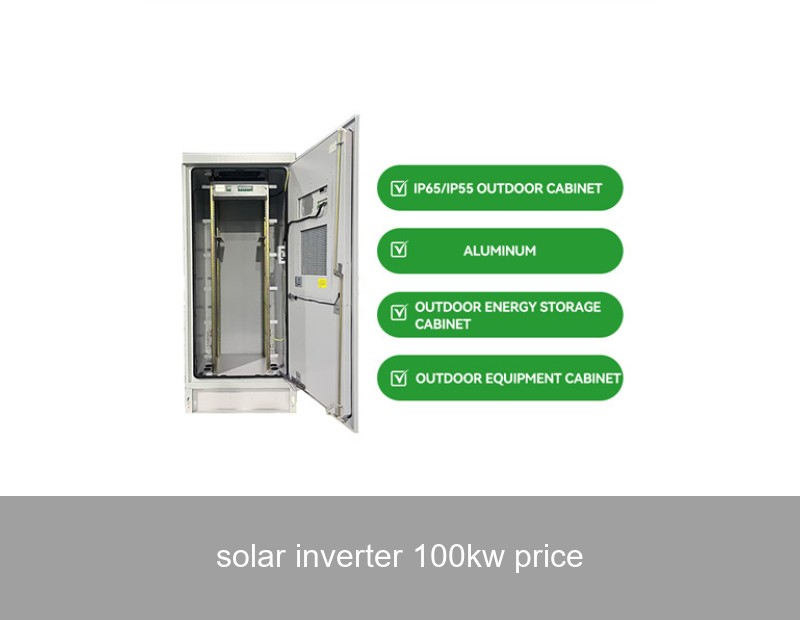
So, you're planning a significant commercial or industrial solar installation, and the search for a "solar inverter 100kW price" has brought you here. You're likely seeing a wide range of figures, and it's tempting to focus solely on that bottom line. But here's a crucial insight from the world of advanced energy systems: the upfront price of the inverter is just one piece of the financial puzzle. The real value lies in total lifetime cost, system performance, and the intelligence it brings to your entire operation. Let's unpack what goes into that price and how to ensure your investment powers your business for decades to come.
Key Factors Influencing a 100kW Solar Inverter Price
The quoted price for a 100kW solar inverter isn't arbitrary. It's a reflection of engineering, features, and long-term reliability. Choosing based on price alone can be a costly mistake. Here are the core components that shape the cost:
- Inverter Technology: Are you considering a traditional string inverter or a more advanced modular system? Central string inverters might have a lower entry point, but modular designs offer superior redundancy—if one module has an issue, the rest keep producing, maximizing uptime.
- Efficiency Rating: A 98.5% efficient inverter versus a 99% efficient one may seem like a small difference. But over the 20+ year lifespan of your system, that half a percent translates to thousands of kilowatt-hours of additional, free energy harvested from your panels. Higher efficiency typically commands a premium but pays back handsomely.
- Grid Services & Software Intelligence: Modern inverters are the brains of your solar array. Capabilities like advanced grid support functions (e.g., reactive power control, frequency regulation), sophisticated monitoring platforms, and the ability to integrate with battery storage or energy management systems add value—and cost. This intelligence is what transforms a simple DC-to-AC converter into a grid asset.
- Brand, Warranty, and Service: Established manufacturers with proven field reliability and comprehensive, long-term warranties (think 10+ years, extendable) often price their products higher. This premium buys peace of mind and operational security. The cost of downtime for a critical commercial system far outweighs the initial savings on an unproven unit.
| Inverter Type | Key Features | Efficiency Range | Price Consideration |
|---|---|---|---|
| Standard String Inverter | Basic conversion, standard monitoring | 98% - 98.8% | Lower initial cost |
| Advanced Modular Inverter | High redundancy, advanced grid support, detailed analytics | 99%+ | Higher initial, lower lifetime cost |
| Hybrid/Storage-Ready Inverter | Seamless battery integration, backup power functionality | 98.5% - 99% | Premium for future-ready capability |
Beyond the Initial Cost: The True Value of Your Investment
Think of your solar inverter not as a commodity purchase, but as a long-term partner in your energy strategy. The operational savings and revenue opportunities a high-performance inverter unlocks are where the real return on investment (ROI) is found.

Image Source: Unsplash - A well-designed commercial PV system relies on robust inverters.
For instance, an inverter with superior partial-load efficiency will generate more power during cloudy days or early mornings, times when basic inverters underperform. Furthermore, in markets like the U.S. or Germany, grid operators increasingly value and compensate for stability services. An inverter that can provide these services can turn your solar installation into a direct revenue stream, offsetting its price many times over.
The Highjoule Solution: Smart Power, Sustainable Value
This is where Highjoule's expertise, honed since 2005, fundamentally changes the equation. We don't just sell inverters; we provide integrated, intelligent power conversion systems designed for maximum lifetime value. Our HPS-100k Modular Power Station is a prime example of this philosophy applied to the 100kW scale.
Rather than a single monolithic unit, the HPS-100k utilizes multiple, synchronized power modules. This architecture offers unparalleled advantages that directly impact your total cost of ownership:
- Reduced Risk & Maximized Uptime: If one module needs service, the others continue operating at full capacity. Your system's energy yield is protected, safeguarding your revenue and sustainability goals.
- Scalability and Future-Proofing: The system is designed for easy integration with Highjoule's IntelliBESS battery storage solutions. What starts as a solar-only system can be seamlessly upgraded to a hybrid or microgrid setup, defending against future energy price volatility.
- Grid Intelligence: Equipped with Highjoule's GridSync™ technology, the inverter actively supports grid stability, potentially qualifying for additional grid service payments in regulated markets.
When you evaluate the solar inverter 100kW price for a Highjoule system, you're investing in this resilience, intelligence, and a partnership dedicated to optimizing your energy assets for 25 years or more.
Real-World Impact: A Case Study from Bavaria
Let's move from theory to practice. Consider a medium-sized dairy processing plant in Bavaria, Germany. They faced rising energy costs and wanted to lock in long-term price stability while reducing their carbon footprint. Their primary concern was system reliability—any downtime would spoil product and cost thousands.
They installed a 295kWp solar array paired with three Highjoule HPS-100k units configured in a redundant setup. Here's what the data revealed after the first 18 months of operation (figures are approximate):
- Energy Production: ~285,000 kWh/year, covering ~40% of the facility's base load.
- Performance Ratio: Achieved a consistent 86%, a high figure for Central European climate, attributed to the inverters' excellent low-light and partial-load efficiency.
- Critical Incident: A lightning-induced surge affected one power module in a single HPS-100k unit. Because of the modular design, the overall system lost less than 10% of its capacity while the module was replaced within 48 hours. Production loss was minimized to under 500 kWh, a stark contrast to the total shutdown a standard inverter would have caused.
- Financial Return: Combined with Germany's EEG (Renewable Energy Act) feed-in tariff and direct self-consumption savings, the project's payback period is projected at under 7 years.

Image Source: Unsplash - Reliable service and maintenance are key to long-term system health.
This case underscores that the value of a robust inverter system lies not just in daily production, but in risk mitigation. The slightly higher initial investment in modular, reliable technology provided insurance against operational disruption, a factor any business manager can appreciate. For more on performance benchmarks, the NREL's efficiency charts provide authoritative context on how technology evolves.
Making the Right Choice for Your Energy Future
As you navigate the market for a 100kW solar solution, shift your questions from "What is the price?" to "What is the total value?" Engage with providers who can demonstrate not just product specs, but a deep understanding of your specific load profile, local grid requirements, and long-term business objectives.
Ask potential suppliers: How does your inverter's performance degrade under partial load? What is your process for proactive monitoring and swift service? Can the system integrate with storage or participate in grid revenue programs today or in the future?
At Highjoule, we believe in transparent partnerships. We provide detailed, lifecycle cost analyses that compare upfront solar inverter 100kW price against 25-year energy yield, maintenance costs, and potential revenue from grid services. Our goal is to ensure your investment delivers not just clean energy, but also financial resilience and control.
What single operational risk in your business could a more resilient, intelligent energy system help you mitigate starting this year?
 Inquiry
 Online Chat