


Unlocking Greater Energy Independence: The Rise of the 500W Monocrystalline Solar Panel
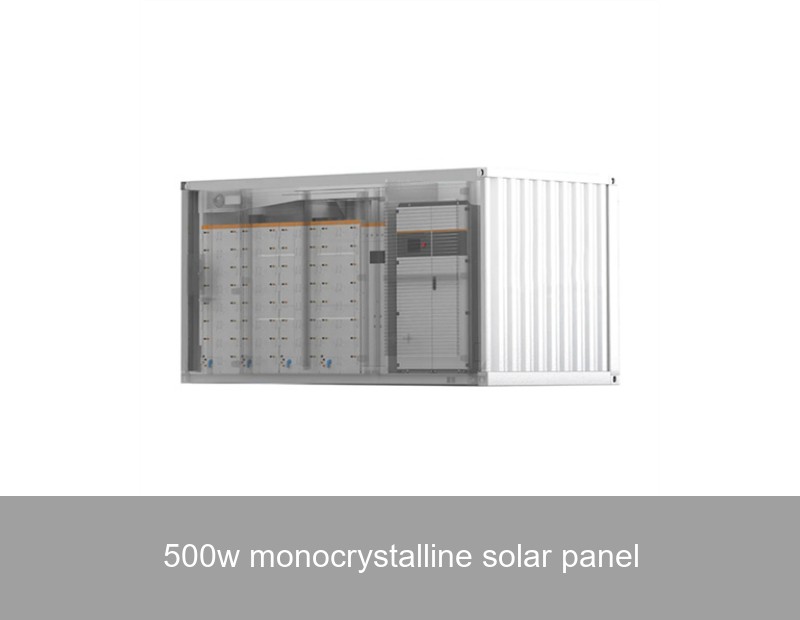
If you're exploring solar options for your home or business, you've likely encountered a dizzying array of specifications. Among them, one term is gaining significant traction: the 500w monocrystalline solar panel. But what does this number really mean for you? Simply put, it represents a leap in solar technology, packing more power-generating capability into a single panel than ever before. For homeowners with limited roof space, businesses aiming to maximize on-site generation, or anyone seeking a faster return on their green investment, understanding this technology is key. This isn't just about a panel; it's about a smarter, more efficient approach to harnessing the sun, perfectly complemented by intelligent energy storage and management systems.
Why a 500W Monocrystalline Solar Panel is a Game Changer
Traditional residential solar panels often ranged between 250W and 370W. The jump to 500W+ is substantial. This increase is primarily driven by advances in monocrystalline silicon cell technology, specifically the use of PERC (Passivated Emitter and Rear Cell), half-cut cells, and multi-busbar designs. These innovations reduce energy loss, improve light capture, and enhance the panel's durability. The core benefit? Power density. You generate the same amount of electricity using fewer panels.
- Space Efficiency: Perfect for roofs with spatial constraints or complex layouts.
- Reduced Balance-of-System Costs: Fewer panels mean less racking, fewer connectors, and potentially lower installation labor.
- Higher System Voltage: Allows for shorter string lengths to achieve optimal operating voltage, which can minimize power loss in wiring.

Image Source: Unsplash (Professional photography of solar panels)
Phenomenon, Analysis, Solution: The 500W Panel in Action
Let's break down the real-world impact of this technology using a clear problem-solving framework.
The Phenomenon: Rooftop Space is Limited, Energy Needs Aren't
Across Europe and the U.S., a common challenge emerges: energy bills are rising, and the desire for sustainability is growing, but physical space for solar arrays is finite. A typical suburban home might have a roof shaded partially by chimneys or dormers. A farm or small business may have a large but structurally limited barn roof. The old approach was to cover every available inch with lower-wattage panels, which could lead to higher costs and suboptimal system design.
The Data: Efficiency, Output, and ROI
Modern 500w monocrystalline solar panel units often boast efficiencies above 21%. For context, the National Renewable Energy Laboratory (NREL) tracks these advancements, showing a steady climb in commercial panel efficiency over the past decade. What does this mean on your roof? Let's compare:
| Scenario | Using 350W Panels | Using 500W Panels |
|---|---|---|
| Desired System Size | 7 kW | 7 kW |
| Panels Required | 20 panels | 14 panels |
| Estimated Roof Space | ~35 sq. meters | ~26 sq. meters |
| Potential Installation Complexity | Higher (more mounting points, wiring) | Lower (fewer components) |
The data is clear: higher-wattage panels directly address the space constraint phenomenon.
A Real-World Case: The Bavarian Dairy Farm
Consider a dairy farm in Bavaria, Germany. The goal was to offset the substantial energy costs of cooling tanks and automated milking systems. The main barn roof was large but had several skylights, limiting usable area. A system using standard 400W panels would have required intricate layout workarounds, leaving generation potential untapped.
The Solution & Outcome: The installer designed a system using 500W monocrystalline panels. By needing 24% fewer panels to achieve the same 25kW system capacity, they could easily fit the array around the skylights on the strongest roof sections. This system, paired with a Highjoule 30 kWh commercial battery storage unit, now generates over 28,000 kWh annually. It covers 65% of the farm's direct consumption, and the intelligent battery stores excess midday sun for use during the high-tariff evening hours. The farm reduced its grid energy purchases by over 40% in the first year, accelerating the project's payback period. The robustness of the monocrystalline panels also provides peace of mind against the region's harsh winters.

Image Source: Unsplash (Solar panels on agricultural building)
The Integrated Solution: Beyond the Panel Itself
Here's the crucial insight: a 500w monocrystalline solar panel is a superb engine, but to build a high-performance energy vehicle, you need the right chassis, battery, and control system. High-wattage panels can produce high currents, requiring compatible inverters and careful electrical design. More importantly, their greater output makes energy storage an even more valuable partner. Without storage, excess power generated on a sunny afternoon goes to the grid for a minimal feed-in tariff. With storage, you capture that premium energy for self-use.
Highjoule: Your Partner in Intelligent Energy Management
This is where Highjoule's expertise transforms a good solar installation into a resilient and smart energy asset. Since 2005, we've evolved from a battery specialist to a provider of complete, integrated power solutions. Our role begins where the solar panels stop.
- Highjoule HISE (Home Intelligent Storage Ecosystem): For residential clients, our HISE systems are designed to seamlessly integrate with high-power solar arrays. They don't just store energy; they use AI-driven software to learn your consumption patterns, weather forecasts, and utility rates to optimize when to charge, discharge, or hold energy.
- Highjoule C&I Grid-Flex Solutions: For businesses and industries, our scalable battery energy storage systems (BESS) ensure that the high output from your 500W panels directly reduces demand charges and provides backup power for critical operations. Our systems can be configured for peak shaving, time-of-use optimization, and even participation in grid services.
- Microgrid Controllers: For the ultimate in energy independence, Highjoule's controllers can manage a mix of solar, storage, and backup generators as a single, islandable system.
Pairing your high-efficiency 500w monocrystalline solar panel array with a Highjoule storage system means maximizing self-consumption, protecting against outages, and building a truly sustainable energy footprint.
Choosing and Maintaining Your 500W Solar System
Ready to explore this technology? Keep these points in mind:
- Compatibility First: Ensure your installer selects an inverter that can handle the higher current and voltage input of modern high-wattage panels.
- Quality Matters: Look for panels with strong warranties (often 25+ years linear performance warranty) from reputable manufacturers. The durability of monocrystalline silicon is a key advantage.
- Think Holistically: Discuss your long-term energy goals with your provider. Is backup power a priority? Do you plan to buy an EV? This will determine the ideal size of your solar array and the essential role of a storage system like Highjoule's.
- Maintenance: Thankfully, solar systems are low-maintenance. Periodic cleaning to remove dust, pollen, or snow (in colder climates) and a visual inspection for damage are usually sufficient. Your monitoring system, especially when integrated with Highjoule's platform, will alert you to any performance dips.
The Future is Bright and Efficient
The shift towards higher-wattage panels like the 500w monocrystalline solar panel is more than a technical trend; it's a response to our collective need for efficient, decentralized, and resilient power. As panel efficiencies continue to creep upward, supported by ongoing research documented by institutions like the Fraunhofer Institute for Solar Energy Systems, the integration with smart storage and software will become the default standard for a modern energy system.
What energy challenge could you solve if your roof could generate 30% more power from the same footprint, and you had a smart system to store every kilowatt-hour for when you truly need it?
 Inquiry
 Online Chat