


Choosing the Right Supplier of Lithium ESS: A Guide for Energy Resilience
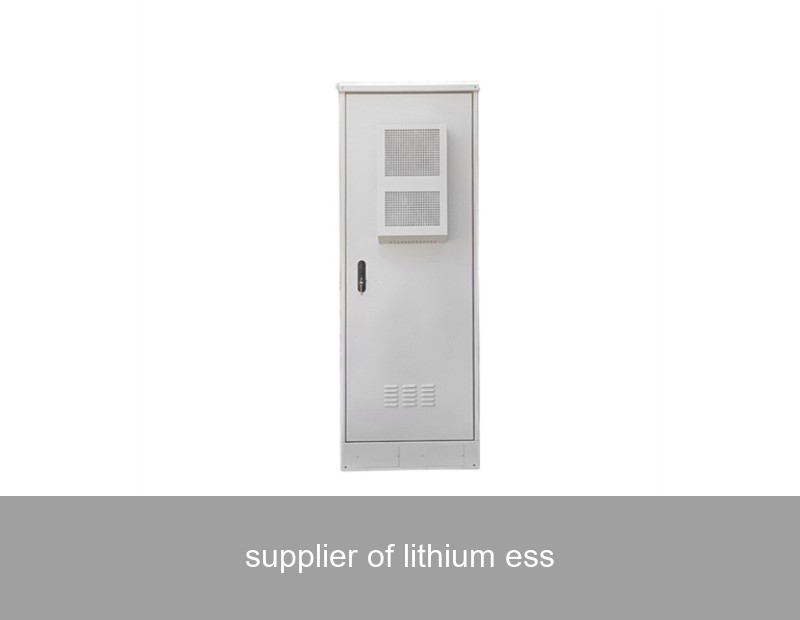
As electricity grids face increasing pressure and energy costs remain volatile, businesses and communities are turning to a powerful solution: the Lithium-Ion Energy Storage System (ESS). But the success of your project hinges on a critical decision—selecting the right supplier of lithium ESS. This isn't just about buying batteries; it's about forming a partnership for long-term energy security and operational efficiency. Let's explore what truly matters when evaluating a provider.
Table of Contents
- The Phenomenon: From Passive Consumer to Active Prosumer
- The Data: Why Lithium ESS is the Dominant Choice
- The Case Study: A European Logistics Hub's Transformation
- The PAS Framework: Problem, Agitation, Solution
- Key Criteria for Your Lithium ESS Supplier
- The Highjoule Approach: Intelligence Beyond the Battery
- Building a Future-Ready Energy Asset
The Phenomenon: From Passive Consumer to Active Prosumer
Gone are the days when managing energy meant simply paying the monthly bill. Today, forward-thinking organizations are becoming "prosumers"—both producing and consuming energy intelligently. The catalyst for this shift is the advanced lithium ESS. It acts as the central nervous system for your energy footprint, allowing you to store solar power, avoid peak demand charges, provide backup power, and even participate in grid services. However, the market is flooded with options. How do you distinguish a true partner from a mere box seller?
The Data: Why Lithium ESS is the Dominant Choice
The numbers speak volumes. Lithium-ion technology has become the standard for stationary storage, commanding over 90% of the global grid-scale battery market. Why? Compared to older technologies, it offers superior energy density, longer cycle life (often 6,000+ cycles to 80% capacity), and faster response times (milliseconds). For a commercial operation, this translates to a higher return on investment and a smaller physical footprint. But not all lithium systems are created equal. The chemistry (LFP, NMC), system design, and software intelligence create a vast performance gap.

Image Source: Unsplash. Professional monitoring and control software is a key differentiator for a premium lithium ESS supplier.
The Case Study: A European Logistics Hub's Transformation
Consider the real-world challenge faced by a major logistics center in Rhineland, Germany. Their issues were twofold: skyrocketing peak demand charges that eroded profitability, and a need for reliable backup to maintain cold storage operations. They partnered with a seasoned supplier of lithium ESS—Highjoule—to deploy a 1.2 MWh integrated storage system coupled with their existing rooftop solar.
The results, quantified over 12 months, were compelling:
| Metric | Before ESS | After ESS | Change |
|---|---|---|---|
| Peak Demand from Grid | 850 kW | 520 kW | -38% |
| Solar Self-Consumption | 65% | 98% | +33% |
| Energy Cost Savings | Baseline | €72,000 annually | Significant Reduction |
| Backup Power for Critical Loads | None (Diesel Genset only) | Up to 4 hours | Enhanced Resilience |
This case highlights that the right supplier delivers more than hardware; they deliver a tailored financial and operational outcome. The system's AI-driven software predicts consumption patterns and automatically dispatches storage to shave peak loads, turning a cost center into a strategic asset.
The PAS Framework: Problem, Agitation, Solution
Let's break down the decision process using the PAS (Problem, Agitation, Solution) framework.
Problem: Unpredictable energy costs, grid instability, and sustainability targets are pressing concerns for facility managers and business owners.
Agitation: Without action, these problems directly hit the bottom line. Peak demand charges can constitute up to 50% of a commercial electricity bill. Grid outages halt production and cause data loss. Furthermore, fossil-fuel-based backup is noisy, polluting, and increasingly socially and regulatory frowned upon. A poorly chosen storage system can exacerbate these issues with safety risks, underperformance, and lack of support.
Solution: A meticulously engineered lithium ESS from a supplier with proven expertise in system integration, software, and long-term service. The solution must be holistic.
Key Criteria for Your Lithium ESS Supplier
When vetting a supplier of lithium ESS, move beyond spec sheets. Evaluate these pillars:
- Core Technology & Safety: Do they use top-tier LiFePO4 (LFP) cells for enhanced safety and longevity? Is the system design compliant with stringent local codes (like UL 9540 in the US, CE in Europe)?
- System Intelligence: The hardware stores energy, but the software unlocks value. Can it perform multiple revenue-grade applications (peak shaving, frequency response, solar time-shift) simultaneously?
- Integration & Scalability: Can the system seamlessly integrate with existing solar, generators, and building management systems? Can you easily add capacity later?
- Warranty & Support: Look for a comprehensive performance warranty (e.g., 10 years, 70% capacity retention) and a clear, proactive remote monitoring and maintenance plan.

Image Source: Unsplash. Modular, well-designed battery racks are a hallmark of a scalable and serviceable ESS.
The Highjoule Approach: Intelligence Beyond the Battery
At Highjoule, our philosophy as a global supplier of lithium ESS is that storage should be an intelligent, adaptive asset. Since 2005, we've evolved from providing components to delivering turnkey, smart energy ecosystems. Our flagship product, the Highjoule HiveStack™, embodies this.
The HiveStack™ is more than a battery cabinet. It's an integrated platform featuring:
- Adaptive LFP Chemistry: Prioritizing safety and cycle life without compromising performance.
- Neuron™ AI Software: This brain of the system uses machine learning to optimize every kilowatt-hour for maximum economic return. It can forecast weather, load, and grid conditions to make real-time decisions.
- Modular Architecture: Starting from 100 kWh, systems can be scaled modularly to multi-megawatt installations, perfect for both commercial/industrial sites and microgrids.
- Global Service Network: With 24/7 monitoring hubs in the EU and North America, we provide predictive maintenance and remote support, ensuring your system performs for its entire lifespan.
Our services encompass initial consultancy and feasibility studies, custom engineering, grid interconnection support, and long-term performance management. We become an extension of your team.
Building a Future-Ready Energy Asset
The transition to a resilient, low-carbon energy system is accelerating. Policies like the EU's REPowerEU plan and the U.S. Inflation Reduction Act are creating powerful incentives for energy storage adoption. Choosing your supplier is a strategic decision that will impact your operations for the next decade or more.
So, as you evaluate potential partners, ask yourself: Are they providing a commodity product, or are they co-designing an intelligent energy solution tailored to your specific financial and operational goals? The difference defines the value you will capture.
What is the single largest energy cost driver in your facility today, and how might an intelligently managed storage system address it?
 Inquiry
 Online Chat