


The Complete Guide to a 5kW PV Anlage mit Speicher: Your Path to Energy Independence
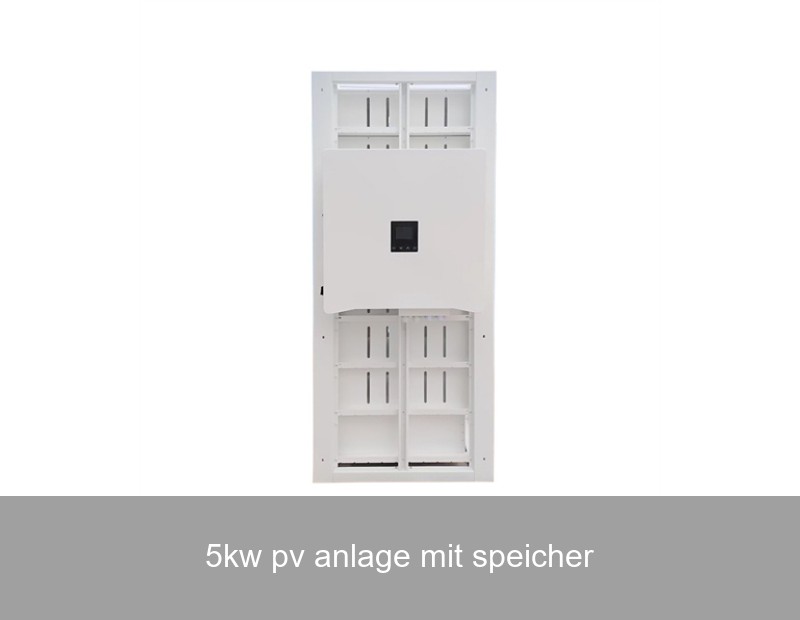
If you're a homeowner in Europe or the US looking to take control of your energy bills and reduce your carbon footprint, you've likely heard the term 5kW PV Anlage mit Speicher. This powerful combination—a 5-kilowatt photovoltaic (PV) solar panel system paired with a battery storage unit—is rapidly becoming the gold standard for residential energy independence. But what does it really offer, and is it the right fit for your home? Let's demystify this technology and explore how it can transform your relationship with energy.
The Energy Independence Phenomenon: Why Now?
Across neighborhoods from Bavaria to California, a quiet revolution is happening on rooftops. The drive isn't just about being green anymore; it's a pragmatic response to soaring electricity prices and a desire for resilience. A 5kW PV system with storage moves you from being a passive consumer to an active energy manager. You generate clean power during the day, use what you need, and store the excess for use in the evening or during grid outages. This simple shift dramatically increases your self-consumption rate—the percentage of your solar energy you use directly—from around 30-40% with solar alone to 70% or more with a battery.

Image: A typical residential setup for energy independence. Source: Unsplash
Breaking Down the Numbers: Capacity, Output, and Savings
Let's get specific. A 5kW PV Anlage refers to the peak power output of the solar panels under ideal conditions. In reality, its annual yield depends heavily on your location.
| Region | Estimated Annual Generation (kWh) | Equivalent to* |
|---|---|---|
| Southern Germany / Central Europe | 4,500 - 5,200 kWh | ~125% of a typical 4-person household's consumption |
| Southern USA (e.g., Arizona) | 7,000 - 8,000 kWh | ~170% of a typical US household's consumption |
| Northern USA (e.g., New York) | 5,500 - 6,200 kWh | ~135% of a typical US household's consumption |
*Based on average household consumption of ~4,000 kWh in Germany and ~4,500 kWh in the USA. Source: U.S. Energy Information Administration and BDEW (German Association of Energy and Water Industries).
The "Speicher" (storage) component is typically sized between 5 kWh and 10 kWh of usable capacity. A 10 kWh battery can store enough energy to power a typical home through the night. The magic happens when you pair them: instead of selling excess midday solar back to the grid at a low feed-in tariff, you save it for your own high-demand periods, effectively buying electricity from yourself at the much higher retail rate you would have paid.
Real-World Case Study: The Schmidt Family in Freiburg, Germany
Let's look at concrete data. The Schmidt family installed a 5kW PV system with a 8.2 kWh Highjoule HomePower battery in 2022. Their goal was to maximize self-consumption after their feed-in tariff contract expired.
- System: 5.2 kWp PV array, Highjoule HomePower 8.2 lithium-ion battery, smart energy manager.
- Before Storage (2021): Solar self-consumption rate: 38%. Grid electricity purchased: 3,200 kWh.
- After Storage (2023): Solar self-consumption rate: 82%. Grid electricity purchased: 890 kWh.
- Financial Impact: With an electricity price of €0.35/kWh, their annual savings increased by over €800. The system also provided backup power during two brief grid outages.
- Carbon Impact: They reduced their grid-sourced CO2 emissions by approximately 72%.
This case highlights the transformative impact of adding intelligent storage. The Schmidts are now exploring adding an EV charger, knowing their system can be optimized to handle the extra load.
Choosing the Right Storage: The Heart of Your System
The battery is not a commodity. Its chemistry, management system, and integration define your experience. Lithium Iron Phosphate (LFP) has become the dominant chemistry for home storage due to its superior safety, longevity (often 6,000+ cycles), and stable performance. When evaluating a 5kW PV Anlage mit Speicher, ask these questions:
- Usable Capacity vs. Total Capacity: Can you access 100% of the battery's energy, or is some held in reserve?
- Depth of Discharge (DoD): A higher DoD (like 95%) means you can use more of the battery's stored energy without harming it.
- Power Rating: Can the battery deliver enough power (in kW) to run multiple high-load appliances simultaneously?
- System Intelligence: Does it have weather forecasting and learning algorithms to optimize charge/discharge cycles?
Highjoule's Integrated Solution: Smart Energy, Made Simple
This is where Highjoule's expertise shines. Since 2005, we've focused on creating seamless, intelligent storage solutions that are more than just a battery in a box. For a robust 5kW PV Anlage mit Speicher, our HomePower Series is the ideal companion.
The Highjoule HomePower is an LFP-based system designed with the homeowner in mind. Its modular design allows for capacities from 5 kWh to 20 kWh, making it a perfect match for a 5kW solar array. What sets it apart is the Highjoule Energy Operating System (EOS). This AI-driven platform doesn't just react; it predicts. By integrating local weather forecasts and learning your household's consumption patterns, EOS autonomously decides the most economical time to store solar energy, draw from the grid (when rates are low), or even provide backup power.
For homeowners with existing solar, our systems are designed for easy retrofit. For new installations, we partner with certified installers to provide a turnkey PV and storage package, ensuring perfect compatibility and peak performance from day one.

Image: A sleek, wall-mounted home battery system. Source: Unsplash
Key Considerations for Installation and Incentives
Installing a 5kW PV system with storage is a significant investment with long-term rewards. Key steps include:
- Site Assessment: A professional will evaluate your roof's orientation, shading, and structural integrity.
- Energy Audit: Understanding your consumption profile is crucial for sizing the battery correctly.
- Grid Connection Approval: In most regions, you must notify your grid operator. Highjoule's certified installers handle this paperwork.
- Financial Incentives: In the US, the federal Investment Tax Credit (ITC) now applies to standalone storage and solar+storage projects. In Germany, KfW loans and various state programs support storage adoption. These incentives can substantially reduce the payback period.
Future-Proof Your Investment: The E-Mobility and Smart Home Link
A 5kW PV Anlage mit Speicher is the foundation of a modern, resilient home. The next logical step is integrating electric vehicle charging. With a Highjoule system, you can set your EV to charge only when your solar panels are producing excess power or when grid electricity is cheapest, effectively "fueling" your car for pennies. This integration turns your car into an extension of your home energy system.
As we move towards more dynamic electricity markets and time-of-use tariffs, the ability of your system to intelligently interact with the grid will become even more valuable. Will your system be ready to participate in virtual power plants or demand-response programs?
Your journey to energy independence starts with a single question: What is the first step you'll take to understand your home's true energy potential?
 Inquiry
 Online Chat