


Banco de Baterías para Casa: Your Complete Guide to Home Energy Independence
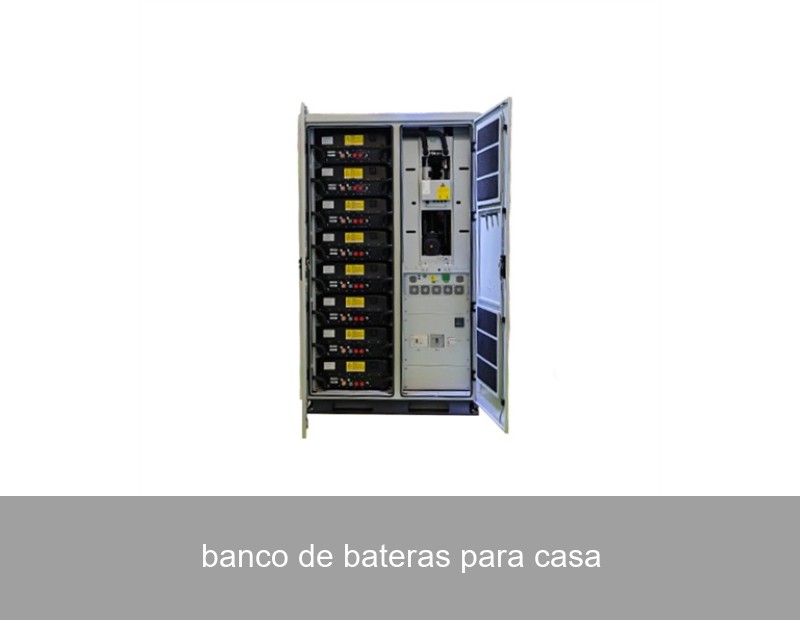
Imagine a storm knocks out the power in your neighborhood. While others are left in the dark, your home's lights, refrigerator, and internet hum along steadily. This isn't magic; it's the power of a modern banco de baterías para casa—a home battery bank. For homeowners across Europe and the U.S., this technology is rapidly shifting from a luxury to a central pillar of a resilient, efficient, and sustainable household. But what exactly is it, and how can it transform your relationship with energy? Let's unpack the phenomenon that is reshaping home energy management.
Why Home Battery Storage is Booming Now: More Than Just Backup
The surge in home battery systems isn't happening in a vacuum. It's a direct response to a perfect storm of market forces and technological advancement. On one hand, electricity prices in regions like Germany and California have seen significant volatility and upward trends. On the other, the cost of lithium-ion batteries has plummeted by over 80% in the last decade, making them more accessible than ever. But the real catalyst? The synergy with rooftop solar. A solar panel system generates power when the sun shines, often during the day when you're not home. Without a battery, excess energy is sent back to the grid for a small credit. A home battery bank captures that surplus, storing it for use in the evening peak when grid rates are highest or during an outage. This simple shift turns a solar home from a partial solution into a nearly self-sufficient energy powerhouse.

Source: Unsplash (Representative image of a home energy system)
Key Components of a Modern Home Battery System
Understanding the key parts of a home battery system demystifies its operation. It's more than just a box of batteries.
- The Battery Modules: The heart of the system. Modern systems typically use Lithium Iron Phosphate (LFP) chemistry, prized for its long life, safety, and stability. Capacity is measured in kilowatt-hours (kWh), indicating how much energy it can store.
- The Battery Inverter/Controller: The brain. This critical component manages the flow of electricity—directing solar energy to charge the batteries, converting stored DC power to AC for your home appliances, and ensuring the system seamlessly switches to backup power during a grid failure.
- The Energy Management System (EMS): The strategy. This intelligent software learns your consumption patterns, weather forecasts, and utility rate schedules to optimize when to charge and discharge your battery, maximizing your savings and self-consumption.
This is where expertise matters. As a global leader since 2005, Highjoule integrates these components into seamless, intelligent solutions. Our Highjoule HPS Series for residential use is built with modular LFP battery packs and features our proprietary Adaptive Grid Intelligence software. This system doesn't just store energy; it actively manages it, allowing homeowners to set preferences for cost savings, backup priority, or green energy usage, all monitored via a simple smartphone app.
Technical Specifications at a Glance
| Feature | Typical Entry System | Highjoule HPS Mid-Range Model | Whole-Home Backup Solution |
|---|---|---|---|
| Usable Capacity | 5 - 10 kWh | 13.5 kWh | 20+ kWh (modular) |
| Continuous Power | 3-5 kW | 7.6 kW | 10+ kW |
| Chemistry | Lithium-ion | Lithium Iron Phosphate (LFP) | LFP |
| Scalability | Fixed | Modular, expandable | Fully modular |
| Warranty | 10 years | 15 years | 15+ years |
A Real-World Case Study: The Johnson Family in Sacramento, California
Let's move from theory to practice. The Johnson family installed a 8 kW solar array with a 13.5 kWh Highjoule HPS battery bank in early 2022. Their goals were clear: reduce their reliance on the grid, gain protection from Public Safety Power Shutoffs (PSPS), and cut their electricity bill.
- Solar Self-Consumption Rate: Increased from 35% (without battery) to 85% (with battery).
- Grid Energy Import: Reduced by 78% during summer months.
- Bill Savings: Achieved an average monthly bill reduction of 92% from April to October, including escaping peak-time charges of over $0.50/kWh.
- Backup Events: The system provided uninterrupted power during 4 grid outages, the longest lasting 9 hours.
The Insight: For the Johnsons, the battery bank transformed their solar investment. Instead of just offsetting costs, it provided predictable energy expenses and priceless peace of mind. "The system paid for itself during a heatwave when everyone was cranking AC," noted Mr. Johnson. "Our home was cool, and our bill was barely a blip." This case mirrors experiences for homeowners in Spain and Italy, where time-of-use tariffs make shifting energy consumption highly valuable.

Source: Unsplash (Representative image of a professional home battery installation consultation)
Choosing the Right System for Your Home: Key Questions to Ask
Selecting a banco de baterías para casa is a significant decision. Asking the right questions ensures you get a system tailored to your needs, not an off-the-shelf product.
- What are your primary goals? Is it bill savings, backup power for essential loads, or maximizing your renewable footprint?
- What is your home's energy profile? Review your utility bills to understand your daily and seasonal consumption (in kWh). A professional installer from a company like Highjoule will conduct a detailed audit.
- Is the system modular and future-proof? Can you add more battery capacity if you buy an electric vehicle or your needs change? Highjoule's modular design allows for easy expansion.
- How is the system integrated and managed? A unified system with a single point of control, like Highjoule's platform, is far more reliable and user-friendly than a patchwork of components from different manufacturers.
Highjoule's approach goes beyond hardware. We provide a comprehensive service package including site assessment, system design, professional installation by certified partners, and ongoing performance monitoring. Our systems are designed for the diverse grid standards and climate conditions found across Europe and North America, ensuring compliance and reliability.
The Future of Home Energy Management: The Grid-Interactive Home
The evolution of the home battery bank is leading us toward the grid-interactive home. In the near future, aggregated home batteries could form "virtual power plants" (VPPs), where utilities can call upon stored energy in thousands of homes to stabilize the grid during high demand, rewarding participants. Technologies like vehicle-to-home (V2H) will allow your electric car to power your house. The home battery is the foundational hub for this coming innovation.
For authoritative information on battery technology trends and grid integration, you can refer to resources from the U.S. Department of Energy and the International Renewable Energy Agency (IRENA).

Source: Unsplash (Representative image of home energy management software)
So, as you consider taking control of your energy future, what will be the first load you want to secure when the grid goes down, and how would you design your home's energy ecosystem if you had the perfect partner to guide you?
 Inquiry
 Online Chat