


Understanding the 60 kWh Lithium Ion Battery Price: A Smart Investment for Your Energy Future
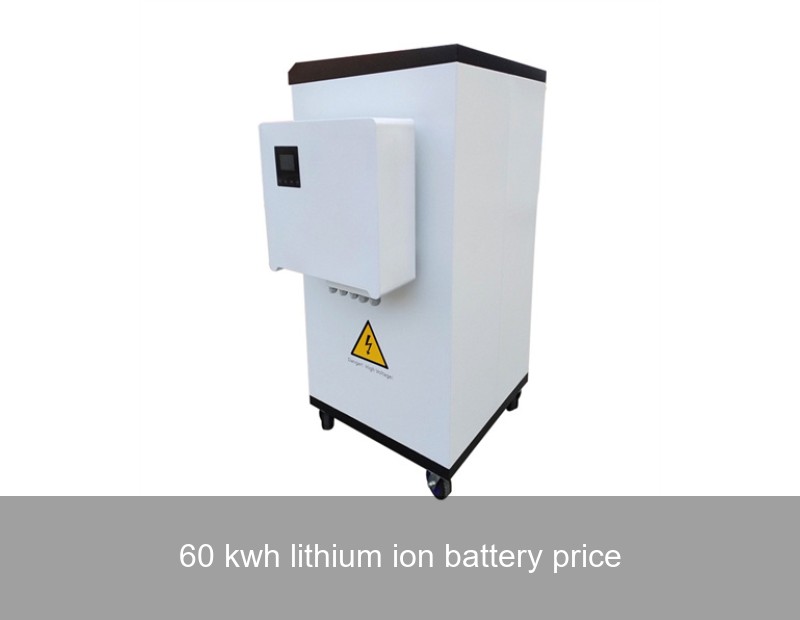
If you're exploring energy storage, you've likely encountered the "60 kWh lithium ion battery" as a common benchmark. But the price tag you see is more than just a number—it's a gateway to energy independence, resilience, and long-term savings. For homeowners and business managers across Europe and the U.S., understanding what drives the cost of a 60 kWh lithium-ion battery system is the first step in making a savvy investment. In this article, we'll demystify the pricing factors, showcase real-world value, and explain how companies like Highjoule deliver solutions where the true worth extends far beyond the initial quote.
The Real Breakdown of a 60 kWh Battery Price
Let's be clear: when you ask for the 60 kWh lithium ion battery price, you're rarely paying for just the battery cells. Think of it like buying a car. The sticker price includes the engine (battery modules), but also the transmission, safety systems, and interior features. A complete energy storage system (ESS) includes:
- Battery Modules: The core lithium-ion cells that store energy.
- Battery Management System (BMS): The "brain" that ensures safety, balance, and longevity.
- Power Conversion System (PCS): The inverter/charger that converts DC battery power to AC for your home or business.
- Thermal Management System: Crucial for maintaining optimal temperature, impacting performance and lifespan.
- Enclosure & Safety Hardware: The physical cabinet, integrated fire suppression, and disconnects.
- Software & Connectivity: The intelligence for monitoring, control, and optimizing energy use.
As a leading provider since 2005, Highjoule engineers all these components to work in seamless harmony. Our H-Series Commercial and Industrial ESS platforms, for instance, are designed as integrated solutions, not just battery packs. This holistic approach ensures reliability, which over a 15-20 year lifespan, is far more critical than shaving a few cents off the initial per-kWh cell cost.
Key Factors Influencing Your System's Cost
Why might one 60 kWh system quote differ from another by thousands? Several market and technical factors are at play.
| Factor | Impact on Price | Why It Matters |
|---|---|---|
| Cell Chemistry | High | Lithium Iron Phosphate (LFP) is now dominant for stationary storage due to its superior safety, longer cycle life (>6000 cycles), and stability, often justifying a premium over older NMC chemistries. |
| System Integration & Intelligence | High | A "dumb" battery is a liability. Advanced software for peak shaving, solar self-consumption optimization, and grid services (like frequency response) adds significant value and cost. |
| Installation & Grid Interconnection | Variable | Site-specific electrical work, permits, and utility fees in the U.S. or EU can add 20-40% to the equipment cost. Highjoule's network of certified partners streamlines this process. |
| Scalability & Modularity | Medium | Can you easily add more capacity later? Modular systems, like Highjoule's residential EcoNode series, offer future-proofing but may have a different initial cost structure. |
| Warranty & Support | Medium | A robust 10+ year warranty with guaranteed end-of-life capacity (e.g., 70% after 10 years) reflects quality and protects your investment. |
According to a 2023 analysis by the U.S. Department of Energy's National Renewable Energy Laboratory (NREL), the installed cost for commercial battery storage systems has been falling, but software and integration costs are becoming a larger share of the total value.

Integrated systems at commercial sites, like those powered by Highjoule solutions, manage energy flow between solar, storage, and the grid.
The Highjoule Difference: Value Beyond the Price Tag
At Highjoule, we believe the right metric isn't just "cost per kWh," but "value per cycle over the system's lifetime." Our focus on intelligent, durable systems transforms the battery from a cost center into a revenue-generating or cost-saving asset.
For our residential customers, the EcoNode Home system isn't just about backup power. Its AI-driven energy management learns your household patterns, maximizing solar self-consumption to slash electricity bills. For businesses, our H-Series platform is engineered for rigorous duty cycles. Its advanced thermal management ensures consistent performance in both a sweltering Texas summer and a cold German winter, directly impacting long-term ROI by preserving battery health.
Our global service network provides proactive monitoring and support, a critical but often overlooked component of total cost of ownership. A cheaper system without reliable support can become the most expensive purchase you ever make.
Case Study: A German Bakery's Recipe for Savings with a 60 kWh System
Let's look at a real example from Bavaria, Germany. Bäckerei Schmidt (name used with permission) faced high demand charges and wanted to stabilize operations amid volatile energy prices. Their mid-morning production peak strained the local grid and their budget.
- Challenge: Reduce peak grid demand, increase solar consumption from existing rooftop PV, and ensure power quality for sensitive baking equipment.
- Solution: Highjoule installed a 60 kW / 60 kWh H-Series C&I system with integrated peak shaving software and grid-interactive capabilities.
- Results (Data after 12 months):
- Peak Demand Reduction: 40%, leading to direct savings on grid capacity fees.
- Solar Self-Consumption: Increased from 35% to over 80%.
- ROI Timeline: Projected payback period of 6.5 years, based on energy savings and participation in a local grid flexibility program.
- Unplanned Benefit: The system's voltage stabilization eliminated minor production stoppages in delicate pastry machinery.
This case mirrors findings from the European Association for Storage of Energy (EASE), highlighting that commercial storage ROI often comes from combining multiple value streams: energy arbitrage, peak shaving, and grid services.

Professional installation and ongoing maintenance are key to realizing the full value of a battery storage investment.
Making the Right Decision for Your Needs
So, how should you approach the purchase of a 60 kWh lithium-ion battery system? First, shift the conversation from price to purpose. Are you seeking emergency backup, bill reduction, sustainability goals, or a combination? A reputable provider like Highjoule will start with an energy audit and needs assessment, not just a product catalog.
Ask detailed questions about cycle life warranties, degradation rates, and the software's capabilities. Inquire about the supplier's track record with projects of similar scale in your region. For instance, our experience navigating the Irish DS3 grid services program or California's SGIP incentive program is invaluable for clients in those markets.
Your Next Step: From Curiosity to Clarity
The landscape of energy storage is exciting but complex. The true cost of a 60 kWh system is a function of the value it creates for you over decades. At Highjoule, we're committed to providing that clarity—transparent proposals, detailed financial modeling, and solutions built to last.
What specific energy challenge is driving your search today, and how could a smart, integrated storage system transform that challenge into an opportunity for your home or business?
 Inquiry
 Online Chat