


Acumuladores de Calor para Placas Solares: Maximizing Your Solar Investment Beyond Electricity
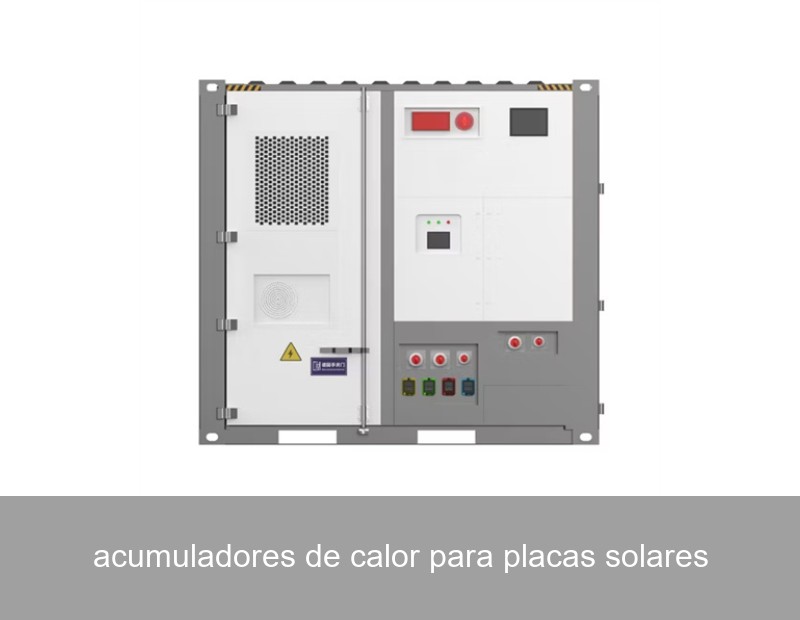
You've made the smart move to solar panels. Your electricity bills are dropping, and your carbon footprint is shrinking. But on a chilly evening, you're still cranking up the gas or electric heater. That's when a question arises: Is my solar system only for powering lights and appliances? The answer is a resounding no. The next frontier in renewable self-sufficiency lies in acumuladores de calor para placas solares – thermal energy storage systems that capture and store the sun's heat for later use. This technology transforms your photovoltaic (PV) system from a pure electricity generator into a comprehensive home energy solution, tackling one of the largest energy demands: heating.
The Solar Dilemma: When the Sun Goes Down
Here's a common phenomenon for solar panel owners, especially in cooler climates across Europe and the Northeastern US. Your panels peak at noon, but your heating needs peak in the early morning and evening. This creates a frustrating mismatch. According to the International Energy Agency (IEA), heating accounts for nearly half of global final energy consumption in buildings. Relying on the grid for this heat, often generated by fossil fuels, undermines the full environmental and economic potential of your solar investment.

Image Source: Unsplash - Illustrating the time mismatch between solar production and heating demand.
What Are Heat Accumulators for Solar Panels?
Think of a heat accumulator (or thermal battery) as a "thermos for your house," but far more sophisticated. While your PV panels convert sunlight into electricity, these systems capture excess thermal energy—either directly from solar thermal collectors or from surplus PV electricity—and store it in a medium like water, ceramic, or phase-change materials. This stored heat is then released on demand to provide space heating, domestic hot water, or even underfloor heating.
The key advantage? Time-shifting solar energy. You're no longer constrained to using heat only when the sun shines. You can harvest summer sun to warm your winter mornings.
How It Works: From Photons to Warmth
The process can be implemented in two primary ways:
- Direct Solar Thermal Systems: Dedicated solar thermal collectors (often evacuated tubes) heat a fluid that circulates into a heavily insulated water storage tank—the accumulator. This is a direct, highly efficient method for heating water.
- PV-Powered Electric Thermal Storage: This is where it gets exciting for modern PV owners. Your solar panels produce DC electricity. An inverter converts it to AC for home use. Any surplus can be intelligently diverted by an energy management system to power electric heating elements (like immersion heaters) within a thermal storage unit. Instead of sending all excess back to the grid at a low feed-in tariff, you store it as valuable, high-grade heat for yourself.
| Feature | Traditional PV-Only System | PV System with Heat Accumulator |
|---|---|---|
| Energy Use | Electricity only | Electricity + Heat |
| Self-Consumption | Typically 30-50% | Can exceed 70-80% |
| Impact on Heating Bill | Minimal | Significant Reduction |
| Year-Round Value | Lower in winter | Consistently high, especially in winter |
Real-World Case Study: A German Dairy Farm
Let's look at concrete data. A medium-sized dairy farm in Bavaria, Germany, faced high costs for heating water to clean milking equipment and provide warm water for calves. They had a 50 kWp rooftop PV system but were exporting most surplus energy in summer.
The Solution: They installed a 5,000-liter high-capacity acumulador de calor, integrated with a smart controller that prioritized using PV surplus for heating. The system included an electric heating element and was linked to their existing boiler as a backup.
- PV Self-Consumption Rate: Increased from 41% to 78%.
- Heating Energy from PV: Covered 65% of their annual low-temperature hot water needs.
- Natural Gas Consumption: Reduced by approximately 2,800 cubic meters per year.
- CO2 Savings: An additional 5.6 tonnes annually, on top of their PV savings.
- Payback Period: Achieved in under 6 years thanks to high German gas prices and intelligent energy routing.
This case, documented in part by the Fraunhofer Institute for Solar Energy Systems (ISE), highlights the tangible impact for commercial operations.
Beyond the Basics: Integration with Modern Energy Systems
The true potential of thermal storage is unlocked when it's not a standalone unit, but a core component of an integrated energy ecosystem. This is where expertise in system design becomes critical. An advanced system connects:
- PV Generation
- Electrical Battery Storage (for overnight electricity)
- Thermal Storage (for heat and hot water)
- Smart Energy Manager (the "brain")
The smart manager makes real-time decisions: Should this kilowatt-hour of solar power charge the lithium battery, heat the water tank, or be exported to the grid? It optimizes for cost, comfort, and carbon footprint automatically.
The Highjoule Approach: Smart, Integrated Thermal Management
At Highjoule, with nearly two decades of experience as a global energy storage provider, we view acumuladores de calor as a vital piece of the decarbonization puzzle. Our solutions go beyond simple tanks. Our Highjoule Energy Hub platform is designed to seamlessly integrate thermal storage with our proven lithium-ion battery systems and advanced inverter technology.
For instance, our HJT-300 Thermal Store is engineered for high-efficiency coupling with PV systems. It features intelligent controls that communicate directly with Highjoule's battery inverters, creating a unified strategy for managing all your energy assets. Whether for a large residential property in California, an off-grid cabin in Sweden, or a small hotel in Italy, our systems are configured to maximize the utility of every kilowatt-hour you generate.

Image Source: Unsplash - Representing a modern, integrated home energy system with storage.
We specialize in tailoring these hybrid systems for commercial, industrial, and microgrid applications, where scale amplifies the savings. By combining electrical and thermal storage, businesses can achieve unprecedented levels of energy independence and resilience against price volatility.
Is a Solar Heat Accumulator Right for Your Home or Business?
So, how do you decide? Consider these factors:
- Your Climate: Colder regions with significant heating seasons see the fastest return.
- Your Current Heating Fuel: If you rely on expensive propane, oil, or electric resistance heating, the economics are very favorable.
- Your PV System Size: Do you regularly have a surplus of solar generation? A monitoring system can tell you.
- Your Hot Water Demand: Large families or businesses with high hot water use are ideal candidates.
The journey to full energy independence isn't just about generating more power—it's about storing and using it in its most useful forms, precisely when you need it. As you contemplate the next step for your solar investment, ask yourself this: What if the warmth in your home tonight could come directly from yesterday's sunshine?
 Inquiry
 Online Chat