


The Age to Microgrid Controller: Why Modern Energy Management Demands Intelligent Control
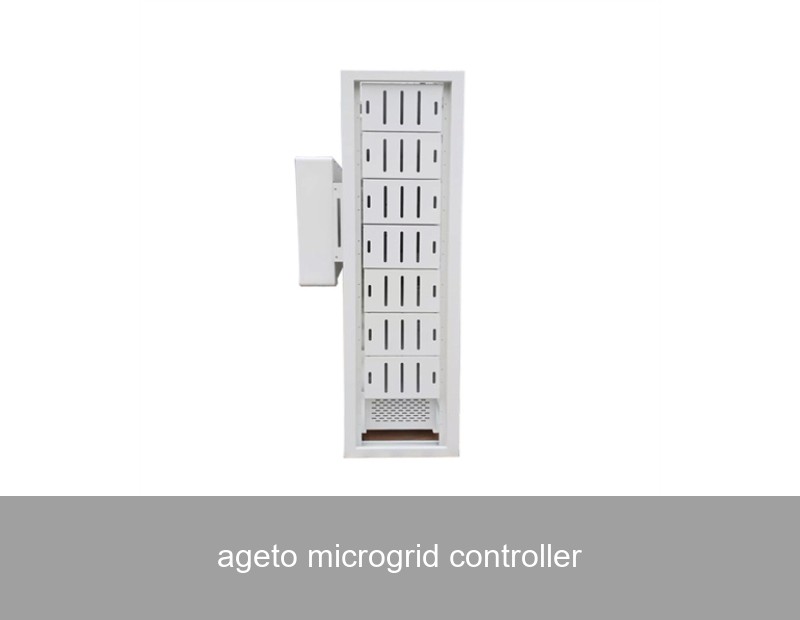
For decades, our relationship with energy was simple: a one-way street from a centralized power plant to our homes and businesses. But as we transition into a new age—an age defined by renewable energy, volatile markets, and climate resilience—this model is showing its cracks. Enter the modern microgrid controller, the indispensable "brain" that transforms a collection of energy assets into a resilient, self-optimizing power system. This isn't just an upgrade; it marks the essential shift from a passive to an active energy era. For facility managers, community planners, and business owners, understanding this transition is key to unlocking energy independence, security, and savings.
Table of Contents
- The Phenomenon: From Passive Grids to Active Hubs
- The Data: The Compelling Case for Intelligent Control
- The Case Study: A European Hospital's Journey to Resilience
- The Insight: What Truly Defines a Modern Microgrid Controller?
- The Highjoule Approach: Intelligence Engineered for Real-World Impact
- Your Next Step: Is Your Energy System Ready for This Age?
The Phenomenon: From Passive Grids to Active Hubs
Think about the traditional electrical setup. Power flows in, you use it, and you pay the bill. You're at the mercy of grid outages, price spikes, and have little visibility into your own consumption patterns. Now, layer in solar panels on the roof, a battery storage system in the garage, and maybe even an electric vehicle fleet. Suddenly, you're not just a consumer; you're a prosumer—both producing and consuming energy. This creates complexity. How do you decide when to store solar energy, when to draw from the battery, when to sell back to the grid, and when to prioritize critical loads during a blackout? Without intelligent orchestration, these assets operate in silos, failing to deliver their full potential value. This operational chaos is the very problem a sophisticated microgrid controller is designed to solve.
The Data: The Compelling Case for Intelligent Control
The move to microgrids with advanced controllers isn't just theoretical; it's driven by hard economics and reliability data. Consider these points:
- Resilience Cost: Power outages cost the U.S. economy an estimated $150 billion annually. For a single hospital or data center, minutes of downtime can translate to millions in losses.
- Renewable Integration: The International Energy Agency (IEA) notes that effective integration of variable renewables like solar and wind is paramount for decarbonization, a task perfectly suited for adaptive microgrid controllers.
- Financial Returns: A well-controlled microgrid can reduce energy costs by 20-40% through strategies like peak shaving (reducing draw during expensive grid periods) and arbitrage (storing energy when it's cheap, using it when it's dear).

Image Source: Unsplash - Representative image of energy system monitoring
The Case Study: A European Hospital's Journey to Resilience
Let's look at a real-world application in our European target market. A regional hospital in Southern Germany faced a dual challenge: ensuring 100% uptime for life-critical equipment and managing soaring energy costs, despite having installed a sizable solar array.
The Situation: Their solar PV system often produced excess energy during midday that was sold to the grid at low feed-in tariffs, while they simultaneously drew expensive power from the grid during peak evening hours. During a brief grid disturbance, the entire facility, including operating rooms, was on emergency generators within seconds, but the transition was disruptive.
The Solution: The hospital partnered with Highjoule to implement a turnkey microgrid solution centered on our HiveMind Microgrid Controller. The system integrated their existing solar PV, added a 500 kWh Highjoule lithium-ion battery storage system, and connected all critical and non-critical load panels.
| Metric | Before HiveMind Controller | After HiveMind Controller |
|---|---|---|
| Energy Cost Savings | Baseline | 34% reduction |
| Renewable Self-Consumption | ~35% | Over 80% |
| Grid Outage Response | ~10s (Generator) | Seamless islanding (<2s) |
| CO2 Footprint Reduction | -- | Estimated 62 tonnes/year |
The HiveMind Controller continuously forecasts solar generation and hospital load, making pre-emptive decisions to charge the battery with cheap solar excess and discharge it during expensive peaks. Most importantly, it can island the facility from the grid in milliseconds, maintaining power to critical loads from the battery and solar, with the generator as a backup—all without human intervention. This is the power of moving into the intelligent age to microgrid controller.
The Insight: What Truly Defines a Modern Microgrid Controller?
Not all controllers are created equal. Moving from a simple timer or basic relay logic to a true smart controller involves several key capabilities:
- Predictive, Not Just Reactive: It uses weather forecasts and load history to plan energy moves hours or days ahead.
- Technology-Agnostic: It can communicate with and manage diverse equipment—old and new—from multiple vendors, a critical feature for real-world sites.
- Grid-Services Ready: In markets like the U.S. and parts of Europe, it can enable the microgrid to provide valuable services (like frequency regulation) back to the main grid, creating new revenue streams.
- Cybersecurity by Design: As a critical digital asset, its security protocols must be paramount, a non-negotiable in today's threat landscape.
The Highjoule Approach: Intelligence Engineered for Real-World Impact
At Highjoule, we've spent nearly two decades refining the hardware and software that make microgrids not just functional, but profoundly intelligent and profitable. Our philosophy is that the controller must be both a brilliant strategist and a rugged field operator.
Our flagship HiveMind Energy Management Platform and its embedded microgrid controller logic are the culmination of this work. It goes beyond basic optimization to offer:
- Multi-Layer Optimization: Simultaneously calculates for cost savings, carbon reduction, and resilience based on your unique priorities.
- Open-Architecture Integration: We design our systems to seamlessly integrate with your existing infrastructure, whether it's legacy generators, new EV chargers, or building management systems.
- Global Support with Local Expertise: Whether your project is in Texas or Bavaria, our team provides expert support, understanding both local grid codes and global best practices.
For a commercial or industrial entity, this translates to a system you can trust to operate autonomously, delivering a clear, measurable return on investment while future-proofing your energy assets.

Image Source: Unsplash - Representative image of a professional battery storage installation
Your Next Step: Is Your Energy System Ready for This Age?
The transition from a simple energy consumer to the operator of a sophisticated, interactive energy ecosystem is no longer a futuristic concept. The technology, exemplified by advanced microgrid controllers, is here, proven, and delivering value today. The question isn't whether this age of intelligent control will become the standard, but when you will choose to be part of it.
What single energy challenge—be it cost, reliability, or sustainability goals—would you want a system like HiveMind to solve for you first? The answer might just define your next step into a more empowered energy future.
 Inquiry
 Online Chat