


Planta Solar para Fincas: The Ultimate Guide to Powering Your Farm with Sunlight
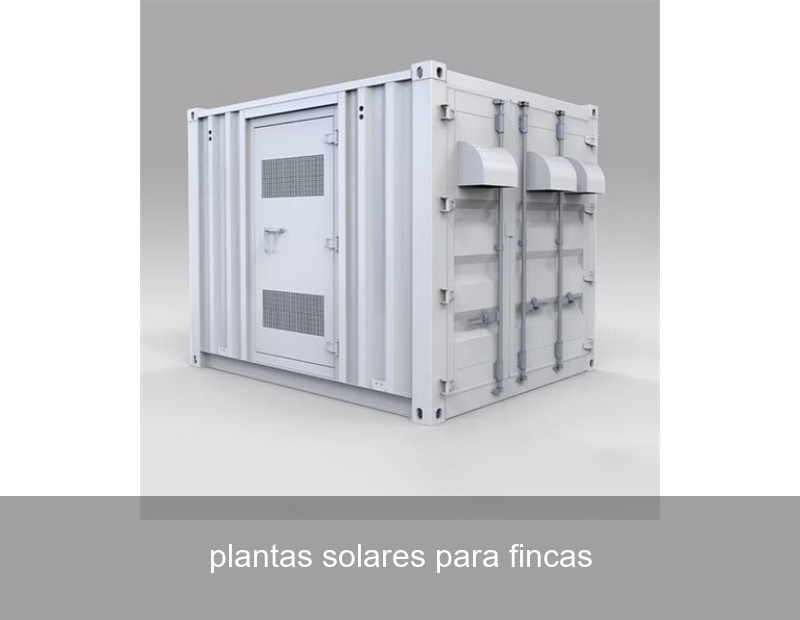
Imagine your farm operating on clean, reliable, and virtually free energy. For landowners and agricultural managers across Europe and the Americas, this is no longer a distant dream but a tangible, profitable reality. A planta solar para fincas (solar power plant for farms) is transforming agricultural operations, turning underutilized land and rooftops into powerful assets. This shift isn't just about being green; it's a strategic financial decision that directly tackles rising operational costs and energy insecurity. As a global leader in advanced energy storage, Highjoule has partnered with countless farms since 2005 to not only capture solar energy but to intelligently manage and store it, ensuring power is available precisely when and where it's needed most—day or night.
Table of Contents
- The Rural Energy Challenge: More Than Just a Bill
- Beyond Panels: The Critical Role of Energy Storage
- Case Study: An Olive Grove's Transformation
- Key Components of a Robust Farm Solar System
- The Highjoule Solution: Intelligence for Your Agricultural Microgrid
- Financial Considerations and Incentives
- Is Your Farm the Next Pioneer?
The Rural Energy Challenge: More Than Just a Bill
Farmers have always been at the mercy of nature, but now, volatile energy markets add another layer of uncertainty. The phenomenon is clear: irrigation pumps, cooling barns, milking systems, and processing facilities are energy-intensive. Grid power in remote areas can be expensive and prone to outages, a risk that can jeopardize an entire season's produce. Let's look at the data. According to the International Energy Agency (IEA), renewables are set to dominate new power capacity, with solar PV leading the charge. In the U.S., the USDA highlights that energy is one of the largest expenses for agricultural producers. The insight is straightforward: controlling your energy production is a direct path to greater operational control and profitability.
Beyond Panels: The Critical Role of Energy Storage
Here's a common misconception we see: a planta solar para fincas is just about installing rows of photovoltaic panels. While panels are the engine, the true brain and battery of the system is the energy storage solution. Solar generation peaks at midday, but your farm's energy demand might spike early in the morning for irrigation or in the evening for lighting and heating. Without storage, you're exporting excess energy at low rates and buying it back from the grid at high prices later. This is where Battery Energy Storage Systems (BESS) become a game-changer. They capture surplus solar energy, allowing you to time-shift your consumption and create a resilient, independent power supply. Think of it as canning your summer harvest to enjoy in the winter.

Image Source: Unsplash - Solar panels can be integrated into farmland without sacrificing agricultural use.
Case Study: An Olive Grove's Transformation in Andalusia, Spain
Let's make this real with a story from southern Spain. A 200-hectare olive farm faced annual electricity costs exceeding €85,000, primarily for water pumping and irrigation systems. Their grid connection was weak, causing voltage sags that threatened sensitive equipment. In 2022, they deployed a 500 kWp planta solar para fincas coupled with a 372 kWh Highjoule BESS. The results were transformative:
| Metric | Before Installation | After Installation |
|---|---|---|
| Energy Cost | ~€85,000/year | ~€12,000/year (grid backup) |
| Energy Self-Sufficiency | ~15% | ~92% |
| Grid Dependency During Peak Irrigation | 100% | <10% |
| CO2 Emissions Reduction | Baseline | Approx. 420 tons/year |
The Highjoule system was configured to prioritize solar charging of the batteries, using stored energy to power the critical irrigation pumps during the early morning and evening hours. This not only slashed costs but also guaranteed water access during grid outages, protecting the valuable crop. The project payback period was under 6 years, thanks in part to regional incentives for agricultural solar projects.
Key Components of a Robust Farm Solar System
A successful agricultural solar installation is a symphony of components working in harmony:
- Solar PV Array: The primary energy harvester, typically mounted on ground-mounted structures, rooftops, or even as solar canopies over parking or working areas.
- Inverters: Convert the DC electricity from panels into usable AC electricity for farm equipment.
- Battery Energy Storage System (BESS): The heart of modern off-grid and hybrid systems. It stores excess energy and provides backup power.
- Energy Management System (EMS): The intelligent brain. A sophisticated EMS, like the one integrated into every Highjoule unit, makes real-time decisions on when to store, use, or export energy based on weather forecasts, consumption patterns, and tariff rates.
- Monitoring Platform: Provides remote, real-time visibility into system performance, energy flows, and savings from any device.
The Highjoule Solution: Intelligence for Your Agricultural Microgrid
At Highjoule, we understand that a farm is more than a business; it's a living ecosystem with unique and critical loads. Our products are engineered for this challenge. Our HI-Stack Commercial & Industrial battery systems are modular, scalable, and built with lithium iron phosphate (LFP) chemistry, known for its safety, long life (over 6,000 cycles), and stable performance even in varying temperatures. What truly sets us apart is our Adaptive Grid Intelligence (AGI) software. For a planta solar para fincas, AGI can be programmed to:
- Automatically switch to battery power during peak utility rate hours, maximizing savings.
- Ensure uninterrupted power to critical infrastructure like refrigeration units or neonatal livestock warmers.
- Manage multiple energy sources (solar, grid, generator) seamlessly for optimal efficiency.
We provide end-to-end support, from initial feasibility analysis and system design to commissioning and long-term maintenance, ensuring your investment delivers for decades.

Image Source: Unsplash - A modern battery storage system in an industrial setting.
Financial Considerations and Incentives
The economics of a planta solar para fincas are compelling. The core model shifts energy from a variable operating expense to a fixed capital investment with a known return. Key financial aspects include:
- Capital Investment: Cost varies by size and complexity, but prices for both solar and storage have fallen dramatically.
- Operational Savings: Immediate reduction in monthly utility bills, often by 70-95%.
- Government Incentives: In the U.S., the Investment Tax Credit (ITC) now covers 30% of the cost of both solar and paired storage. In the EU, programs like the Common Agricultural Policy (CAP) often have green energy grants and subsidies. Local and state-level incentives are also prevalent.
- Increased Property Value: A self-sufficient energy infrastructure makes the property more valuable and resilient.
The key is to work with a partner who can help you navigate this landscape and model your specific return on investment.
Is Your Farm the Next Pioneer?
The journey to energy independence starts with a single question. What would you do with the savings and security gained from powering your operations with your own sun? Could you invest in new equipment, expand your processing capabilities, or simply enjoy the peace of mind that comes with knowing your essential systems will never be darkened by a grid failure? We invite you to share your biggest energy challenge with us. What single piece of farm equipment keeps you up at night when you think about a power outage?
 Inquiry
 Online Chat