


Akasha Battery Cost: How Much Should You Invest in a Premium Home Energy System?
You've likely heard the buzz about home battery storage, especially with rising electricity prices and a growing desire for energy independence. The name "Akasha" might have popped up in your research, and now you're asking the crucial question: "Akasha battery how much?" It's a smart question. Understanding the investment goes far beyond a simple price tag; it's about evaluating the long-term value, performance, and peace of mind a premium energy storage system brings to your home. In this guide, we'll break down the factors influencing the cost and reveal what you're truly paying for.
Table of Contents
The Price Puzzle: More Than Just a Number
Let's address the elephant in the room first. When homeowners search for "akasha battery how much," they often expect a single, straightforward figure. However, the final investment for a complete, installed home energy storage system is akin to asking "How much does a house remodel cost?" It depends. A premium battery like the Akasha is the core component, but the total system includes inverters, smart energy management, professional installation, and configuration. Think of it as investing in a sophisticated, integrated ecosystem for your power, not just a box that holds electricity.
The initial price is just one part of the equation. Durability, efficiency, safety, and intelligent software are where the real value lies—factors that directly impact your savings over the system's 15+ year lifespan.

Image Source: Unsplash - A modern home energy setup.
Key Factors That Determine Your Akasha Battery System Cost
To understand the investment, we need to dissect the main cost drivers. Here’s a breakdown of what contributes to the total price of a high-quality residential energy storage system.
| Cost Component | Description | Impact on Price & Value |
|---|---|---|
| Battery Capacity (kWh) | The total amount of electricity the system can store, e.g., 10 kWh, 15 kWh. | The primary cost driver. Larger capacity supports higher energy self-consumption and backup during longer outages. |
| Power Rating (kW) | How much electricity the system can deliver at once, crucial for running multiple appliances simultaneously. | Homes with high instantaneous loads (e.g., heat pumps, EV chargers) require a higher power rating, influencing inverter and system design cost. |
| Inverter & System Topology | The brain of the system, converting DC (from solar/battery) to AC (for your home). Can be AC- or DC-coupled. | Advanced hybrid inverters with high efficiency ratings and grid-support features add cost but optimize overall performance. |
| Installation Complexity | Electrical panel upgrades, mounting location, distance between components, and local permitting requirements. | Can vary significantly. A straightforward retrofit is less costly than a full electrical service upgrade. |
| Intelligent Energy Management (EMS) | Software that learns your usage patterns, optimizes charging/discharging, and can integrate with smart tariffs or EVs. | This is where brands like Highjoule add immense value. Smart software can unlock additional savings of 20-30% by optimizing for time-of-use rates. |
A Real-World Case: The Schmidt Family in Bavaria
Let's move from theory to practice. The Schmidt family, living in a detached home near Munich, Germany, wanted to maximize their solar self-consumption and gain backup power. Their annual consumption is 8,500 kWh, with a 9 kWp solar array already installed.
- Challenge: High grid electricity costs (~€0.35/kWh), frequent short grid instabilities, and desire for resilience.
- Solution: A Highjoule Harmony ESS with 14.4 kWh of usable Akasha battery capacity, a 7.6 kW hybrid inverter, and the Highjoule Neuron AI energy manager.
- Investment: The fully installed system had a gross cost of approximately €18,500. After claiming the local federal subsidy (Bundesförderung für effiziente Gebäude - BEG), the net investment was reduced to around €13,000.
- Result: Their solar self-consumption rate jumped from 35% to over 85%. The system is programmed to avoid drawing power during peak tariff hours. Their calculated annual savings are €1,900, leading to a simple payback period of just under 7 years on the net investment. Furthermore, during a 12-hour grid outage last winter, their home continued to operate seamlessly.
This case illustrates that the answer to "Akasha battery how much?" is effectively offset by savings and incentives, transforming a capital expense into a long-term financial and practical asset.
The Highjoule Solution: Delivering Value Beyond the Battery Cell
As a global leader since 2005, Highjoule doesn't just sell battery modules. We provide integrated, intelligent power solutions. When you choose a Highjoule system featuring Akasha battery technology, you're investing in a meticulously engineered ecosystem.
Our Harmony ESS product line for residential use is built around safety, longevity, and adaptability. The Akasha battery cells are renowned for their exceptional cycle life and thermal stability. But what truly sets our system apart is the Neuron AI Energy Manager. This platform doesn't just react; it predicts. By analyzing weather forecasts, your consumption history, and dynamic electricity prices, it autonomously makes decisions to store or discharge energy, ensuring you get the maximum economic benefit every single day.

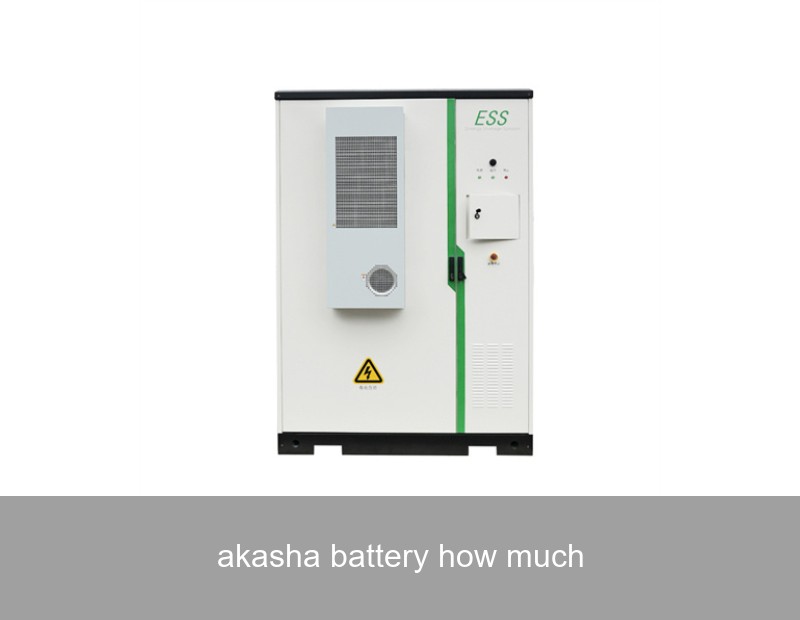
Image Source: Unsplash - Representative of a sleek, modern battery storage unit.
For commercial and industrial applications, our GridMAX solutions offer scalable, containerized storage that provides peak shaving, demand charge reduction, and grid services. This level of sophistication ensures that the question "akasha battery how much" is answered with a clear demonstration of return on investment (ROI), often within a few years.
Calculating True Value: ROI and Long-Term Savings
So, how do you translate the initial cost into long-term value? Let's build a simple framework.
1. Offset Purchased Electricity: Every kWh you use from your battery is a kWh you don't buy from the grid at a retail price that is consistently rising. In many European markets and US states like California, this price is now between €0.25 - €0.40/kWh.
2. Avoid Peak Charges: In regions with Time-of-Use (TOU) rates, smart systems can discharge during expensive peak periods (e.g., 4-9 PM) and recharge during cheap off-peak or solar hours. The differential can be substantial.
3. Leverage Incentives: Many governments offer direct subsidies, tax credits (like the U.S. Residential Clean Energy Credit), or favorable loans. These can reduce your upfront cost by 20-30% or more.
4. Backup Power Value: While harder to quantify, the value of keeping your lights on, food cold, and home secure during an outage is immense for many homeowners.
A study by the National Renewable Energy Laboratory (NREL) highlights that pairing solar with storage significantly increases both self-consumption and grid resilience benefits. When you factor in these elements, the focus shifts from upfront cost to lifetime value.
Your Path to Energy Independence
Asking "akasha battery how much" is the first step on a journey toward taking control of your energy. The true metric isn't just the initial price, but the cost per reliable, clean kilowatt-hour over the next two decades. With volatile energy markets and increasing climate-related grid stresses, the value of a resilient, efficient home energy system is only growing.
Are you ready to move beyond the price tag and explore what a customized Highjoule energy storage system, designed for your specific home and energy goals, can deliver for your wallet and your peace of mind?
 Inquiry
 Online Chat