


Understanding the 1kV Off-Grid Solar System Price: A Complete Investment Guide
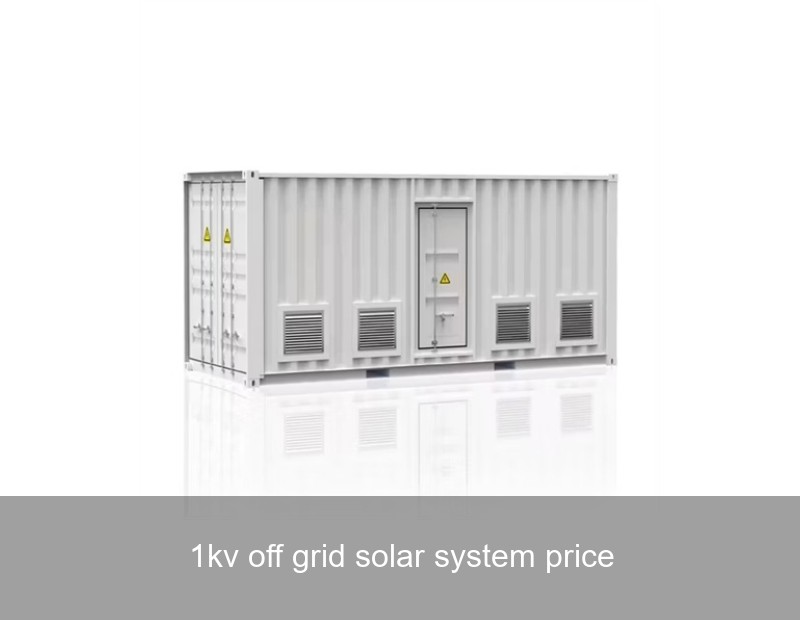
Thinking about energy independence with an off-grid solar system? You've likely encountered the term "1kV" (or 1 kilowatt) and are now wondering: what does a 1kV off-grid solar system price actually include, and is it worth it? For homeowners in rural areas, remote cabins, or those simply seeking resilience against grid outages, this is a crucial starting point. However, the sticker price you see online is just the tip of the iceberg. A truly reliable off-grid system is an ecosystem of components working in harmony, and its cost is a reflection of quality, capacity, and intelligent design. In this guide, we'll demystify the pricing, explore the key factors that influence your final investment, and show how choosing a provider like Highjoule—a leader in integrated energy storage since 2005—ensures you pay for performance, not just parts.
Table of Contents
- The Real Price Breakdown: More Than Just Panels
- Key Factors Influencing Your 1kV Off-Grid Solar System Price
- A Real-World Case: Off-Grid Living in the Scottish Highlands
- Looking Beyond the Sticker Price: The Value of Integration
- How Highjoule's Expertise Optimizes Your Investment
- Is Your Property Ready for Energy Independence?
The Real Price Breakdown: More Than Just Panels
Let's be clear: a functional off-grid system is not just a few solar panels. The "1kV" typically refers to the peak power output of the solar array. But to make that power usable 24/7, you need a complete setup. A basic price estimate for a 1kV off-grid system in markets like the US or Europe can range from $3,000 to $7,000+ for the hardware alone, before installation. Why such a wide range? Here’s what that price must encompass:
- Solar Panels (1kW): The most visible component.
- Battery Energy Storage System (BESS): The heart of off-grid living. This is your energy bank for nights and cloudy days. Capacity (measured in kWh) is a major cost driver.
- Inverter/Charger: A smart device that converts DC power from panels/batteries to AC for your appliances AND manages battery charging.
- Charge Controller: Protects your batteries from overcharging.
- Mounting, Wiring, and Balance of System (BOS): All the crucial hardware that brings everything together safely.
- Installation & Permitting: Labor costs and local regulatory fees.
As you can see, focusing solely on the cost-per-watt of the panels is a mistake. The battery storage and inverter technology often represent 40-60% of the total system cost, and rightfully so—they determine your system's reliability and lifespan.
Key Factors Influencing Your 1kV Off-Grid Solar System Price
To understand your specific quote, you need to consider these variables:
| Factor | Impact on Price & System Quality |
|---|---|
| Battery Type & Capacity | Lead-acid is cheaper upfront but has a shorter life. Lithium-ion (like LiFePO4) costs more initially but offers longer lifespan, deeper discharge, and better efficiency, providing lower cost over time. Do you need 5kWh or 15kWh of storage? |
| Inverter Capability | A pure sine wave inverter is essential for modern electronics. Its power rating (continuous and surge) must match your largest appliances. An integrated inverter-charger simplifies the system. |
| Energy Autonomy | How many days of backup do you need ("days of autonomy")? Planning for poor weather increases battery and potentially solar array size. |
| Installation Complexity | Roof type, distance between components, and local building codes can significantly affect labor costs. |
| Brand & System Integration | Opting for a pre-engineered, compatible kit from a single provider often ensures better performance and warranty than piecing together disparate components. |

A modern LiFePO4 battery system is a core cost and value driver. (Image Source: Unsplash)
A Real-World Case: Off-Grid Living in the Scottish Highlands
Let's look at a concrete example. A couple in the Scottish Highlands wanted to power a small, energy-efficient two-bedroom holiday home without connecting to the distant and costly grid. Their needs included a refrigerator, LED lighting, a water pump, a laptop, and occasional use of a small kitchen appliance.
- Challenge: High latitude with low winter sun exposure and frequent overcast days.
- Solution: A slightly oversized 1.2kW solar array to capture weak light, paired with a robust 14.4kWh LiFePO4 battery system to provide over three days of autonomy. They chose an integrated inverter-charger (3kW) with a smart energy management system.
- Investment: The total installed cost was approximately £9,500 (around $12,000 USD). While higher than a bare-minimum setup, this system guaranteed year-round reliability. According to a UK Government energy price report, they avoided a grid connection fee estimated at £15,000+ and eliminated all future electricity bills.
- Outcome: The system covers 100% of their energy needs. The intelligent monitoring allows them to optimize usage, and the battery's 10-year warranty provides long-term peace of mind.
Looking Beyond the Sticker Price: The Value of Integration
This case highlights a critical lesson: the true value of an off-grid system isn't in its cheapest components, but in its reliable, predictable performance over 15-25 years. A poorly integrated system with mismatched parts can lead to efficiency losses, premature battery failure, and frustrating blackouts—effectively making your "cheap" system very expensive.
This is where the philosophy of companies like Highjoule becomes paramount. We don't just sell boxes; we provide engineered power solutions. Our HES-Series off-grid storage systems are designed with fully compatible components: high-efficiency batteries, advanced hybrid inverters, and intelligent energy management software that communicate seamlessly. This integration maximizes every kilowatt-hour your panels produce, extends battery life, and gives you a single point of support and warranty.
How Highjoule's Expertise Optimizes Your Investment
With nearly two decades of experience powering commercial, industrial, and residential projects worldwide, Highjoule understands that a 1kV off-grid system price is an investment in a lifestyle or a business operation. Our approach adds value by:
- Pre-Engineering: Our systems are pre-configured for common scenarios, reducing design risk and installation time.
- Smart Management: Our software provides real-time insights and control, allowing you to prioritize loads and monitor system health remotely—a feature once only available in utility-scale projects.
- Future-Proofing: Our modular battery design allows for capacity expansion as your needs grow, protecting your initial investment.
- Professional Support: We work with a network of certified installers in Europe and the US, ensuring your system is commissioned correctly for optimal performance and safety, adhering to strict local codes like the NFPA 855 standard for energy storage.

Smart energy management is key to getting the most from your investment. (Image Source: Unsplash)
Is Your Property Ready for Energy Independence?
So, when you research "1kV off-grid solar system price," you're really asking about the cost of reliable, self-sufficient power. The initial number is important, but the long-term value is defined by intelligent design, quality components, and seamless integration. It's about choosing a partner who views your system as more than a product—but as a tailored power ecosystem.
What's the one critical energy load you couldn't live without during a power outage, and how would you ensure your off-grid system is designed to always support it? Answering this question is the first step toward defining the system that's right for you—and understanding the true investment behind the price tag.
 Inquiry
 Online Chat