


Completely Off Grid Solar Systems: Your Ultimate Guide to Energy Independence
Imagine a life where your power is truly yours—unaffected by grid outages, rising utility rates, or infrastructure limitations. This is the promise of completely off grid solar systems. For homeowners, remote businesses, and sustainability pioneers, going fully off-grid is the final frontier in energy independence. But what does it take to disconnect successfully? This guide breaks down the technology, the real-world performance, and how modern solutions from leaders like Highjoule are making this dream more reliable and accessible than ever before.
Table of Contents
The Rise of True Energy Independence
The concept of living off the grid has evolved from a rustic ideal to a technologically sophisticated choice. Driven by a desire for resilience, environmental stewardship, and often by the sheer economics of extending grid power to remote locations, more people are considering a complete disconnect. The core phenomenon is simple: you generate, store, and consume all your electricity on-site. No power lines coming in, no monthly bills going out. However, the shift from a grid-tied system with backup to a fully off-grid one is significant. It requires meticulous planning around energy generation, but more critically, around intelligent storage and management to cover consumption during long nights, cloudy days, and peak demand periods.

A well-planned off-grid solar array is the heart of an energy-independent property.
Core Components of a Robust Off-Grid System
Forget the simple solar setup you might picture. A reliable, completely off-grid power station is an integrated ecosystem. Here’s what makes it tick:
- Solar Panels (PV Array): Your primary fuel source. Sizing must account for the worst sunlight conditions of the year, not annual averages.
- Battery Energy Storage System (BESS): The absolute cornerstone. This is your "private energy bank" for nights and bad weather. Lithium-ion technology, particularly Lithium Iron Phosphate (LFP), is now the standard for its longevity, safety, and depth of discharge.
- Solar Charge Controller: The guardian of your batteries, regulating the flow from panels to prevent overcharging.
- Inverter/Charger: The multi-tasking brain. It converts DC battery power to AC for your appliances, and often integrates a charger to top up batteries from a backup generator.
- Backup Generator (Optional but Recommended): A weather-proof safety net for prolonged periods of low solar harvest. Modern systems can auto-start the generator only when needed to preserve fuel.
- Energy Management System (EMS): The intelligent layer that optimizes every watt, prioritizing loads and extending battery life based on weather forecasts and usage patterns.
Data vs. Reality: Sizing Your System Correctly
A common pitfall is undersizing the battery bank. Let's talk numbers. A typical U.S. household uses about 30 kWh per day. If you need to cover three consecutive cloudy days, you'd need at least 90 kWh of usable battery capacity. Factoring in a recommended maximum Depth of Discharge (DoD) of 80% for LFP batteries, your total bank capacity needs to be at least 112.5 kWh. This is a massive, and costly, requirement if using standard residential batteries.
This is where scalable, commercial-grade storage comes into play. Companies like Highjoule specialize in designing systems that meet these substantial energy needs without compromising on reliability. Their modular battery cabinets can be stacked to achieve capacities from 20 kWh to over 1 MWh, making them a perfect fit for the demanding duty cycle of a primary off-grid power source.
Case Study: An Off-Grid Homestead in the Colorado Rockies, USA
Let's look at a real-world application. The Miller family built a 2,800 sq ft year-round home near Telluride, CO, at an elevation of 9,200 feet. Grid connection was quoted at over $120,000. They opted for a completely off-grid solar system instead.
| Component | Specification | Rationale |
|---|---|---|
| Solar Array | 24 kW (60 x 400W panels) | To compensate for heavy winter snow and shorter days. |
| Battery Storage | Highjoule H-Series, 140 kWh total capacity (112 kWh usable) | To provide 3+ days of autonomy for the family's 35 kWh/day average load. |
| Inverter/Charger | Highjoule Multi-Mode Inverter, 3x 15 kW units | To handle well pump and workshop motor start-up surges. |
| Backup | Propane generator with auto-start | Engages only if battery state-of-charge falls below 20%. |
| Management | Highjoule EnergyOS® Platform | Forecasts weather, schedules high-load tasks (water heating), and provides remote monitoring. |
Results after two years: The system has maintained 99.8% uptime. The generator has run for less than 50 hours total, primarily during a historic winter storm series. The family's "levelized cost of energy" over the system's 20+ year lifespan is projected to be lower than the local utility's escalating rates. This case highlights that with proper engineering and robust components, off-grid living does not mean sacrificing modern comforts.

Modern off-grid systems seamlessly power entire homes and businesses.
The Highjoule Difference: Intelligent Off-Grid Solutions
As a global leader in advanced energy storage since 2005, Highjoule understands that an off-grid system is more than a product—it's a mission-critical power plant. Our approach integrates hardware and software to deliver peace of mind.
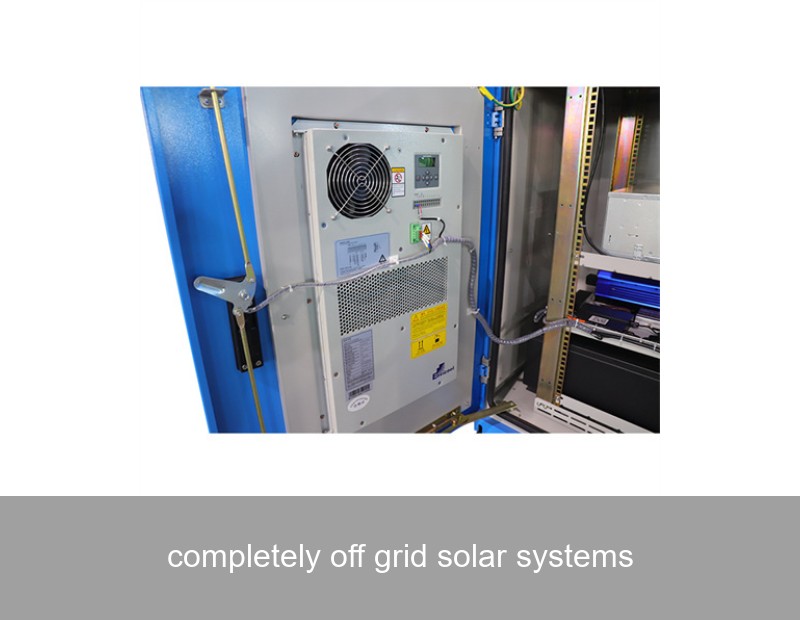
Our H-Series and I-Series battery cabinets are built with LFP chemistry and feature integrated thermal management for operation from -20°C to 50°C, a crucial factor for off-grid installations in barns or garages. Their modular design allows homeowners to start with a base configuration and add capacity as needs grow.
The true intelligence lies in EnergyOS®, our proprietary monitoring and control platform. For the off-grid user, it acts as a virtual power plant operator. It learns consumption patterns, ingests hyper-local weather data to predict solar yield, and can automatically defer non-essential loads to conserve battery. You can see your system's status, from state-of-charge to individual panel string performance, from a smartphone anywhere in the world—a vital feature for managing a remote property.
Highjoule provides end-to-end support, from initial load analysis and 3D system design simulation to commissioning and long-term maintenance, ensuring your journey to energy independence is built on a foundation of expertise.
Navigating Challenges: What They Don't Always Tell You
Going completely off-grid requires a mindset shift. Energy conservation becomes a conscious practice. It's highly recommended to invest in the most efficient appliances (e.g., heat pump over resistive heating, LED lighting). According to the U.S. Department of Energy, this can reduce your total load by 30-50%, dramatically shrinking the size and cost of your required solar and storage system. Furthermore, local regulations vary; some jurisdictions may have restrictions on fully disconnected dwellings, so permits and codes must be thoroughly researched, a process where Highjoule's project development team can offer valuable guidance.
Is a Completely Off-Grid System Right for You?
The technology is proven and more robust than ever. The decision often boils down to economics and priorities. For a remote cabin, the math is straightforward against a costly grid tie-in. For a suburban home, it's a premium investment in ultimate resilience and sustainability. As battery costs continue to decline—BloombergNEF reports a 89% real-term decline since 2010—this choice becomes accessible to more people.
What would your energy mix look like if you designed it from scratch, prioritizing reliability and independence above all else? Could your business or community benefit from a self-sufficient microgrid? We invite you to explore what's possible. Share your biggest question or hesitation about taking the leap to a completely off-grid lifestyle in the comments below, or contact Highjoule's expert team for a personalized assessment of your off-grid potential.
 Inquiry
 Online Chat