


Almacenamiento de Energía Eléctrica a Gran Escala: The Backbone of a Clean Energy Future
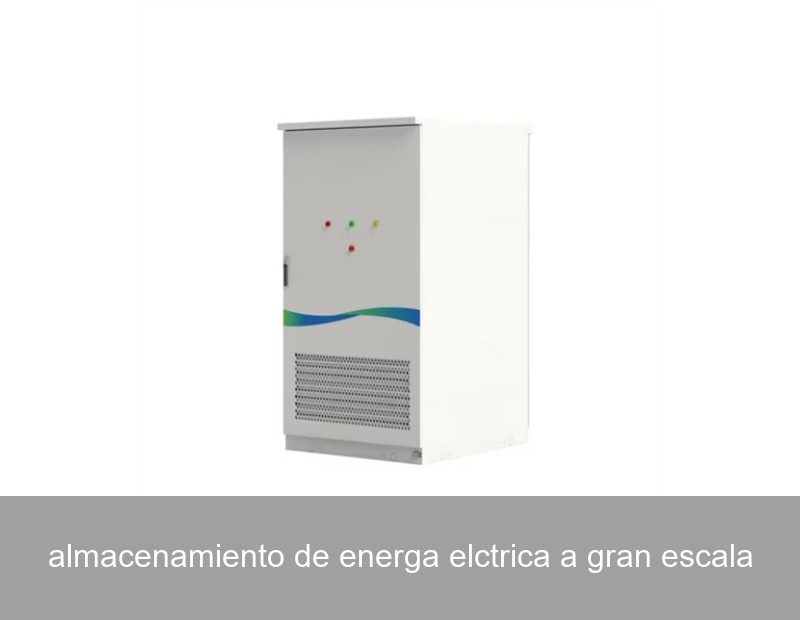
Imagine a world where solar and wind power don't just supplement the grid—they reliably power it, day and night, rain or shine. This vision hinges on one critical technology: almacenamiento de energía eléctrica a gran escala, or large-scale electrical energy storage. As grids worldwide integrate more renewable sources, the inherent intermittency of sun and wind becomes the central challenge to solve. The solution lies in deploying massive batteries and other storage systems that can act as a buffer, storing excess green energy when production is high and releasing it when demand peaks. This isn't just a technical upgrade; it's a fundamental reimagining of how we manage and consume electricity.
Table of Contents
- The Grid Challenge: From Intermittency to Stability
- Technology Breakdown: More Than Just Big Batteries
- Case Study: California's Shift to Evening Sun
- Beyond Reliability: The Economic and Environmental Catalyst
- Highjoule's Role: Engineering Intelligent Grid-Scale Solutions
- The Future Horizon: What's Next for Grid-Scale Storage?
The Grid Challenge: From Intermittency to Stability
Traditional power grids are masterclasses in real-time balancing. Generation from coal, gas, or nuclear plants is carefully adjusted to meet the second-by-second demands of cities and industries. Now, introduce a high percentage of solar and wind. On a brilliantly sunny afternoon, solar panels can flood the grid with more power than is needed, potentially causing congestion and even requiring utilities to curtail (waste) that precious renewable energy. Conversely, when the sun sets and wind speeds drop, a massive generation gap can appear just as everyone returns home and turns on appliances.
This "duck curve"—a graph showing the steep drop in net load during the day and a sharp ramp-up in the evening—has become the iconic symbol of this challenge, particularly in sunny regions like California and Southern Europe. The data is stark: in 2022, California's grid operator, CAISO, had to curtail over 2.4 million megawatt-hours of primarily solar and wind energy. That's enough electricity to power over 200,000 homes for a year, simply lost because there wasn't enough storage capacity to absorb it.
Image Source: CAISO (California Independent System Operator) public reports on grid load shapes.
Technology Breakdown: More Than Just Big Batteries
When we talk about almacenamiento de energía eléctrica a gran escala, lithium-ion battery energy storage systems (BESS) often steal the spotlight, and for good reason. Their rapid response time (milliseconds) and modular scalability make them ideal for grid services like frequency regulation and peak shaving. However, a resilient grid relies on a diverse storage portfolio.
| Technology | Primary Use Case | Duration Scale | Key Advantage |
|---|---|---|---|
| Lithium-ion BESS | Frequency regulation, Peak shaving, Solar smoothing | 1-4 hours | Fast response, high efficiency, modular |
| Pumped Hydro Storage | Bulk energy storage, Long-duration backup | 6-24+ hours | Proven, lowest cost per kWh at scale |
| Flow Batteries | Long-duration storage for renewables integration | 4-12+ hours | Decoupled power/energy, long lifecycle |
| Compressed Air (CAES) | Bulk energy management, Grid inertia | 8-24+ hours | Very large scale, provides grid stability |
The choice of technology depends on the specific grid need: is it sub-second frequency control, shifting solar energy 4 hours into the evening, or providing backup power for days during extreme weather? The future grid will seamlessly orchestrate all of these.
Case Study: California's Shift to Evening Sun
Let's look at a real-world example. To tackle its notorious duck curve and reduce reliance on gas "peaker" plants, California has aggressively deployed almacenamiento de energía eléctrica a gran escala. One landmark project is the Moss Landing Energy Storage Facility. In its current phases, it represents one of the world's largest battery installations, with a capacity of over 750 MW / 3,000 MWh.
Here's the impact: These batteries charge during the day using abundant, low-cost solar power. Then, as the sun sets and grid demand spikes between 4 PM and 9 PM, they discharge that stored energy. In 2023, batteries became the single largest source of power on the CAISO grid during certain evening hours, surpassing even nuclear power for a period. This directly reduces natural gas consumption, cuts carbon emissions, and crucially, keeps the lights on reliably. The data proves the model: massive battery storage is no longer a pilot project; it's operational grid infrastructure.
Beyond Reliability: The Economic and Environmental Catalyst
The benefits of grid-scale storage extend far beyond keeping the grid stable. It is a powerful economic tool:
- Reducing Costs: By storing cheap renewable energy and discharging it during expensive peak hours, storage lowers wholesale electricity prices and can defer costly grid infrastructure upgrades.
- Enabling More Renewables: Storage solves the curtailment problem, making every new solar or wind farm more viable and profitable, accelerating the energy transition.
- Creating Resilience: For microgrids at hospitals, data centers, or industrial parks, large-scale storage provides critical backup during outages, whether from storms or wildfires.
Environmentally, the multiplier effect is clear. The more storage we deploy, the more renewables we can integrate, and the faster we can retire fossil-fueled peaker plants—often the dirtiest and least efficient power sources on the grid.
Highjoule's Role: Engineering Intelligent Grid-Scale Solutions
At Highjoule, we've been at the forefront of this transformation since 2005. We understand that deploying almacenamiento de energía eléctrica a gran escala isn't just about supplying batteries; it's about delivering a fully integrated, intelligent power solution. Our expertise spans the entire value chain, ensuring our systems are not only high-performance but also safe, durable, and perfectly tuned to the grid's needs.
For utility and large-scale commercial projects, our GridMax BESS platform is engineered for durability and safety. We utilize a holistic system design approach, integrating best-in-class battery cells with our proprietary thermal management and control software. This ensures optimal performance in diverse climates and maximizes the system's lifespan, which is critical for the 15-20 year operational life of such assets. Our solutions are designed to provide essential grid services like frequency response, voltage support, and capacity firming, turning a storage asset into a reliable grid citizen.

Image Source: Highjoule project portfolio - a utility-scale BESS installation.
Furthermore, our Energy Management System (EMS) is the brain of the operation. It doesn't just charge and discharge based on simple schedules; it uses sophisticated algorithms to optimize the system's value, responding to real-time market signals, weather forecasts, and grid conditions. This intelligence is what transforms a capital expenditure into a revenue-generating asset for our clients.
The Future Horizon: What's Next for Grid-Scale Storage?
The trajectory is clear: storage capacity will continue to grow exponentially. The U.S. Energy Information Administration (EIA) projects that utility-scale battery storage capacity will nearly double in the United States in 2024 alone. The next frontier is extending discharge durations from hours to days, exploring technologies like advanced flow batteries, compressed air, and even green hydrogen for seasonal storage.
The question for grid operators, energy developers, and large energy consumers is no longer *if* they should invest in almacenamiento de energía eléctrica a gran escala, but *how* and *when*. The technology is proven, the economics are improving rapidly, and the regulatory frameworks in many European and U.S. markets are increasingly supportive.
Is your organization evaluating how large-scale energy storage can stabilize your operations, integrate your renewable assets, or create new revenue streams in the evolving energy market?
 Inquiry
 Online Chat