


Alternative Energy Plus Jamaica: A Blueprint for Island Resilience and Sustainable Power
Imagine an island nation blessed with abundant sunshine and consistent trade winds, yet historically dependent on expensive, imported fossil fuels for its electricity. This was the reality for Jamaica, a challenge shared by many island communities worldwide. Today, however, Jamaica is writing a new story—one of energy independence and climate resilience, powered by a strategic shift towards alternative energy plus Jamaica. This isn't just about adding solar panels; it's about integrating diverse renewable sources with advanced energy storage to create a stable, reliable, and sustainable grid. For islands and remote communities from the Caribbean to Europe and the US, Jamaica's journey offers critical insights into the future of decentralized power.
Table of Contents
The Challenge: High Costs and Grid Vulnerability
Island grids are often isolated, making them uniquely vulnerable. They typically rely on small fleets of aging diesel or heavy fuel oil generators. The result? Electricity prices in places like the Caribbean can be two to three times higher than in mainland North America. Furthermore, these grids lack the inertia and flexibility of large, interconnected continental systems. A single generator failure or a hurricane can lead to widespread blackouts. The push for solar and wind—the core "alternative energy"—is a logical first step. But herein lies the puzzle: solar and wind are intermittent. The sun doesn't always shine, and the wind doesn't always blow. Without a way to capture and time-shift that energy, the grid's stability can be compromised, a phenomenon known as "duck curve" challenges now seen in California and Hawaii.

This is where the "plus" in alternative energy plus Jamaica becomes non-negotiable. The "plus" represents advanced energy storage systems (ESS)—the linchpin that transforms variable renewable generation into a firm, dispatchable resource.
The Data: Why Storage is the Missing Link
Let's look at the numbers. According to the International Renewable Energy Agency (IRENA), battery storage in islands could grow 50-fold by 2030. The economics are compelling. A study by the National Renewable Energy Laboratory (NREL) found that combining solar PV with storage in island settings can reduce the levelized cost of electricity (LCOE) by over 40% compared to diesel-only generation. But the benefits extend far beyond cost:
- Grid Stability: Storage provides millisecond-frequency response, something slow diesel gensets cannot do.
- Capacity Firming: It smooths out the sudden peaks and dips from cloud cover or wind gusts.
- Renewables Integration: It allows for higher penetration of renewables without risking grid instability.
- Resilience: When paired with renewables in a microgrid configuration, storage can keep critical facilities online during main grid outages.
Case Study: Jamaica's Path to Energy Security
Jamaica's ambitious goal is to achieve 50% renewable energy generation by 2030, up from about 12% in 2020. A landmark project exemplifying the alternative energy plus model is the 20.5 MW BMR Wind Farm in St. Elizabeth, coupled with utility-scale battery storage.
Here’s how it works in practice: The wind farm generates clean power. Instead of that power being directly and inconsistently fed into the grid, a significant portion charges a large-scale battery energy storage system (BESS). The Jamaica Public Service Company (JPS) can then dispatch this stored energy during evening peak demand periods when electricity is most expensive and traditionally supplied by diesel. The result? This single project contributes to displacing over 60,000 barrels of oil annually and provides critical grid services that enable more renewable projects to come online safely.
| Metric | Impact |
|---|---|
| Annual Diesel Displacement | > 60,000 barrels |
| CO2 Emissions Avoided | ~ 25,000 tons per year |
| Grid Service | Frequency regulation, peak shaving, capacity firming |
| Renewable Penetration | Enables higher integration of solar & wind |
This successful integration proves that the alternative energy plus storage model is not theoretical; it's a practical, operational reality delivering economic and environmental benefits today.
The Solution: Intelligent Energy Storage Systems
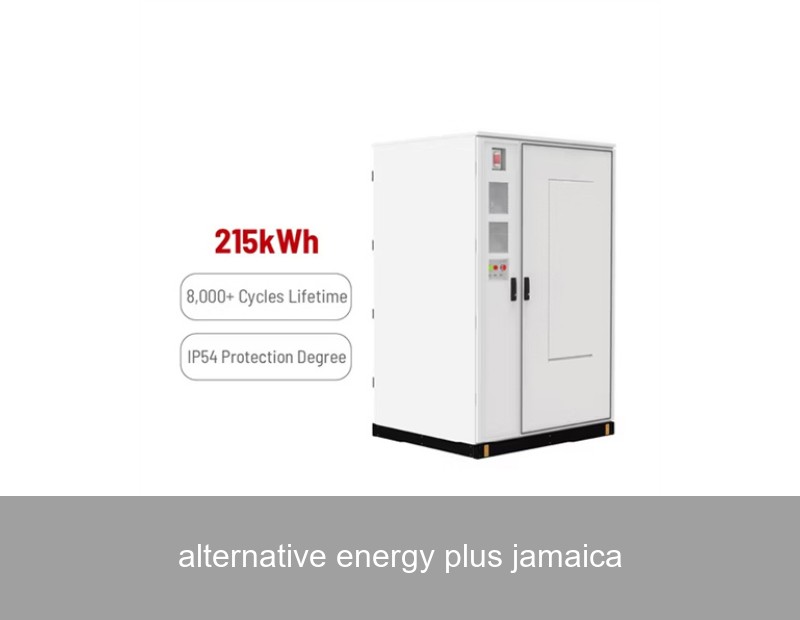
Not all storage is created equal. The key to unlocking the full potential of an alternative energy plus strategy lies in intelligent, grid-ready Battery Energy Storage Systems (BESS). These are far more than just boxes of batteries. A modern BESS is an integrated power plant that includes:
- Advanced Battery Modules: Typically lithium-ion (LFP chemistry is increasingly popular for its safety and longevity).
- Power Conversion System (PCS): The intelligent inverter that manages AC/DC conversion and grid communication.
- Energy Management System (EMS): The "brain" that decides when to charge, discharge, or hold, based on grid signals, weather forecasts, and economic optimization.
- Thermal Management & Safety Systems: Critical for performance and longevity in tropical climates like Jamaica's.
This intelligent system can be configured for various applications: behind-the-meter for a large hotel or factory to reduce demand charges, front-of-the-meter for a utility like JPS, or as the core of a standalone community microgrid.
How Highjoule Powers Sustainable Transitions
As a global leader in advanced energy storage since 2005, Highjoule is at the forefront of providing the essential "plus" in the alternative energy plus equation. Our solutions are engineered for the specific challenges faced by island grids and decentralized energy projects in Europe, the US, and beyond.
For commercial and industrial (C&I) applications, our H-Series C&I ESS allows businesses—from Jamaican resorts to European manufacturing plants—to maximize their on-site solar consumption, dramatically reduce peak demand tariffs, and ensure backup power. Its modular design and robust thermal management make it ideal for demanding environments.

At the utility and microgrid scale, our GridMax Utility BESS platform is the technology of choice for projects like Jamaica's. It offers seamless grid-forming and grid-following capabilities, black start functionality (crucial for post-storm recovery), and advanced grid services like voltage support and frequency regulation. Highjoule's proprietary Adaptive EMS software ensures each storage asset delivers maximum value, whether the goal is arbitrage, renewables integration, or resilience.
By partnering with developers, utilities, and governments, Highjoule doesn't just supply hardware; we provide turnkey, intelligent power solutions that make ambitious renewable targets not only achievable but also economically and technically sound.
What's Next for Your Energy Independence?
Jamaica's story demonstrates that the transition to a sustainable, resilient energy future is not a distant dream. The technology—renewable generation plus sophisticated storage—is proven and available today. Whether you're a utility planner in the Mediterranean, a municipal leader in a coastal US community, or an industrial facility owner looking to lock in energy costs, the same principles apply.
The question is no longer "if" storage is needed, but "how" to design and implement the right system for your specific goals and challenges. What is the first step your community or business could take to integrate an intelligent storage solution and start capturing the full value of your alternative energy investments?
 Inquiry
 Online Chat