


Aquion Saltwater Battery: A Safe and Sustainable Choice for Modern Energy Storage
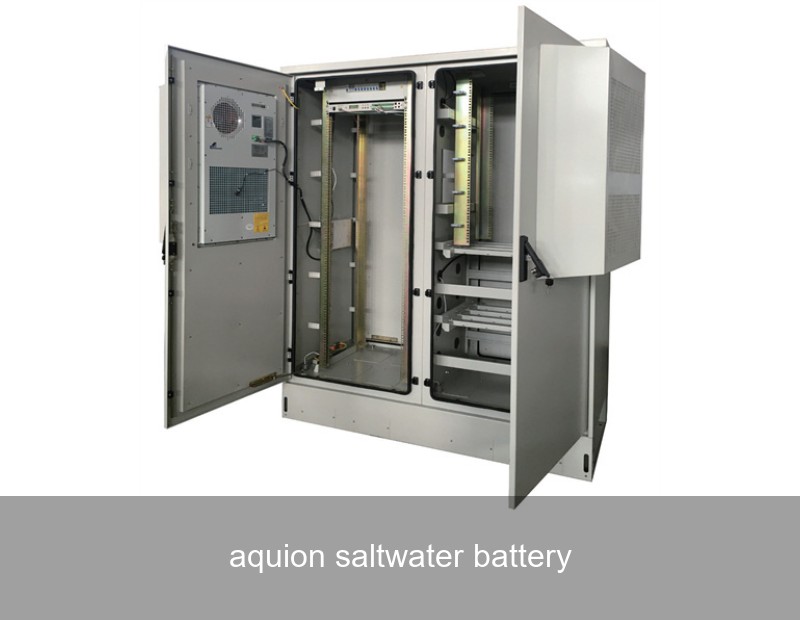
As the world shifts towards renewable energy, a common question arises for homeowners and businesses alike: "What's the safest, most sustainable way to store my solar power?" Traditional lithium-ion batteries dominate the headlines, but a unique, chemistry-based alternative has been making waves for its remarkable safety and environmental profile. This is the story of the Aquion saltwater battery. In this deep dive, we'll explore how this innovative technology works, its real-world performance, and why solutions like it are integral to building a resilient and clean energy future. Companies like Highjoule, a global leader in advanced energy storage since 2005, are at the forefront of integrating such diverse, purpose-driven technologies into intelligent systems for homes, businesses, and microgrids.
Table of Contents
What is an Aquion Saltwater Battery?
Unlike batteries that use heavy metals or volatile electrolytes, the Aquion saltwater battery is an aqueous hybrid ion (AHI) battery. Its core components are simple: saltwater electrolyte, manganese oxide cathode, carbon composite anode, and synthetic cotton separator. There's no lithium, no cobalt, and no lead. The chemistry is non-toxic and non-flammable, which immediately addresses two major concerns of other battery types: fire risk and environmental impact at end-of-life. Think of it as the "gentle giant" of energy storage—prioritizing safety and longevity over raw, high-power density.

Image Source: Wikimedia Commons (Creative Commons)
How It Works: Chemistry Made Simple
Let's break down the science without the jargon. During charging, sodium ions from the saltwater electrolyte move through the separator and embed themselves into the manganese oxide cathode. Simultaneously, hydrogen ions move to the carbon anode. This process is reversed during discharge, releasing the stored energy. Because the electrolyte is a simple saltwater solution, the battery operates at a neutral pH and poses no corrosion risk or off-gassing hazard. This fundamental chemistry dictates its performance characteristics: excellent cycle life, deep discharge capability, and stable performance across a wide temperature range.
Key Benefits and Considerations
Every technology has its ideal application. For the Aquion saltwater battery, its strengths shine in specific scenarios.
- Unmatched Safety & Sustainability: Can be installed in living areas without complex ventilation or fire suppression. Made from abundant, non-toxic materials, simplifying recycling.
- Long Cycle Life: Designed for thousands of deep discharge cycles (80-90% depth of discharge) with minimal degradation, ideal for daily solar cycling.
- Wide Temperature Tolerance: Performs well in both hot and cold environments without requiring significant climate control.
- Considerations: Lower energy density means a larger physical footprint. Lower charge/discharge rates make it less suitable for high-power, short-duration applications like frequency regulation. It's a marathon runner, not a sprinter.
Real-World Performance: A Case Study from Germany
Let's move from theory to practice. A compelling example comes from a small agricultural cooperative in Bavaria, Germany. Their goal was to achieve near-total energy independence using a rooftop PV system, but they needed safe, long-lasting storage that could handle daily, deep cycling. In 2018, they installed a 40 kWh Aquion saltwater battery system alongside their 25 kW solar array.
The data, monitored over five years, is telling:
| Metric | Performance Data |
|---|---|
| Annual Solar Self-Consumption | Increased from 35% to 94% |
| Battery Cycles Completed | Over 1,800 deep cycles |
| Capacity Retention | Approximately 92% of original capacity |
| System Availability | >99.8% (No safety shutdowns or maintenance issues) |
The farm manager noted, "For us, the peace of mind knowing the battery posed no fire risk in our barn was as important as the numbers. It just works, day in and day out." This case underscores the technology's fit for applications where daily, deep-cycle storage and safety are paramount. You can explore more independent research on sustainable battery chemistries from sources like the Fraunhofer Institute for Solar Energy Systems.
Highjoule's Approach to Sustainable Storage Integration
At Highjoule, we believe there is no one-size-fits-all solution for energy storage. The German farm's success story aligns perfectly with our philosophy: match the technology to the customer's specific energy profile, risk tolerance, and sustainability goals. While we offer a range of high-performance lithium-ion systems for applications requiring high power density, we also recognize the unique value of chemistries like saltwater for certain projects.
Our Intelligent Energy Platform (IEP) is designed to be chemistry-agnostic. Whether integrating with an Aquion-based system for a safety-focused residential community, a robust lithium-iron-phosphate (LFP) bank for a commercial peak-shaving application, or a hybrid setup, our platform optimizes the entire system's performance. We provide the smart brain that manages charge/discharge cycles, integrates with solar inverters, and ensures grid interaction is seamless, maximizing return on investment regardless of the underlying battery chemistry. For businesses looking to build resilient microgrids, this flexibility is crucial.

Image Source: Unsplash (Free to use)
Tailored Solutions for Every Need
Our product suite is built on this principle of tailored integration:
- H-Joule Home: Our residential system can be configured with recommended storage technologies based on a homeowner's primary needs—be it maximum safety, longest lifespan, or highest daily throughput.
- H-Joule Commercial: For factories, offices, and retail spaces, we design systems that often blend technologies, using different batteries for different tasks within the same microgrid, all managed by our unified IEP software.
- H-Joule GridScale: Our utility and microgrid solutions prioritize longevity and total cost of ownership, where technologies like saltwater batteries can play a vital role in long-duration storage segments.
The Future of Saltwater and Hybrid Storage Systems
The energy storage landscape is diversifying. While lithium-ion will continue to play a major role, the demand for ultra-safe, sustainable, and long-life storage is growing. Innovations in aqueous battery chemistries continue, promising improvements in energy density and cost. The real future, however, lies in intelligent hybridization. Imagine a system where a saltwater battery handles the bulk of daily solar storage, a small, high-power lithium capacitor manages sudden loads like EV charging, and an AI-driven platform like Highjoule's IEP orchestrates it all for optimal efficiency and lifespan. This isn't science fiction; it's the next frontier of energy management. For further reading on the policy drivers in our key markets, the U.S. Department of Energy's Solar Energy Technologies Office provides valuable insights.
So, as you consider the right storage solution for your home or business, ask yourself: Beyond just kilowatt-hours, what are my true priorities—is it absolute safety, 25-year performance with minimal degradation, or supporting a fully circular economy? Your answer will guide you to the perfect technology.
 Inquiry
 Online Chat