


Armazenamento de Energia em Baterias: The Silent Engine Powering Our Clean Energy Future
it's a bright, sunny afternoon, and solar panels across your neighborhood are humming with activity. But what happens when the sun sets, or demand suddenly spikes on a windless evening? This is the central puzzle of the renewable energy transition, and the answer lies in a powerful, evolving technology: armazenamento de energia em baterias, or Battery Energy Storage Systems (BESS). At its core, BESS is the art of capturing energy produced at one time for use at a later time. Think of it as a high-tech, grid-scale "energy savings account" that ensures the lights stay on reliably, even when the primary sources are intermittent.
For nearly two decades, Highjoule has been at the forefront of this revolution. Since 2005, we've dedicated ourselves to designing intelligent battery storage solutions that don't just store power—they optimize it, making commercial, industrial, and residential energy use more resilient, efficient, and sustainable. As we delve into the world of battery storage, we'll explore why it's no longer a luxury but a necessity for a stable grid.
Why the Global Push for Energy Storage is Happening Now
The shift towards battery storage isn't happening in a vacuum. It's a direct and necessary response to several converging global trends. The first is the meteoric rise of variable renewables like solar PV and wind. According to the International Energy Agency (IEA), renewables are set to contribute 80% of new power capacity to 2030 under current policies. However, this incredible growth introduces a challenge: generation doesn't always match demand.
Secondly, aging grid infrastructure in many parts of Europe and the U.S. is struggling with modern demands, leading to increased frequency of outages and the need for costly upgrades. Thirdly, ambitious net-zero targets from governments and corporations are creating regulatory and economic incentives for clean, flexible energy assets. Battery storage sits uniquely at the intersection of these drivers, providing the critical flexibility and reliability the new energy landscape demands.

Image Source: Unsplash - A modern battery storage installation co-located with solar generation.
Key Applications: How Battery Storage Systems Are Used
Battery storage is a remarkably versatile tool. Its applications range from stabilizing the entire national grid to powering a single family home. Let's break down the primary use cases:
- Grid Services & Frequency Regulation: This is perhaps the most technical yet vital role. Batteries can respond to grid frequency fluctuations in milliseconds (far faster than traditional gas plants), injecting or absorbing power to keep the grid stable. It's like a shock absorber for the entire electricity network.
- Renewables Integration & Time-Shift: This is the classic "store sun for night" application. BESS captures excess solar or wind energy during periods of high generation and low demand, then dispatches it during peak evening hours when demand is high and solar generation is zero.
- Commercial & Industrial (C&I) Resilience: For factories, data centers, and supermarkets, a power outage can mean millions in lost revenue. On-site battery storage, often paired with solar, provides critical backup power and can also be used for "peak shaving"—reducing consumption during expensive peak tariff periods to slash energy bills.
- Residential Energy Independence: Home battery systems allow homeowners to maximize their solar self-consumption, reduce reliance on the grid, and maintain power during outages, creating a personal energy sanctuary.
| Application | Primary Benefit | Typical Scale |
|---|---|---|
| Frequency Regulation | Grid Stability & Reliability | Utility-scale (10s-100s of MW) |
| Solar Time-Shifting | Increased Renewable Utilization | Utility & Community-scale |
| C&I Peak Shaving | Cost Reduction & Backup Power | 100 kW - 10 MW |
| Residential Backup | Energy Independence & Resilience | 5 - 20 kW |
Meeting Demand with Highjoule's Intelligent Solutions
Understanding the "why" and "where" of battery storage is one thing; implementing a reliable, high-performance system is another. This is where Highjoule's nearly two decades of specialization comes into play. We move beyond simply supplying hardware to delivering integrated, intelligent energy ecosystems.
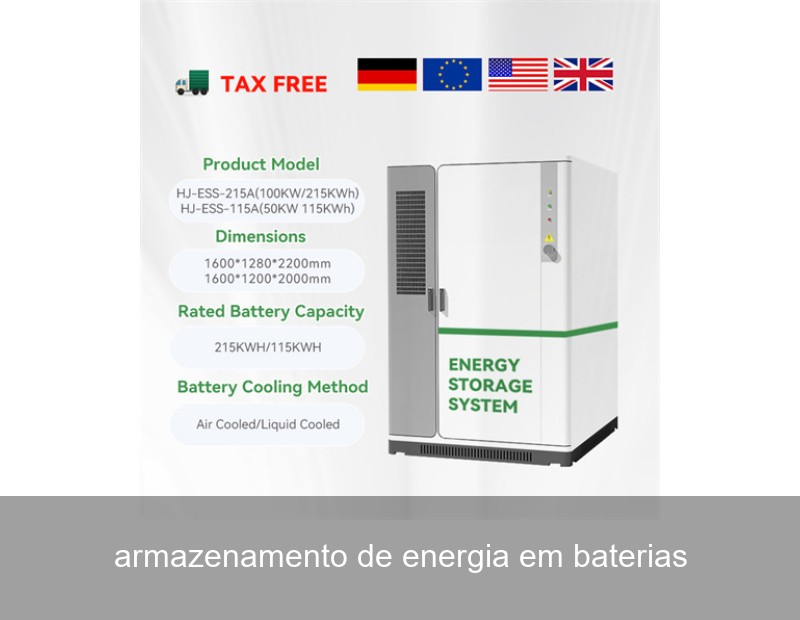
Our flagship product line, the H-Series Modular Energy Storage System, is designed for scalability and safety. Built with lithium iron phosphate (LFP) chemistry, known for its long cycle life and superior thermal stability, these modular units can be configured from a few hundred kilowatt-hours for a commercial site to multi-megawatt-hour installations for industrial or microgrid applications. The true intelligence, however, lies in our ENERGY OS™ platform. This proprietary software is the brain of the operation, using advanced algorithms and real-time data to make decisions: when to charge, when to discharge, and how to optimize for economic return or carbon reduction based on the owner's priorities.
For residential clients, our HomePower Hub seamlessly integrates with existing or new solar PV systems, providing whole-home backup and intelligent energy management through a user-friendly app. For larger-scale deployments, our team provides end-to-end services—from initial feasibility studies and financial modeling to grid compliance support, installation, and long-term performance monitoring. We don't just sell a battery; we deliver a guaranteed outcome, whether it's lower energy costs, enhanced sustainability credentials, or unwavering resilience.
Real-World Impact: A Case Study from California
Let's move from theory to practice. A compelling example of battery storage's value comes from a project we completed for a mid-sized fruit processing cooperative in California's Central Valley. The challenge was twofold: crippling peak demand charges from running refrigeration and processing equipment, and increasing vulnerability to Public Safety Power Shutoffs (PSPS) due to wildfire risk.
Highjoule deployed a 1.2 MWh / 750 kW H-Series battery system, integrated with their existing rooftop solar. The system was programmed with a dual-purpose strategy. Daily, it performs aggressive peak shaving, discharging the battery during the 4 PM to 9 PM peak window to flatten the facility's load profile. Annually, this strategy reduced their peak demand charges by an estimated 28%, leading to six-figure savings on their electricity bill. Secondly, the system provides 4+ hours of critical backup power, allowing refrigeration and essential processing to continue seamlessly through grid outages.
The data speaks for itself. In the first year of operation, the system achieved a 99.7% availability rate. It dispatched energy during 98% of all peak rate periods, and successfully maintained operations during two separate grid outages. This project underscores a key insight: a well-designed BESS isn't an expense; it's a strategic asset that pays for itself through direct savings while de-risking operations. You can explore more real-world data on the economic benefits of storage in reports from the National Renewable Energy Laboratory (NREL).

Image Source: Unsplash - Technical monitoring and control of an industrial energy storage system.
The Future Outlook for Energy Storage
The trajectory for armazenamento de energia em baterias is steeply upward. We're seeing rapid advancements in battery chemistries beyond lithium-ion, like sodium-ion and solid-state, promising even lower costs and higher safety profiles. Furthermore, the concept of "virtual power plants" (VPPs)—where thousands of distributed home and commercial battery systems are aggregated and controlled as a single resource to support the grid—is moving from pilot to mainstream, especially in markets like Germany and parts of the U.S.
This evolution points to a future where energy storage is deeply embedded and invisible, working silently in the background to balance supply and demand, integrate massive amounts of renewables, and empower every consumer to be a prosumer. The question is no longer if battery storage will be a cornerstone of our energy system, but how quickly and how intelligently we can deploy it.
As you consider the resilience of your operations or the sustainability of your energy footprint, what specific challenge—be it volatile energy costs, reliability concerns, or carbon goals—could a intelligent battery storage system solve for you today?
 Inquiry
 Online Chat