


Aus Energy Solar Pty Ltd and the Future of Sustainable Power in Australia
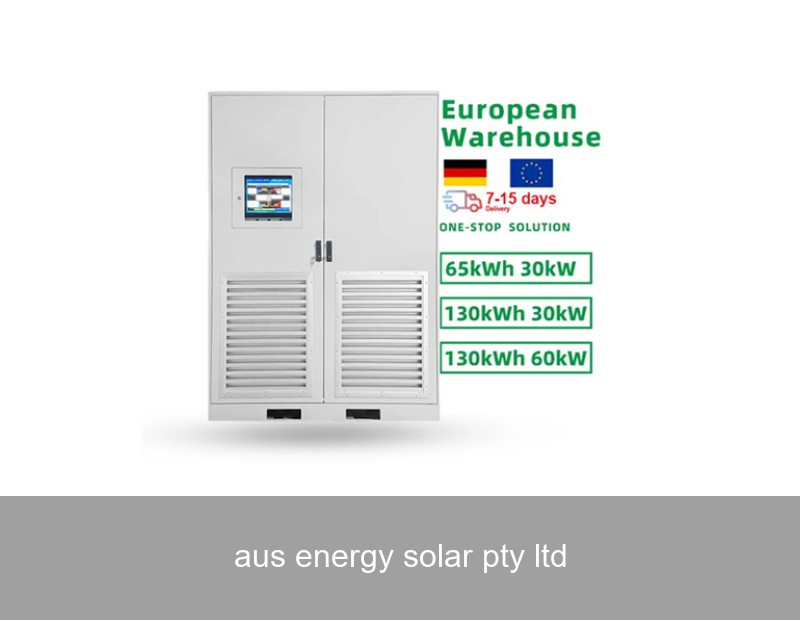
If you're involved with Aus Energy Solar Pty Ltd or a similar enterprise in Australia's vibrant renewable sector, you're at the forefront of an exciting yet complex challenge. The nation's sun-drenched landscape is perfect for solar, but the real question the industry faces is no longer just about generation—it's about what happens when the sun goes down. The intermittent nature of solar power creates a pressing need for intelligent, reliable storage solutions to ensure clean energy is available 24/7. This is where the conversation shifts from simply capturing sunlight to building a resilient, modern energy ecosystem.
Table of Contents
- The Australian Solar Paradox: Abundant Sun, Grid Challenges
- The Data Reality: Why Storage is No Longer Optional
- From Challenge to Solution: A Commercial Case Study
- Beyond the Battery: The Intelligent Storage System
- Highjoule's Partnership with Australian Energy Leaders
- Shaping Australia's Energy Future: Your Next Move
The Australian Solar Paradox: Abundant Sun, Grid Challenges
Australia boasts some of the highest solar irradiation levels in the world, a fact that companies like Aus Energy Solar Pty Ltd have successfully leveraged. Rooftop solar penetration is among the highest globally, particularly in states like South Australia and Queensland. However, this success story has introduced a new set of technical phenomena: the "duck curve." This term, coined by grid operators, describes the steep drop in net grid demand during midday when solar output is high, followed by a sharp evening ramp-up as the sun sets and demand peaks.
This creates volatility. It can lead to grid instability, negative pricing events where solar generators are paid to switch off, and wasted renewable energy. For end-users, it means the clean power they generate might not be available when they need it most, often forcing them back onto the grid during expensive peak tariff periods. The symptom is clear: generation and consumption are out of sync.

Image Source: Unsplash (Representative image of Australian solar farm)
The Data Reality: Why Storage is No Longer Optional
Let's look at the numbers. According to the Australian Government Department of Climate Change, Energy, the Environment and Water, renewable sources contributed over 39% to the National Electricity Market (NEM) in 2023, with solar being a dominant force. Yet, the Australian Energy Market Operator (AEMO) consistently highlights system strength and storage as critical needs for a secure grid. The data tells a compelling story:
| Challenge | Data Point / Implication |
|---|---|
| Solar Curtailment (Wasted Energy) | In South Australia, periods of 100% instantaneous renewable penetration are common, leading to frequent curtailment signals to maintain grid balance. |
| Evening Peak Demand | Residential electricity demand often spikes by 40-60% in the early evening, precisely when solar generation falls to zero. |
| Commercial Energy Costs | Businesses can face demand charges where up to 50% of their electricity bill is based on their highest 30-minute power draw during peak periods. |
This data isn't just abstract; it directly impacts the business case for solar installers and their customers. The value of a solar installation is dramatically enhanced when paired with a system that can time-shift that energy.
From Challenge to Solution: A Commercial Case Study
Consider a mid-sized manufacturing plant in Victoria, a client of a forward-thinking solar provider. The facility had a 500kW rooftop solar array but was still hit with high demand charges and struggled to use its solar energy during weekend shutdowns. Their solar generation and consumption profile was a textbook mismatch.
The solution was integrating a 1.2 MWh battery energy storage system (BESS) alongside their existing solar. Here’s the transformation:
- Peak Shaving: The BESS automatically discharges during the plant's operational peak hours (4 PM - 9 PM), cutting grid draw and virtually eliminating demand charges.
- Solar Self-Consumption Optimization: Excess solar generated during the day charges the battery, increasing on-site consumption from ~40% to over 85%.
- Revenue Stacking: The system participates in the grid's Frequency Control Ancillary Services (FCAS) market during nights and weekends, generating a new income stream.
The Result? A reduction in overall energy costs by 68%, a payback period of under 5 years, and a dramatic increase in the site's energy resilience. This case, mirrored by many across Australia, proves that solar + storage is more than a sum of its parts—it's a transformative energy asset.
Beyond the Battery: The Intelligent Storage System
It's crucial to understand that not all storage is created equal. A true advanced energy storage system is defined not by its battery cells alone, but by its intelligence. This is where companies like Highjoule redefine the standard. For a partner like Aus Energy Solar Pty Ltd, offering a superior solution means providing a system with:
- Adaptive Power Electronics: Inverters and converters that seamlessly manage bi-directional flow between solar, battery, grid, and load.
- AI-Driven Energy Management Software (EMS): The true "brain." It forecasts solar production and load, analyzes tariff structures in real-time, and optimizes every kilowatt-hour for economic or resilience goals.
- Grid-Forming Capability: Advanced systems can actually "form" a stable grid voltage and frequency, a critical feature for supporting weak grids or enabling off-grid microgrids.
- Scalable & Modular Architecture: From a residential Highjoule HomePower system to a containerized Highjoule GridStack for C&I or utility applications, scalability ensures the right fit for every customer.
Image Source: Unsplash (Representative image of BESS monitoring)
Highjoule's Partnership with Australian Energy Leaders
With nearly two decades of experience since 2005, Highjoule has evolved into a global leader in advanced storage by focusing on this exact intelligence. Our role isn't to replace excellent solar providers but to empower them. For a company like Aus Energy Solar Pty Ltd, partnering with Highjoule means accessing:
- Turnkey Storage Solutions: Fully integrated, pre-tested systems for commercial, industrial, and residential applications, reducing complexity and installation time.
- Highjoule Horizon Platform: A proprietary cloud-based EMS that allows for remote monitoring, fleet management, and performance optimization across a portfolio of installations.
- Technical Expertise & Training: Deep collaboration on system design, grid compliance (a critical factor in the NEM), and sales enablement to confidently bring storage solutions to market.
- Proven Reliability: Our systems are engineered for the long haul, with robust thermal management and safety protocols, backed by comprehensive warranties and performance guarantees.
We enable our partners to move beyond selling components to delivering guaranteed energy outcomes—be it a fixed cost per kilowatt-hour, a specific bill reduction target, or enhanced backup power.
Shaping Australia's Energy Future: Your Next Move
The trajectory is undeniable. As noted by the International Energy Agency (IEA), storage is the linchpin for secure and clean energy transitions worldwide. In Australia, with its unique grid dynamics and world-leading solar uptake, this is even more pronounced. The market is moving from asking "if" to "what type and how smart."
For solar industry leaders, the question becomes: How will you evolve your offering to capture this essential next wave of value for your customers? Will you provide the piece of the puzzle, or the complete, intelligent picture that locks in long-term savings, resilience, and sustainability?
What specific grid challenge or customer demand in your service area is pushing you to seriously evaluate advanced storage partnerships right now?
 Inquiry
 Online Chat