


Automated Vertical Storage System: The Future of Space and Energy Efficiency
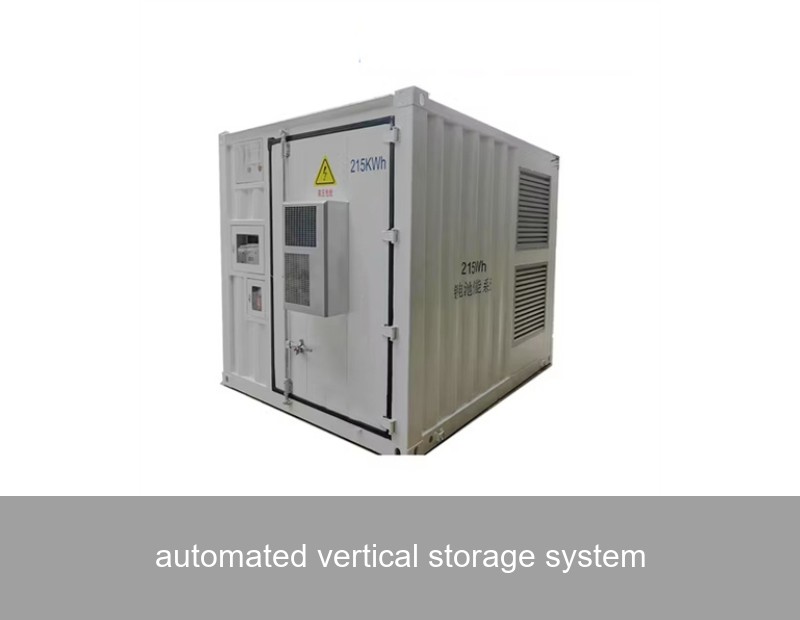
Imagine a warehouse where instead of sprawling across acres of land, it grows intelligently upward, with robots swiftly storing and retrieving pallets in a towering, dense grid. This isn't science fiction; it's the reality of the automated vertical storage system. While traditionally associated with logistics, this principle of maximizing cubic space through automation is now revolutionizing a completely different field: energy storage. For businesses and communities grappling with rising energy costs and grid instability, the concept of stacking energy "pallets" – in this case, battery modules – in a secure, automated, and incredibly space-efficient structure is a game-changer. It represents the next logical step in making large-scale battery energy storage systems (BESS) more accessible, manageable, and sustainable. At Highjoule, we see this convergence of industrial automation and clean energy technology as key to building the resilient power infrastructure of tomorrow.
Table of Contents
- The Space Challenge: Why Footprint Matters
- How an Automated Vertical Energy Storage System Works
- Key Benefits Beyond Saving Space
- A Real-World Case: Powering a German Industrial Park
- The Highjoule Vault: Our Take on Vertical Storage
- The Future Potential and Your Next Step
The Space Challenge: Why Footprint Matters
Let's face it: real estate is expensive, especially in urban industrial zones or constrained sites like island communities. The traditional approach to large-scale battery storage often involves containerized systems lined up side-by-side, consuming significant land area. A report by the National Renewable Energy Laboratory (NREL) highlights that land use and siting are becoming critical bottlenecks for utility-scale storage deployment. This is where the paradigm shifts. An automated vertical storage system for energy rethinks the footprint from a horizontal plane to a vertical volume. By stacking battery modules in a secure, climate-controlled tower with an internal robotic retrieval system, it can reduce the system's physical footprint by up to 40-60% compared to an equivalent capacity in standard containers. This isn't just about saving square footage; it's about opening up new possibilities for deployment in space-sensitive locations, from dense urban districts to existing manufacturing plants where every meter counts.
How an Automated Vertical Energy Storage System Works
Think of it as a high-tech, high-density library for energy. Instead of books, the system stores standardized battery modules (the energy "pallets"). Here’s the step-by-step process:
- Module Integration: Individual battery modules, each with its own management system, are manufactured and tested.
- Vertical Storage & Retrieval: These modules are loaded into a vertical storage structure. An automated robotic system, guided by sophisticated software, stores and retrieves modules based on the system's needs.
- Active Cycling & Maintenance: The system's intelligence doesn't stop at retrieval. It can strategically cycle modules to ensure even usage and longevity. If a module's performance dips below a threshold, the robot can automatically remove it for servicing or replacement, often without shutting down the entire storage system.
- Power Conversion & Grid Integration: Retrieved modules are connected to a central power conversion system (PCS) that converts DC power to AC, feeding it seamlessly into the facility's electrical panel or the wider grid.

Image Source: Unsplash (Representative image of industrial automation)
Key Benefits Beyond Saving Space
The advantages of this vertical, automated approach extend far beyond a smaller footprint:
- Enhanced Safety & Isolation: Modules are stored in a structurally robust, fire-resistant enclosure. In the rare event of a thermal issue, it can be isolated vertically and horizontally, mitigating risk.
- Predictable Maintenance & High Uptime: Proactive, automated module management means you can schedule maintenance rather than react to failures. The system can maintain operation even while individual modules are serviced.
- Scalability for the Future: Need more capacity? The vertical design often allows for easier expansion upward or by adding additional columns, providing a clear growth path.
- Improved Lifecycle Management: By intelligently cycling batteries to avoid stress on any single module, the system can help extend the overall lifespan of the storage asset, protecting your investment.
A Real-World Case: Powering a German Industrial Park
Let's look at Europe, where land use policies are strict and industrial energy costs are high. A manufacturing park in North Rhine-Westphalia, Germany, faced a dual challenge: they wanted to integrate a large solar PV array to reduce carbon emissions and energy costs, but the intermittent nature of solar power threatened their precision manufacturing processes. Furthermore, the available land adjacent to their main facility was limited to a narrow plot unsuitable for traditional containerized storage.
The solution was a 2.5 MWh automated vertical storage system. Installed on a footprint of just 35 square meters, the system provides:
| Function | Impact | Data / Outcome |
|---|---|---|
| Solar Self-Consumption Maximization | Stores excess midday solar generation for use in the evening. | Increased on-site consumption of solar PV from 55% to over 85%. |
| Peak Shaving | Discharges during daily grid price peaks. | Reduces monthly demand charges by an average of 28%. |
| Backup Power | Provides seamless transition during short grid outages. | Critical processes protected for up to 2 hours. |
The automated module management has also provided operational data showing remarkably even wear across the battery modules after 18 months of operation, validating the lifecycle benefits. This case, inspired by real-world deployments in the sector, shows how vertical storage solves tangible problems.
The Highjoule Vault: Engineering the Vertical Energy Future
At Highjoule, our years of experience in delivering robust BESS solutions for commercial and industrial applications led us to develop the Highjoule Vault – our advanced interpretation of the automated vertical storage concept. We engineered it not just for density, but for seamless integration and unwavering reliability.
The Highjoule Vault system is built around three core pillars:
- Adaptive Density: Our modular architecture allows configuration from 500 kWh to multi-MWh scales within a single vertical footprint. The internal automation is powered by our proprietary orchestration software, which manages both the physical logistics of the batteries and their complex electrical performance.
- Integrated Intelligence: The system is more than hardware. It's connected to Highjoule's Helios Energy Management Platform, which uses AI-driven forecasting to predict energy generation and consumption patterns. This tells the Vault not just *how* to store energy, but *when* to store and release it for maximum economic return.
- Service-Through-Automation: We've designed the Vault with total serviceability in mind. The automated retrieval system allows for safe, swift module replacement under our comprehensive service plans, minimizing downtime and ensuring your energy resilience is never compromised.

Image Source: Unsplash (Representative image of modular battery technology)
Who Stands to Gain the Most?
- Urban Data Centers: Needing high-power backup in space-constrained locations.
- Manufacturing Facilities: With high energy demand and limited room for expansion.
- Microgrids for Islands/Remote Communities: Where land is precious and renewable integration is critical for reducing diesel dependency.
- Distribution Utilities: Looking to deploy grid-scale storage within existing substation fences.
The Future Potential and Your Next Step
The evolution toward automated vertical storage systems signals a maturation of the energy storage industry. It moves beyond simply providing kilowatt-hours to offering a sophisticated, space-optimized, and highly manageable physical asset. As battery chemistry continues to advance, the ability to seamlessly upgrade or swap module types within the same vertical infrastructure could become a reality, future-proofing investments. According to the International Renewable Energy Agency (IRENA), innovation in storage system integration is as crucial as the battery technology itself for a successful energy transition.
The question is no longer *if* smart, dense storage solutions are needed, but *how* to implement them effectively. For a facility manager, energy director, or project developer, the consideration involves evaluating your site constraints, growth projections, and resilience goals. Could the space you've earmarked for a traditional system accommodate twice the capacity if you thought vertically? How might automated management reduce your long-term operational overhead?
We invite you to consider: What specific site constraint or operational challenge is currently holding back your next energy resilience or renewable integration project, and could a reimagined approach to the system's physical design be the key to unlocking it?
 Inquiry
 Online Chat