


Powering the Future of Connectivity: The Critical Role of Energy Storage in Telecommunications Cabinets
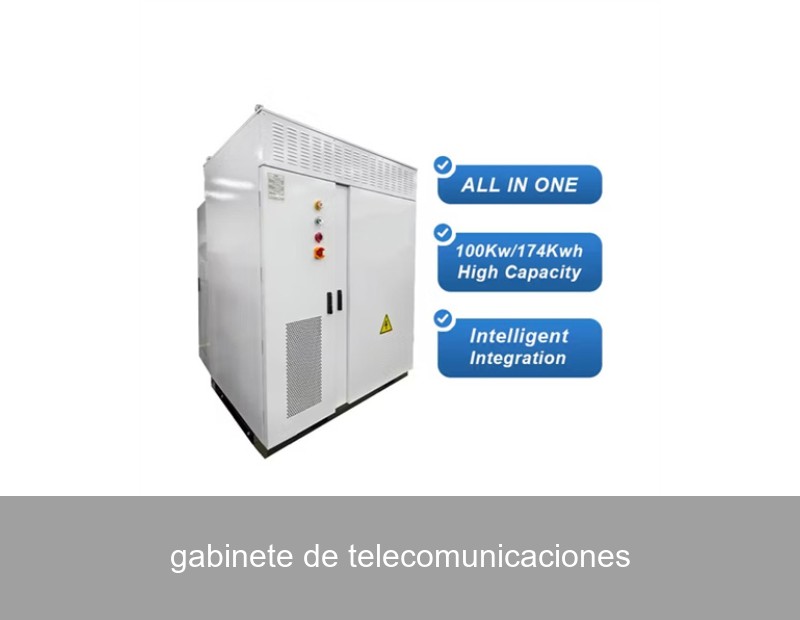
Imagine a world where a sudden power outage doesn't just turn off your lights, but also silences emergency services, halts financial transactions, and cuts off entire communities from the digital world. This isn't science fiction; it's a daily risk for the vast, unseen network of telecommunications cabinets (or gabinetes de telecomunicaciones) that form the backbone of our modern society. As our reliance on seamless data and connectivity skyrockets, so does the energy demand and resilience requirements of these critical nodes. This article explores the silent energy challenge at the heart of our networks and how intelligent, sustainable power solutions are becoming the new standard.
Table of Contents
- The Silent Challenge: Powering the Unseen Grid
- Data Realities: The Cost of Downtime and Inefficiency
- Case Study: A European Telco's Green and Resilient Transformation
- Beyond Backup: The Modern Energy Ecosystem for Cabinets
- Highjoule's Tailored Solutions for Network Resilience
- Future-Proofing Your Network Assets
The Silent Challenge: Powering the Unseen Grid
Telecommunications cabinets are the unsung heroes of connectivity. Nestled on street corners, hidden in basements, or stationed in remote areas, these enclosures house the sensitive electronics that switch, route, and amplify our data. Traditionally, they've relied on simple lead-acid batteries and grid power, with diesel generators as a last resort. However, this model faces mounting pressures:
- Increased Power Density: 5G and fiber-optic upgrades require more powerful equipment in the same confined space, generating more heat and demanding more energy.
- Grid Instability: Aging infrastructure and extreme weather events, from heatwaves in Southern Europe to winter storms in North America, are making grid outages more frequent (IEA Report on Grids).
- Sustainability Mandates: Both corporate ESG goals and regional regulations, like the EU's Green Deal, are pushing telecom operators to reduce carbon footprints and noise pollution from generators.
- Operational Costs: The maintenance, replacement, and inefficient energy use of legacy power systems create a significant financial drain.
Data Realities: The Cost of Downtime and Inefficiency
The numbers paint a stark picture. According to a study by the Ponemon Institute, the average cost of a data center outage has soared to over $9,000 per minute. While a single street cabinet outage may seem smaller in scale, the aggregate impact across a network is colossal, affecting service level agreements (SLAs), brand reputation, and public safety. Furthermore, energy can constitute up to 40% of a telecom network's operational expenditure (OpEx). Inefficient, always-on cooling and conversion losses in traditional power systems waste a substantial portion of this energy, directly impacting the bottom line and environmental goals.

Modern telecom sites are increasingly integrating renewable sources like solar, creating a hybrid power challenge that demands advanced energy management.
Case Study: A European Telco's Green and Resilient Transformation
Faced with rising energy costs and ambitious net-zero targets, a major telecommunications provider in Germany embarked on a pilot project to modernize power for 200 remote and urban cabinet sites. Their challenges were typical: unreliable grid in rural areas, space constraints in cities, and a need to eliminate diesel generators.
The Solution & Implementation: The telco partnered with Highjoule to deploy a standardized, compact lithium-ion battery energy storage system (BESS) paired with intelligent power conversion and management software. The systems were designed for direct integration into new and existing gabinetes de telecomunicaciones.
| Metric | Before (Legacy System) | After (Highjoule BESS) |
|---|---|---|
| Backup Runtime | 2-4 hours (Lead-Acid) | 8+ hours (Li-ion) |
| System Footprint | 100% (Baseline) | Reduced by 60% |
| Expected Lifespan | 3-5 years | 10+ years |
| Energy Efficiency | ~85% | >96% |
| CO2 Reduction (Site/Year) | Baseline | Estimated 1.2 tons |
The Outcome: Over 18 months, the pilot sites achieved 99.999% power availability. The intelligent systems allowed for "peak shaving" – drawing from batteries during expensive grid demand peaks – reducing energy costs by an average of 18% per site. Critically, the remote monitoring capabilities of Highjoule's H-Sync Platform slashed maintenance visits by 75%, turning reactive repairs into proactive management. This case demonstrates that modernizing cabinet power isn't just about backup; it's a strategic upgrade for operational and financial resilience.
Beyond Backup: The Modern Energy Ecosystem for Cabinets
Today's leading telecommunications cabinet is evolving from a passive consumer to an active energy node. The integration of solar canopies or small wind turbines creates a hybrid microgrid at the cabinet level. This shift requires a far more sophisticated brain than a simple battery charger.
- Intelligent Energy Management: An AI-driven platform must decide in real-time: Should it power the load from solar, store excess energy, discharge the battery to avoid a grid peak, or prepare for an incoming storm?
- Thermal Management Synergy: Advanced systems can coordinate cooling cycles with energy availability, pre-cooling the cabinet during off-peak or solar-rich hours to reduce midday grid draw.
- Grid Services Potential: In the future, aggregated networks of these smart cabinets could provide valuable grid stability services, such as frequency response, creating a potential new revenue stream for operators (U.S. Department of Energy on Grid Modernization).
Highjoule's Tailored Solutions for Network Resilience
At Highjoule, we understand that the gabinete de telecomunicaciones is a critical, space-constrained, and often unmanned asset. Since 2005, we have specialized in designing power solutions that meet these unique challenges head-on. Our approach is not one-size-fits-all; it's about precision engineering for the telecom environment.
Our Cabinet-Grade Energy Storage Systems are built around high-cycling, long-life lithium iron phosphate (LFP) battery chemistry, known for its safety and stability. They are modular, allowing for scalable capacity within tight footprints, and feature wide operating temperature ranges to perform reliably from Scandinavian winters to Mediterranean summers.
The true intelligence lies in our H-Sync Energy Management Platform. This software provides network operators with a single pane of glass to monitor, manage, and optimize the energy performance of thousands of dispersed cabinets. It enables predictive maintenance, configures site-specific power strategies (like maximizing solar self-consumption), and delivers detailed reports on energy savings and carbon reduction—key for sustainability reporting.

Centralized, remote management of distributed energy assets is crucial for large-scale network efficiency.
Future-Proofing Your Network Assets
Investing in a modern energy system for telecommunications sites is no longer a mere utility upgrade; it's a strategic decision that impacts network reliability, OpEx, ESG compliance, and future readiness. As we move towards more decentralized and renewable-heavy energy grids, the cabinets that form our digital nervous system must be powered by solutions that are equally intelligent, adaptive, and sustainable.
The question for network planners and operators is this: Is your current power infrastructure for remote sites and cabinets a liability waiting to cause an outage, or is it an asset that enhances your network's value, resilience, and green credentials? At Highjoule, we believe every cabinet should be a pillar of strength in your network. We invite you to consider: What would a 30% reduction in energy-related OpEx and a 99.999% power availability guarantee do for your business and your customers?
 Inquiry
 Online Chat