


Why a Backup Battery for Solar Panels is Your Key to Energy Independence
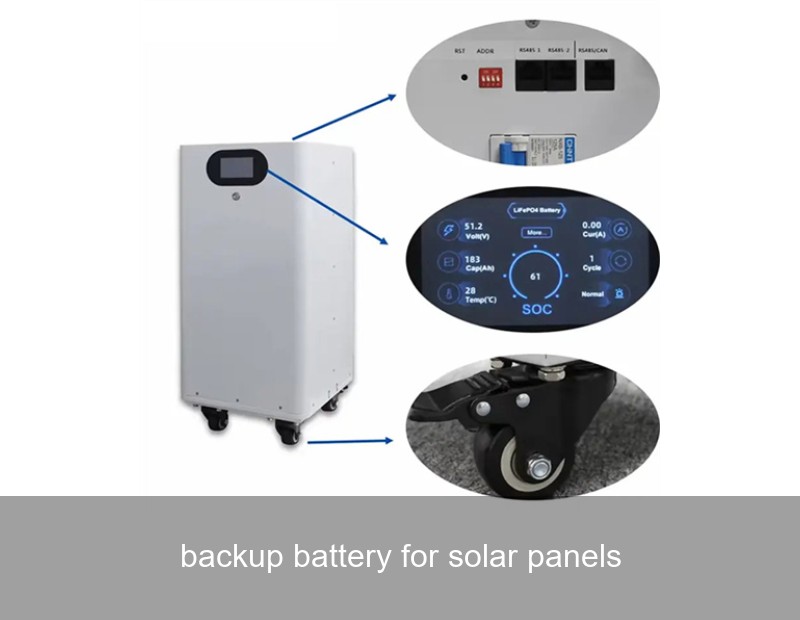
You've made the smart investment in solar panels. You're generating clean energy, reducing your carbon footprint, and watching your electricity bills drop. But what happens when the sun goes down, or more critically, when the grid goes down? Suddenly, your efficient home is in the dark, and your solar panels are idle. This common scenario highlights a crucial missing piece: a backup battery for solar panels. This isn't just an add-on; it's the transformative component that unlocks true energy resilience, maximizes your solar investment, and provides unwavering power security. As a global leader in advanced energy storage since 2005, Highjoule has seen how integrating intelligent battery systems revolutionizes how homes and businesses interact with energy.
Table of Contents
- The Solar Power Gap: Generation vs. Consumption
- How a Solar Backup Battery System Works: More Than Just a Blackout Hero
- Key Benefits: From Financial Smarts to Grid Support
- A Real-World Case: The California Story
- Choosing the Right System: A Highjoule Perspective
- The Future Outlook: Smarter, More Integrated Grids
The Solar Power Gap: Generation vs. Consumption
Let's face a fundamental truth about solar energy: its production curve rarely matches your consumption curve. Peak generation happens in the middle of a sunny day, but peak consumption for many households occurs in the early morning and evening. Without a battery, excess solar energy you don't use immediately is typically fed back to the grid, often for a credit (net metering). However, the value of that exported energy is usually lower than the cost of energy you pull from the grid at night.
This mismatch creates an opportunity cost. You're producing free power but can't fully utilize it on your terms. Furthermore, during a widespread power outage, most standard grid-tied solar systems are required to shut off automatically for the safety of utility workers. This safety feature, called "anti-islanding," means your panels stop powering your home precisely when you need them most. A backup battery system elegantly solves both these problems.

Image Source: Unsplash - A modern home energy setup with solar generation and battery storage.
How a Solar Backup Battery System Works: More Than Just a Blackout Hero
Think of a solar battery system as a sophisticated energy bank. It sits quietly in your garage or utility space, managing the flow of electricity between your solar panels, your home, and the grid. Here’s a simplified breakdown of its intelligent operation:
- Daytime Charging: Your solar panels produce electricity. This power first meets your home's immediate needs. Any surplus, instead of going straight to the grid, is directed to charge your battery.
- Evening/Night Discharge: As the sun sets and your solar production falls, your home automatically draws power from the fully charged battery. This drastically reduces or eliminates your need to buy expensive peak-time electricity from the utility.
- Grid Outage Mode: When the grid fails, the system instantly isolates your home (creating a "microgrid") and switches to backup power. Your solar panels can continue to charge the battery and power critical loads, keeping lights, refrigeration, and essential devices running seamlessly.
Highjoule's systems, like our H-Joule Home Energy Vault, take this further with AI-driven energy management. Our software learns your consumption patterns, weather forecasts, and utility rate schedules to optimize every kilowatt-hour—maximizing savings and ensuring your backup is always ready.
Key Benefits: From Financial Smarts to Grid Support
Investing in a backup battery for solar panels delivers a compelling multi-layered return on investment (ROI):
| Benefit Category | Description | Impact |
|---|---|---|
| Energy Independence & Resilience | Protection from blackouts, storms, and grid instability. | Peace of mind and continuity for families and home businesses. |
| Maximized Solar Self-Consumption | Store your excess solar energy for use later, day or night. | Can increase the utilization of your solar-generated power from ~30% to 70% or more. |
| Bill Management & Savings | Avoid peak-time charges and reduce reliance on the grid. | Significant reduction in electricity bills; in some markets, payback periods are now under 7 years. |
| Grid Services & Incentives | Some systems can participate in utility demand response programs. | Potential for additional revenue by supporting grid stability during stress events. |
| Increased Home Value | Studies show homes with solar+storage are viewed as premium, resilient assets. | A U.S. Department of Energy study notes solar homes sell faster and at a premium. |
A Real-World Case: The California Story
Theoretical benefits are one thing; real-world performance is another. Let's look at a compelling case from California, a leader in solar adoption and, unfortunately, increasingly prone to Public Safety Power Shutoffs (PSPS) due to wildfire risk.
The Situation: A medium-sized family home in Sonoma County had a 8kW solar array but no battery. During PSPS events, which could last multiple days, they were forced to evacuate or rely on a noisy, polluting gasoline generator.
The Solution: In 2022, they installed a Highjoule H-Joule Home Energy Vault with a usable capacity of 13.5 kWh. The system was configured to back up critical loads (refrigeration, lighting, communications, and a well pump) with an automatic transfer switch.
- During a 3-day outage in October 2023, the system kept critical loads running continuously.
- Daily solar production (averaging 25-30 kWh in fall) fully recharged the battery by early afternoon each day, creating a sustainable daily cycle.
- The homeowner's annual electricity bill decreased by an additional 68% post-battery installation, on top of their existing solar savings, by avoiding Time-of-Use (TOU) peak charges.
- They received a state-level incentive (like the SGIP) that covered nearly 25% of the battery system cost.
This case isn't unique. It demonstrates how a backup battery transitions from a contingency plan to a daily workhorse, delivering value 365 days a year.

Image Source: Unsplash - Representative image of a modern home battery installation.
Choosing the Right System: A Highjoule Perspective
Not all backup batteries are created equal. As you evaluate options, here are key factors we at Highjoule, with nearly two decades of global experience, advise you to consider:
- Usable Capacity (kWh): This is the "size of your fuel tank." How much energy can you actually use? Calculate your essential load requirements during an outage to determine the right size.
- Power Rating (kW): How much power can the battery deliver at once? This determines if you can run multiple high-power appliances (like an air conditioner or electric stove) simultaneously.
- Depth of Discharge (DoD) & Cycle Life: A battery with a 90% DoD and a 10,000-cycle life offers far more usable energy over its lifetime than one with 80% DoD and 6,000 cycles. Highjoule cells use advanced lithium iron phosphate (LFP) chemistry for safety and longevity.
- Integration & Intelligence: The inverter and software are the "brain." A seamless, integrated system like Highjoule's, which manages solar, battery, and grid interaction holistically, outperforms piecemeal components.
- Scalability: Can you add more batteries later? Our modular design allows you to start with what you need and expand as your needs or budget grows.
Where Highjoule Fits In
Highjoule designs systems with these principles at the core. For residential customers, our H-Joule Home Energy Vault offers scalable capacity, robust backup power, and intelligent energy arbitrage. For commercial and industrial clients, our GridMax C&I Series provides large-scale storage for demand charge reduction, renewable integration, and backup power for critical operations. Our solutions are built on a foundation of safety, reliability, and smart software that turns stored energy into a strategic asset.
The Future Outlook: Smarter, More Integrated Grids
The evolution of the backup battery for solar panels is moving from a standalone product to a key node in a virtual power plant (VPP). Imagine thousands of distributed Highjoule systems across a city, coordinated by cloud software, providing collective power to stabilize the grid during heatwaves or emergencies. This isn't science fiction; it's happening now in pilot programs across the U.S. and Europe. Homeowners could earn additional income by allowing their battery to support the grid for a few minutes a day, creating a more resilient and democratic energy network.
This future hinges on the continued advancement of battery technology, smart inverters, and policy frameworks that recognize the value of distributed storage. The International Energy Agency (IEA) highlights in its Renewables 2023 report that energy storage is the critical enabler for high shares of renewables in the electricity mix.
So, the question isn't just "Do I need a backup battery?" but rather, "How much value do I want to unlock from my solar investment, and what level of energy resilience does my home or business deserve?"
 Inquiry
 Online Chat