


Backup Battery Power for Home: Your Guide to Energy Independence and Security
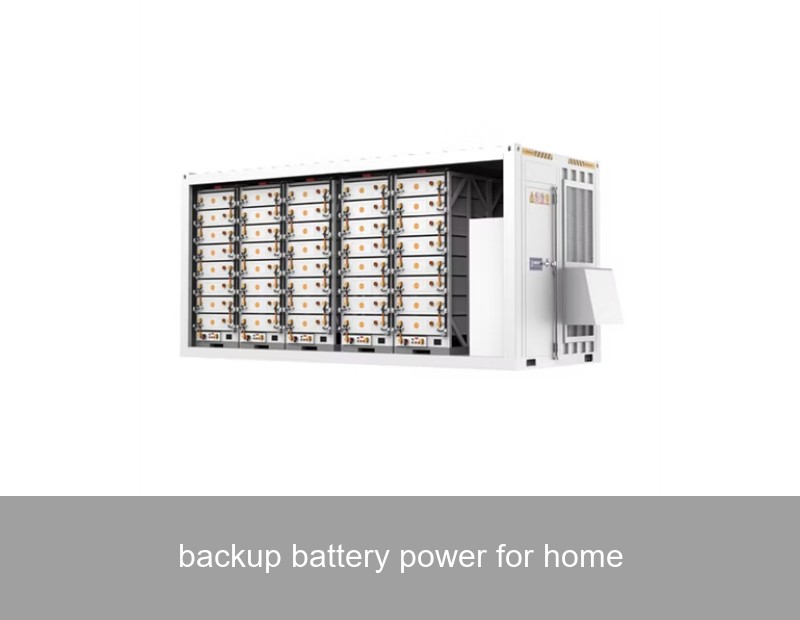
Imagine this: a severe storm rolls through your neighborhood. The lights flicker once, twice, and then go out completely. Your refrigerator hums to a stop, the Wi-Fi is gone, and your phone's battery is dwindling. Now, imagine a different scenario. The same storm hits, but your home's lights stay on, your food stays cold, and life continues with minimal disruption. The difference? Backup battery power for home. More than just a backup plan, modern home battery systems are the cornerstone of a new era of energy resilience, allowing homeowners to take control of their power supply, reduce reliance on the grid, and integrate renewable energy seamlessly. Let's explore how this technology is transforming homes from passive consumers into active, secure energy hubs.
Why Home Backup Power is More Critical Than Ever
The need for reliable backup battery power for home has moved from a niche concern to a mainstream priority. The phenomenon is clear: our weather is becoming more extreme, and our aging electrical grids are struggling to keep up.
Consider the data: The U.S. experienced an average of over 3,500 power outages annually from 2015-2020, with a significant portion caused by severe weather. In Europe, grid stability concerns are equally pressing, driven by both climate events and geopolitical energy pressures. The cost of these outages isn't just inconvenience—it's spoiled food, lost productivity, and in some cases, risks to health and safety for those reliant on medical equipment.
This isn't just about reacting to blackouts. It's about a proactive shift in mindset. Homeowners are no longer asking "if" the power will go out, but "when." And they are seeking solutions that don't just provide emergency power for a few hours, but that integrate with solar panels to create a self-sustaining energy ecosystem. This is where intelligent battery storage comes in.

Image: A modern home equipped for energy independence with solar panels and a battery storage unit. Source: Unsplash
Key Components of a Modern Home Battery System
A sophisticated home backup system is more than just a box of batteries. It's an integrated energy management solution. Here are the core parts:
- The Battery Pack: The heart of the system. Modern systems typically use Lithium Iron Phosphate (LFP) chemistry, known for its safety, long lifespan (often 10+ years), and excellent performance. Capacity is measured in kilowatt-hours (kWh).
- The Inverter/Charger: The brain. This critical device manages energy flow in three directions: converting DC power from the batteries or solar panels to AC power for your home, converting AC grid power to DC to charge the batteries, and ensuring seamless switching during a grid outage.
- The Energy Management System (EMS): The nervous system. This smart software learns your energy usage patterns, decides when to charge from the grid or solar, when to discharge to power your home, and can even participate in grid services in some regions.
- Critical Loads Panel (Optional but Recommended): A sub-panel that allows you to prioritize essential circuits (like refrigeration, lighting, internet, medical devices) during an outage, extending your backup duration significantly.
| System Size | Battery Capacity | Typical Backup Coverage | Best For |
|---|---|---|---|
| Essential | 5-10 kWh | Critical loads for 12-24 hours | Short outages, powering essentials |
| Whole-Home (Medium) | 10-20 kWh | Most home functions for 12-18 hours | Families in areas with frequent, longer outages |
| Whole-Home (Large) + Solar | 20+ kWh | Full home operation for days, especially with solar recharge | Maximizing solar self-consumption, long-term resilience |
Real-World Case Study: Resilience in California's Fire-Prone Zones
Let's look at a concrete example from a Highjoule installation in Sonoma County, California—a region frequently impacted by Public Safety Power Shutoffs (PSPS) to prevent wildfires.
The Challenge: The homeowners, a family of four, experienced 5-7 extended grid outages per year, each lasting from 8 hours to over 48 hours. They had a 8kW solar array but, like most standard systems, it would shut down during a grid outage (a requirement known as "anti-islanding")—leaving their panels useless when they needed power most.
The Solution: Highjoule designed and installed a ResiCore 15 home battery system with a 16 kWh capacity, paired with their existing solar panels. The system included a Highjoule SmartHub inverter, which enables solar charging even during a blackout—a feature known as "solar self-consumption during outage." A critical loads panel was installed to manage essential circuits efficiently.
The Results: During the next PSPS event, which lasted 34 hours, the home remained fully operational on the critical loads circuit. The system powered the refrigerator, lighting, internet/router, and well pump. Crucially, because the sun was shining, the solar panels recharged the batteries during the day, effectively creating a self-replenishing power source. The family's energy usage data showed they maintained 90% of their normal comfort level throughout the outage, with the battery's state of charge never dropping below 40%. This case perfectly illustrates how backup battery power for home, when integrated with solar, transforms a home into a true microgrid.
Choosing the Right System for Your Home
Selecting a backup battery power for home solution isn't one-size-fits-all. Ask yourself these key questions:
- What are your primary goals? Is it purely outage protection, maximizing solar self-use to reduce bills, or both?
- What do you need to power during an outage? List your essential appliances and estimate their wattage. This determines your required battery capacity.
- Do you have or plan to get solar panels? An "AC-coupled" system can work with existing solar, while a new "DC-coupled" installation can be more efficient.
- What is your local climate and grid reliability like? This influences the necessary battery capacity and the potential for solar recharge during extended outages.
Highjoule's Smart Approach to Home Energy Security
At Highjoule, with nearly two decades of experience in advanced energy storage, we engineer solutions that think beyond the battery. Our ResiCore Series of home energy storage systems is built on three pillars: Intelligence, Integration, and Independence.
Our systems feature the proprietary Adaptive Energy Operating System (AEOS), which doesn't just store and release energy. It learns. By analyzing your home's energy patterns, local weather forecasts, and even real-time grid conditions (where available), AEOS optimizes every kilowatt-hour. It can pre-charge your batteries before a forecasted storm, maximize the use of your solar production, and if you choose to participate, can provide grid support services.
For homeowners, this translates to a seamless experience. The Highjoule Home app gives you clear visibility and control over your energy, showing you in real-time where your power is coming from, how much you're storing, and your projected backup duration. Our systems are designed for scalability—you can start with a base unit and add more battery capacity as your needs evolve. We provide comprehensive support from design and installation to ongoing monitoring, ensuring your investment delivers peace of mind for years to come.
Image: A homeowner monitoring their energy usage and battery status via a smartphone app. Source: Unsplash
The Future of Home Energy is Autonomous
The evolution of backup battery power for home is moving towards fully autonomous home energy networks. We're talking about systems that can automatically island from the grid, reconfigure power flows, and communicate with other local systems to create community resilience. Technologies like vehicle-to-home (V2H), where your electric car battery can power your house, are on the horizon and will integrate with these home systems.
The journey towards energy independence is accelerating. It's driven by a desire for security, a commitment to sustainability, and the empowering realization that we can have more control over a fundamental aspect of our daily lives.
 Inquiry
 Online Chat