


Unlocking True Energy Freedom: Your Guide to the Modern Solar Battery System (Batería Sistema Solar Fotovoltaico)
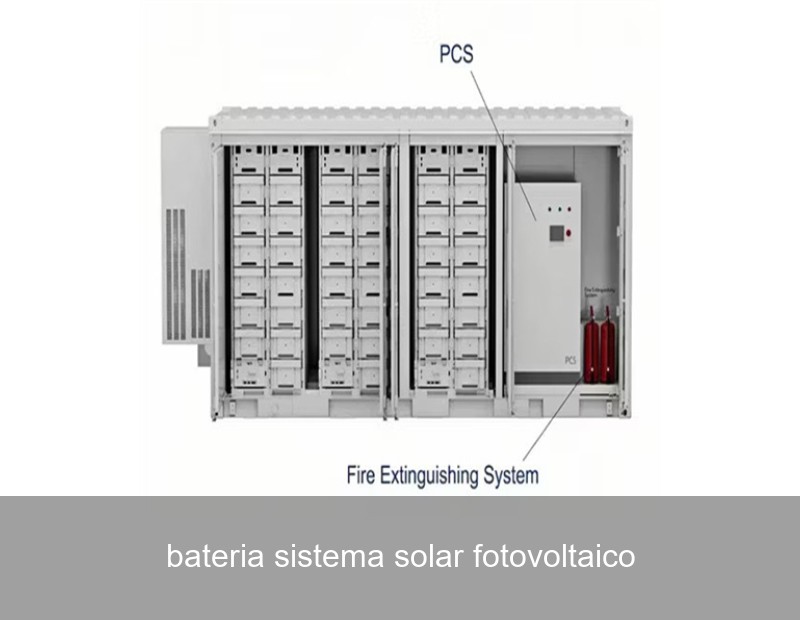
You've made a smart investment in solar panels. You're generating clean energy, reducing your carbon footprint, and watching your daytime electricity bills drop. But what happens when the sun goes down, or on those cloudy days? This is the missing piece of the puzzle for many homeowners and businesses: the solar battery system, or as our Spanish-speaking friends aptly call it, the batería sistema solar fotovoltaico. It's the technology that transforms your solar array from a daytime energy-saver into a 24/7 personal power plant, delivering true energy independence and resilience.
Why You Should Seriously Consider a Battery: Beyond Just Backup
Let's face it, the traditional grid is becoming less predictable. We hear about it in the news: extreme weather events, aging infrastructure, and fluctuating energy costs. The phenomenon is clear—reliance on a one-way power flow is a growing vulnerability.
Here's where the data gets compelling. According to the U.S. Department of Energy, pairing solar PV with storage can increase your self-consumption of solar energy from 20-40% to over 80%. That means the vast majority of the power you generate is used in your own home, not sent back to the grid for a minimal credit. In markets like California with Net Metering 3.0, or across Europe where feed-in tariffs are shrinking, this self-consumption is directly tied to significant financial savings.
Consider the case of a family in Texas. They had a 10kW solar system but still faced high charges during peak evening hours. After installing a battery, their grid imports during expensive peak times dropped by over 90%. The battery charged from their excess solar during the day and powered their home from 4 PM to 9 PM. The result? Their annual electricity bill was slashed by an additional 60%, on top of the savings from solar alone. The battery paid for itself in under 7 years.
The insight is powerful: a batería sistema solar fotovoltaico is no longer just an emergency backup for blackouts. It's an active financial management tool. It allows you to "time-shift" your solar energy, avoid peak utility rates, and create a resilient energy ecosystem for your property. It's the logical next step to maximize your solar investment.

Image Source: Unsplash. A modern, compact solar battery system integrated into a residential setting.
Key Components of a Modern Solar Battery System
Understanding the key parts of the system demystifies the technology. Think of it as a sophisticated energy team:
- The Battery Bank: The heart of the system. Modern systems typically use Lithium Iron Phosphate (LFP) chemistry for its safety, long lifespan (often 10+ years/6000+ cycles), and excellent performance. Capacity is measured in kilowatt-hours (kWh).
- The Hybrid Inverter or Battery Inverter: The brain. This critical device manages the flow of energy between your solar panels, the battery, your home's circuits, and the grid. It converts DC power from solar and batteries to AC power for your home, and vice-versa for charging the battery.
- The Energy Management System (EMS): The strategy. This is the intelligent software that decides when to charge or discharge the battery based on your usage patterns, electricity rates, and even weather forecasts. A good EMS is what unlocks the true financial and practical benefits.
- Safety & Integration Hardware: Includes circuit breakers, disconnects, and monitoring systems to ensure safe, code-compliant operation alongside your existing solar and electrical panel.
| Feature | Solar PV Only | Solar PV + Battery System |
|---|---|---|
| Energy Self-Consumption | Moderate (20-40%) | High (80%+) |
| Power During Outages | No (Grid-tied systems shut off) | Yes (Seamless backup power) |
| Peak Rate Management | Limited | Excellent (Avoid high time-of-use charges) |
| Grid Independence | Low | High |
| ROI Timeline | Shorter | Longer, but with greater long-term savings & value |
Real-World Case Study: From Grid Dependency to Energy Independence
Let's look at a concrete example from our work at Highjoule. A medium-sized dairy farm in Bavaria, Germany, was facing two major challenges: extremely high energy costs for their cooling and milking operations, and an unreliable local grid that threatened spoilage during outages.
The Challenge: A 50kW rooftop solar system was already in place, but over 60% of its generation was being fed back to the grid due to mismatched production and consumption times. The farm was still exposed to volatile energy prices and operational risk.
The Solution: Highjoule engineers designed and installed a tailored batería sistema solar fotovoltaico featuring a 120kWh Highjoule H-Stack commercial battery system, integrated with their existing solar via a Highjoule HI-30 hybrid inverter. The system was configured with intelligent software to prioritize charging the battery during the day and discharging it during high-cost evening hours and for critical overnight cooling loads.
The Data-Driven Results (12 months post-installation):
- Grid Energy Consumption: Reduced by 78%.
- Self-Consumption of Solar: Increased from 35% to 92%.
- Annual Energy Cost Savings: €18,500 beyond previous solar savings.
- ROI Projection: Achieved in under 6 years, factoring in German subsidy programs.
- Resilience: The farm seamlessly weathered three grid outages, protecting thousands of liters of milk.
This case perfectly illustrates the multi-faceted value proposition of a well-integrated solar battery system for commercial applications.
Choosing the Right System: What to Look For
Not all battery systems are created equal. As you evaluate options, keep these key factors in mind:
- Scalability: Can you easily add more battery capacity later if your needs grow?
- Chemistry & Warranty: Prioritize safe, long-life chemistry like LFP. Look for a strong warranty that guarantees both capacity retention and years of service.
- Integration Intelligence: The software is as important as the hardware. Does it allow for smart, customizable control strategies?
- Professional Installation & Support: This is a complex, high-power system. Ensure your provider is certified, experienced, and offers long-term service support.
The Highjoule Solution: Intelligent Energy Independence
At Highjoule, with nearly two decades of experience since 2005, we've designed our products to meet these exact criteria. Our approach to the batería sistema solar fotovoltaico is built on the principle of intelligent integration.
Our flagship residential product, the Highjoule H-Core, is a modular LFP battery system. Starting at 10kWh, it can be expanded in increments to match your exact needs. It pairs seamlessly with our Highjoule HI-Series Hybrid Inverters, which feature our proprietary Adaptive Learning EMS. This system doesn't just follow simple rules; it learns your household's energy patterns and optimizes charge/discharge cycles to maximize savings, all while ensuring you always have reserved power for outages.
For commercial and industrial clients, like the Bavarian farm, our H-Stack modular battery cabinets provide scalable storage from 50kWh to multiple megawatt-hours. They are engineered for high-cycle, daily use and come with robust remote monitoring and management platforms, giving business owners complete control over their energy assets.
Our services extend beyond the sale. We provide full system design, professional installation through our network of certified partners, grid permission support, and comprehensive after-sales monitoring and maintenance. We don't just sell hardware; we deliver a turnkey power resilience solution.

Image Source: Unsplash. Professional monitoring and management of a large-scale battery storage system.
The Future is Bright: Trends in Solar Battery Storage
The technology is advancing rapidly. We're moving towards even more integrated systems, where the inverter, battery, and management system are a single, sleek unit. Software is becoming the key differentiator, with AI-driven predictions optimizing for weather, tariff changes, and individual consumption habits. Furthermore, concepts like Virtual Power Plants (VPPs) are emerging, where networks of home batteries can provide stability services to the grid, potentially creating a new revenue stream for homeowners.
So, as you look at your solar panels on the roof, ask yourself: Is my system working as hard as it could be? What would true energy security and maximum financial return look like for my home or business?
 Inquiry
 Online Chat