


Batterie Lithium Ion 12V: The Compact Powerhouse Revolutionizing Energy Independence
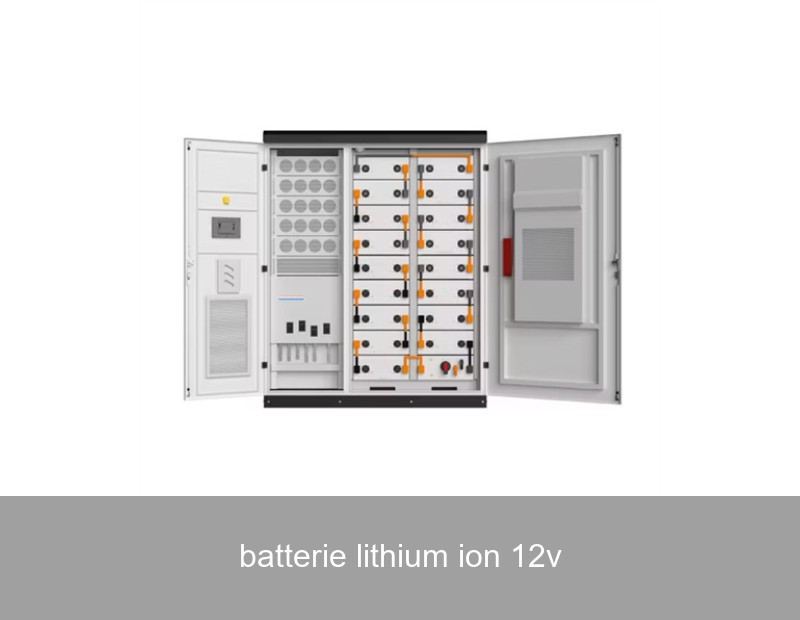
you're miles from the nearest power line, yet your lights are on, your refrigerator hums quietly, and your essential devices are charged. At the heart of this modern convenience often lies a deceptively simple component: the 12V lithium-ion battery. Far from being just a "better" version of an old lead-acid battery, this technology represents a fundamental shift in how we store and use energy for mobility, backup, and off-grid living. For homeowners, boaters, RV enthusiasts, and businesses across Europe and the US, understanding the capabilities of a high-quality batterie lithium ion 12v system is the first step toward true energy resilience and efficiency.
Why the Switch to 12V Lithium-Ion is More Than Just an Upgrade
For decades, lead-acid batteries were the default choice. But many users experienced the frustration of a battery dying prematurely, struggling in cold weather, or requiring constant maintenance. This is the phenomenon of energy storage limitations holding back innovation in small-scale applications.
Let's look at the data. A typical 100Ah lead-acid battery should only be discharged to about 50% of its capacity to avoid damaging it, giving you a usable 50Ah. It might last 500-800 cycles under ideal conditions. In contrast, a 12V lithium iron phosphate (LiFePO4) battery—a leading safe chemistry—can often be discharged to 80-90% depth (giving you 80-90Ah of usable energy) and delivers 3000-5000 cycles. That's not a 20% improvement; it's a 400-600% increase in lifetime performance. The weight saving is equally dramatic, with lithium-ion batteries being up to 70% lighter.

Image Source: Unsplash (Photographer: American Public Power Association)
The Core Advantages in a Nutshell
- Longer Lifespan & Higher Cycle Life: As mentioned, thousands of deep cycles mean years, even a decade, of reliable service.
- Greater Usable Capacity: Get almost all the energy you paid for, every single time.
- Faster Charging: Accepts a higher charge current, reducing generator runtime or time needed in the sun.
- Minimal Maintenance: No need to check water levels or equalize charges. A true "set and forget" solution.
- Superior Performance in Temperature Extremes: Advanced Battery Management Systems (BMS) protect the cells, enabling operation in a wider range than lead-acid.
Beyond Voltage: Key Specifications You Must Understand
Choosing a batterie lithium ion 12v isn't just about picking an "Ampere-hour" (Ah) rating. To make an informed decision, you need to speak the language of its specifications. Think of it as hiring an employee; you need to check their resume (the specs) to ensure they can handle the job (your energy needs).
| Specification | What It Means | Why It Matters for You |
|---|---|---|
| Chemistry (LiFePO4 vs. NMC) | The type of lithium-ion compound used. | LiFePO4 offers superior safety, longevity, and thermal stability, making it ideal for stationary storage. NMC may have higher energy density for weight-sensitive mobile applications. |
| Battery Management System (BMS) | The onboard computer that protects the battery. | A robust BMS prevents overcharge, over-discharge, short circuits, and manages cell balancing. It's the brain that guarantees safety and lifespan. |
| Continuous Discharge Current (A) | The max constant current the battery can supply. | If you have a 1000W inverter, you need a battery that can continuously deliver at least ~83A (1000W / 12V). Exceeding this limit can trip the BMS. |
| Depth of Discharge (DoD) | The percentage of capacity safely usable. | A 100Ah battery with 90% DoD gives you 90Ah of usable energy. This is your "real" capacity. |
From Theory to Practice: A Real-World Case Study in Off-Grid Power
Let's move from specs sheets to a tangible case study. A small, family-run organic farm in Bavaria, Germany, relied on a diesel generator and an aging lead-acid battery bank to power a remote irrigation control system, sensor network, and a small processing shed. Their challenges were high fuel costs, generator noise and fumes, and frequent battery replacements every 2-3 years.
Their solution was a hybrid system: a 5kW rooftop solar array paired with a 15kWh energy storage system built from modular 12V lithium-ion batteries configured in series and parallel. The result? Data from their first year of operation showed a 95% reduction in generator runtime, eliminating over 1,800 liters of diesel fuel and approximately 4.8 tonnes of CO2 emissions annually. The battery system, operating within its optimal DoD, is projected to last beyond 10 years, making the ROI compelling. The farmer noted, "The reliability is what changed our operation. The system runs silently day and night, and we finally trust our power supply completely."
This mirrors the insight we see globally: a batterie lithium ion 12v is rarely just a battery. It's the core building block of an intelligent, scalable, and sustainable energy ecosystem.
Choosing the Right 12V Lithium-Ion Battery System for Your Needs
So, how do you translate this knowledge into a purchase? Follow this logical ladder:
- Audit Your Loads: List everything you need to power and for how long (Watt-hours).
- Define Your Goals: Is it for backup (short duration, high power), daily cycling (solar storage), or a mix?
- Plan for Scalability: Will your needs grow? Choose a system that allows you to add more batteries in parallel easily.
- Prioritize the Ecosystem: The battery must communicate seamlessly with your inverter, charger, and solar charge controller. Compatibility is king.
Common Application Profiles
- RV & Marine: Look for compact size, lightweight, and a BMS with a low-temperature charging cutoff to protect the cells in winter.
- Residential Solar Backup: Prioritize cycle life, safety (LiFePO4), and compatibility with home energy management systems.
- Critical Telecom/Industrial Backup: Focus on reliability, wide operating temperature ranges, and robust communication for remote monitoring.
The Highjoule Difference: Intelligent 12V Solutions for a Sustainable Future
This is where expertise and integrated design become critical. At Highjoule, with nearly two decades of experience since 2005, we view a batterie lithium ion 12v not as a commodity, but as the intelligent heart of a larger system. Our VoltCore® 12V Series is engineered with this philosophy.
Built with premium LiFePO4 cells and an industrial-grade, multi-layer BMS, the VoltCore series offers more than just specs on paper. It features built-in Bluetooth and optional CAN/RS485 communication, allowing users to monitor battery health, state of charge, and historical data directly from a smartphone app. This level of transparency turns a "black box" component into a manageable asset.

Image Source: Unsplash (Photographer: Possessed Photography)
For larger commercial and microgrid applications, our systems shine in their scalability. Our Intelligent Battery Management Platform (iBMP) can seamlessly orchestrate dozens of 12V battery modules as a single, cohesive storage unit, optimizing for longevity, efficiency, and demand response. Whether it's a remote telecom tower in Scandinavia, a winery in California seeking energy resilience, or a net-zero home in the Netherlands, Highjoule provides more than hardware—we provide a guarantee of performance and a partnership in sustainability.
We often get asked, "Is now the right time to invest?" Given the falling costs of lithium technology and the rising costs and volatility of grid power and fossil fuels, the economic and environmental equation has never been clearer. The real question is: What specific energy challenge are you ready to solve with the reliable, clean power of a 12V lithium-ion system, and how can we help you design the optimal solution?
 Inquiry
 Online Chat