


Understanding the Price of a Home Battery: Your Investment in Energy Independence
If you've been considering solar panels or simply want more control over your electricity bill, you've likely stumbled upon the term "home battery" or, as our French-speaking friends say, batterie pour maison. And the first question that comes to mind is almost always about the prix—the cost. It's a crucial question, but the answer is more than just a number on a quote. It's about understanding the value behind the price tag, the technology that powers it, and the long-term freedom it provides. As a global leader in advanced energy storage since 2005, Highjoule is here to demystify the factors that shape the cost of a home battery system and help you see it for what it truly is: a smart investment in resilience, savings, and a sustainable future.
Table of Contents
- What's Inside the Price Tag? A System Breakdown
- Key Factors Influencing Your Home Battery Price
- From Theory to Reality: A European Case Study
- Looking Beyond the Initial Price: ROI and Value
- The Highjoule Approach: Smart Technology for Predictable Value
- Making Your Decision: The Right Questions to Ask
What's Inside the Price Tag? A System Breakdown
Think of a home battery system not as a single appliance, but as an integrated energy ecosystem. The total batterie pour maison prix encompasses several critical components:
- The Battery Unit(s): The heart of the system, measured in kilowatt-hours (kWh). This is your energy "bank."
- The Inverter/System Controller: The brain. This intelligent device manages energy flow between your solar panels, the battery, your home, and the grid. Some systems, like Highjoule's Harmoni series, feature an integrated hybrid inverter, streamlining installation and improving efficiency.
- Balance of System (BOS): This includes wiring, electrical panels, safety disconnects, and mounting hardware.
- Professional Installation: A certified electrician's expertise is non-negotiable for safety, performance, and compliance with local codes and utility requirements.
- Permits and Fees: Local building and electrical permits, along with any utility interconnection fees.
As a ballpark, for a typical installation in markets like Germany or California, you might see a price range of $8,000 to $15,000+ for a quality 10-15 kWh system before incentives. But why such a range? Let's dig deeper.
Key Factors Influencing Your Home Battery Price
Several variables directly impact the final cost. Understanding these empowers you to make an informed comparison.
1. Battery Capacity & Power (kWh & kW)
Capacity (kWh) is how much energy you can store; power (kW) is how much you can use at once. A larger home with higher energy needs or specific goals like whole-home backup will require a larger, more powerful system, increasing the prix de la batterie.
2. Battery Chemistry
Most modern systems use Lithium-ion, but there are variations. Lithium Iron Phosphate (LFP) batteries, which Highjoule utilizes across its residential product lines, offer superior safety, longer cycle life (often over 6,000 cycles), and better performance in a wider temperature range compared to older NMC chemistries. This long-term durability adds immense value over the system's lifetime.

Modern LFP battery systems, like those from Highjoule, offer a compact, safe, and long-lasting energy storage solution.
3. System Integration & Smart Features
A basic battery is just storage. A smart battery system is an energy manager. Advanced systems with sophisticated energy management software (EMS) can learn your usage patterns, automatically optimize for time-of-use rates, and participate in grid services like virtual power plants (VPPs). Highjoule's Neuron AI-powered platform does exactly this, turning your storage into an active asset that can generate additional revenue or savings, offsetting its initial cost.
4. Installation Complexity & Local Market
Is your electrical panel modern and easily accessible? Is the installation site far from the main panel? Labor costs and market demand in your specific region (e.g., California vs. Florida, or urban France vs. rural Sweden) also play a significant role.
From Theory to Reality: A European Case Study
Let's look at real data. A 2023 study by the International Energy Agency (IEA) highlighted the rapid decline in battery storage costs, which have fallen over 70% in the last decade. But how does this translate to a homeowner?
Consider the Müller family in Bavaria, Germany. In 2022, they installed a 12 kWh Highjoule Harmoni H3 system alongside a new solar array. Their total system cost was approximately €22,000. However, after the German federal subsidy (BAFA) and considering their local utility's VPP incentive program, their net investment was reduced to around €14,500.
Their Highjoule system, managed by the Neuron platform, strategically stores excess solar energy and discharges it during high-price evening hours. It also participates in the utility's grid-balancing program for small earnings. The result? They've reduced their grid electricity purchases by 85% and estimate a payback period of just under 7 years. For them, the batterie pour maison prix was an entry ticket to long-term bill stability and energy autonomy, especially valuable given Europe's recent energy price volatility.
Looking Beyond the Initial Price: ROI and Value
The true cost of a home battery is its total cost of ownership (TCO) versus the value it delivers. This is where the financial equation becomes compelling.
| Cost Factor | Value / Return Factor |
|---|---|
| Initial Purchase & Installation | Reduction in Monthly Electricity Bills (Bill Savings) |
| Potential Maintenance | Protection Against Rising Energy Prices & Outages (Energy Security) |
| System Degradation over time | Increased Self-Consumption of Solar Power (Maximizing Solar Investment) |
| Potential Earnings from Grid Services (VPP) | |
| Increased Home Value & Sustainability Profile |
Furthermore, incentives are a game-changer. In the US, the federal Investment Tax Credit (ITC) now covers 30% of the installed cost of a battery, even if it's not paired with solar in the same year. Many states and utilities offer additional rebates. In Europe, countries like Italy, Austria, and Sweden have robust subsidy programs. A reputable provider like Highjoule will have local experts who can guide you through every available incentive to minimize your net cost.
The Highjoule Approach: Smart Technology for Predictable Value
At Highjoule, we believe the right batterie pour maison shouldn't be a complex mystery. Our solutions are engineered for clarity, durability, and intelligent value generation. Our Harmoni series of residential storage systems, built with safe LFP chemistry, is designed for seamless integration with new or existing solar. Paired with our Neuron energy management platform, the system doesn't just store—it thinks.
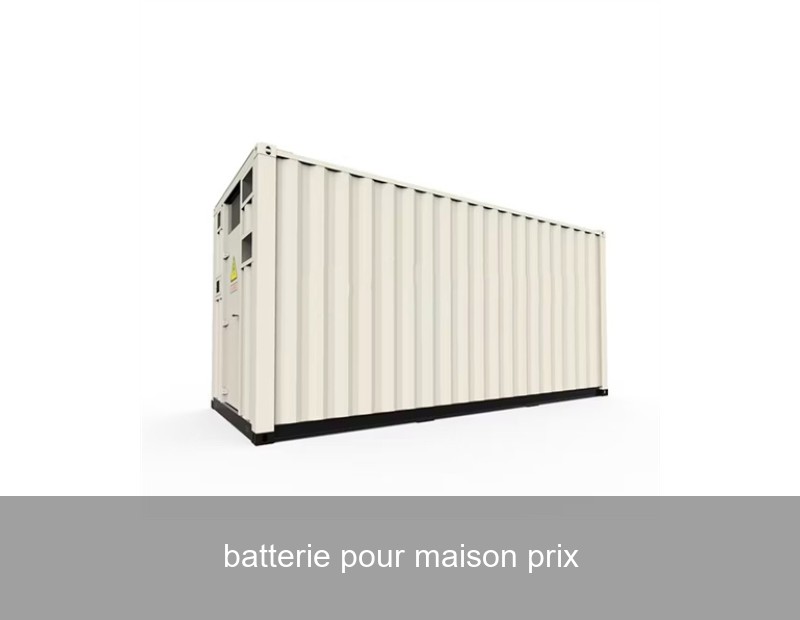
For larger needs, such as multi-family dwellings, commercial properties, or microgrids, our Fortis scalable containerized solutions provide utility-grade resilience. Across all our products, we focus on delivering a transparent prix that reflects not just hardware, but decades of software innovation and global support, ensuring your investment is protected and optimized for decades.

Smart energy management puts control and savings directly in the homeowner's hands.
Making Your Decision: The Right Questions to Ask
So, how do you move from considering the price to realizing the value? Start by asking these questions to any potential provider:
- What is the total installed price, and what warranties are included (battery, inverter, workmanship)?
- What battery chemistry do you use, and what is its expected cycle life/throughput warranty?
- How does the system's software optimize for my specific utility rates and local incentives?
- Can you provide a detailed projection of my bill savings and ROI based on my historical energy usage?
- Do you have local certified installers and service support?
The journey to energy independence starts with understanding that the batterie pour maison prix is the beginning of a financial and environmental story, not the end. With the right technology and partner, it's a story of taking control.
What's the first energy goal you'd like your home battery to achieve—eliminating your peak-time charges, ensuring your lights never go out, or finally maximizing every kilowatt-hour your solar panels produce?
 Inquiry
 Online Chat