


Finding the Best Solar Panel Battery Combo for Your Energy Independence
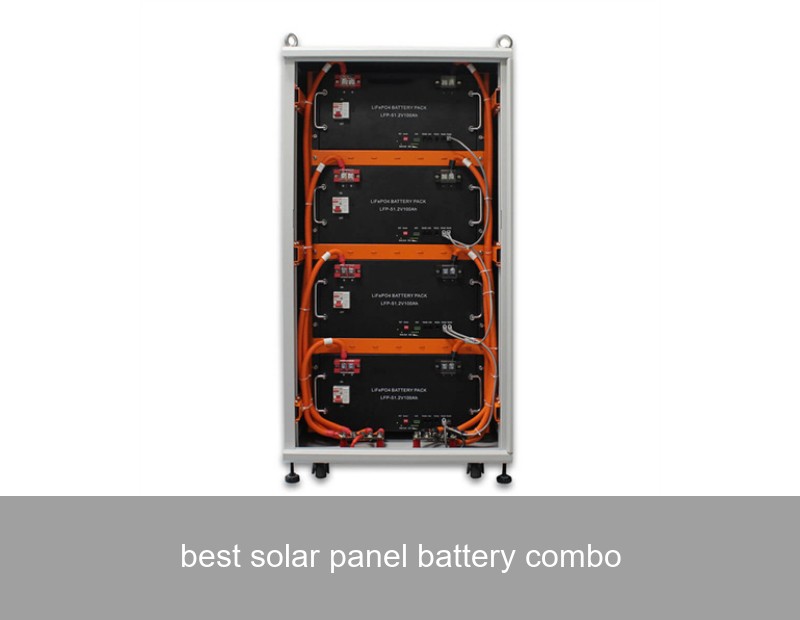
You've made the smart decision to invest in solar panels. You're generating clean energy, reducing your carbon footprint, and watching your daytime electricity bills plummet. But then the sun sets, and you're back to drawing power from the grid, often at peak rates. This common scenario is why the search for the best solar panel battery combo has become a central question for homeowners and businesses across Europe and the US. It's not just about generating power; it's about controlling it. The right battery storage system transforms your solar array from a daytime saver into a 24/7 energy solution, providing backup power, maximizing self-consumption, and unlocking true energy independence.
Beyond Panels: Understanding the Solar + Storage Power Combo
Think of your solar panels as a sophisticated rainwater collection system. It's excellent when the sun is shining (or rain is falling), but without a storage tank—the battery—you can't use that resource on demand. A solar battery stores the excess electricity your panels produce during the day. Later, when your panels are inactive at night or during a grid outage, you can use that stored energy. This simple concept has profound implications: the U.S. Energy Information Administration (EIA) notes that solar generation often doesn't align with peak demand periods, which typically occur in the evenings. A battery solves this mismatch.
The synergy between panels and battery creates a system greater than the sum of its parts. You're not just adding a component; you're creating a resilient, personal microgrid. This is where the quest for the best solar panel battery combo begins—finding two technologies that don't just work together, but are optimized for each other to deliver reliability, efficiency, and long-term value.
Key Criteria for the Best Solar Battery Combo
Not all combinations are created equal. Selecting the right pairing involves evaluating several technical and practical factors:
- Capacity & Power: Capacity (measured in kWh) is how much energy the battery can store—it's the size of your "fuel tank." Power (measured in kW) is how much energy it can deliver at once—it's the "engine size." Can it simultaneously run your fridge, lights, and HVAC during an outage?
- Depth of Discharge (DoD): Most batteries shouldn't be fully drained. A 10kWh battery with a 90% DoD means you can safely use 9kWh of its stored energy. A higher DoD means more usable energy from the same physical unit.
- Round-Trip Efficiency: This is the measure of how much energy you get back out versus what you put in. If you feed 10 kWh into a battery with 94% efficiency, you get 9.4 kWh usable energy out. Higher efficiency means less waste and more savings.
- Integration & Communication: The best solar panel battery combo features seamless communication between inverter, battery, and panels. This smart integration allows for advanced energy management, like prioritizing which circuits to power during an outage or charging from the grid when electricity is cheapest.
- Longevity & Warranty: Look for warranties that guarantee both a certain number of cycles (full charges/discharges) and years of service. A 10-year warranty with 70% capacity retention is a common benchmark for quality.

Image: A modern home energy setup featuring solar panels and an external battery storage unit. Source: Unsplash
A Real-World Case Study: Maximizing Self-Consumption in Hamburg
Let's look at a concrete example from our European operations. The Schmidt family in Hamburg, Germany, installed a 8 kW solar array on their detached home. Despite good generation, their self-consumption rate—the percentage of solar energy used directly in the home—was only around 35%. The rest was being exported to the grid for a modest feed-in tariff.
They sought a solution to increase their independence and resilience. Highjoule designed a system integrating their existing panels with a Highjoule HES-10 residential energy storage unit, featuring a usable capacity of 10.2 kWh and a peak power of 5 kW. The system included our advanced energy management gateway, which intelligently directs solar flow.
- Self-Consumption Rate: Jumped from 35% to 82%, dramatically reducing grid imports.
- Energy Bill Savings: Total electricity costs reduced by an additional €1,150 annually on top of their existing solar savings.
- Backup Power: The system provides seamless backup power for essential loads for over 24 hours, a critical feature during winter storm disruptions.
- ROI Timeline: The battery system's payback period is projected at just under 7 years, well within its warranty period.
This case illustrates that the best solar panel battery combo isn't a generic product, but a tailored system that understands and adapts to a household's unique energy profile.
The Heart of the System: Why Battery Chemistry and Integration Matter
Most modern home batteries use Lithium Iron Phosphate (LFP) chemistry, and for good reason. LFP batteries are renowned for their safety, long cycle life, and stability—they are less prone to thermal issues than other lithium-ion types. This makes them ideal for residential use. But chemistry is only part of the story.
The true performance of your solar panel battery combo is governed by the Battery Management System (BMS) and the system inverter. The BMS is the brain, meticulously monitoring cell voltage, temperature, and state of charge to optimize performance and lifespan. The inverter is the translator, converting DC from the panels and battery to AC for your home. An integrated, "hybrid" inverter that handles both solar and battery storage in one unit often leads to a more efficient, compact, and cost-effective setup than using separate components.
The Highjoule Solution: Engineered Harmony for Your Home
At Highjoule, with nearly two decades of experience since 2005, we believe the best solar panel battery combo is one designed as a unified system from the start. Our products are built not as afterthoughts, but as core components of an intelligent energy ecosystem.
Our flagship residential product, the Highjoule HES Series, is engineered specifically for deep integration with solar arrays. It features:
- High-Density LFP Cells: For superior safety and a lifespan exceeding 6,000 cycles.
- Adaptive Power Management: Our proprietary software learns your home's energy habits, automatically optimizing charge/discharge cycles to maximize savings based on time-of-use rates or solar forecast.
- Scalable Design: Start with a 10 kWh unit and expand capacity modularly as your needs evolve, protecting your initial investment.
- Grid Services Ready: In certain markets, our systems can participate in virtual power plant (VPP) programs, where your battery can help stabilize the community grid and earn you additional income.
For commercial and industrial clients, our Highjoule CIB Series provides large-scale storage solutions that manage demand charges, provide critical backup, and enable significant participation in energy arbitrage. As the International Renewable Energy Agency (IRENA) highlights, battery storage is a key enabler for high shares of renewable energy in grids worldwide, a principle we apply at every scale.

Image: A clean, modern battery storage installation for commercial use. Source: Unsplash
Making the Right Choice for Your Home or Business
So, how do you navigate this decision? Start by asking the right questions:
- What are my primary goals? Is it backup power during outages, maximizing financial return, increasing my renewable usage, or all of the above?
- What is my energy consumption pattern? Review your utility bills. How much energy do you use in the evening peak? A detailed audit is the first step Highjoule experts take when designing a system.
- What is my existing solar setup? Do you have a compatible inverter? Is your system "battery-ready," or will it need upgrades? Not all older solar systems integrate easily with modern batteries.
Consulting with a certified installer who can model different scenarios is crucial. They can use simulation tools to project your future self-consumption, savings, and payback period based on local weather data, electricity rates, and your consumption.
Looking Ahead: The Future of Home Energy
The integration of solar, storage, and smart energy management is paving the way for the next evolution: the true smart home energy manager. Future systems will not only manage your solar and battery but also intelligently control your EV charger, heat pump, and other major appliances, scheduling them to run when energy is cheapest or most abundant from your panels. This holistic approach, championed by innovators, is what will ultimately create the most resilient and cost-effective home energy systems. The U.S. Department of Energy's Solar Energy Technologies Office is actively funding research in this area to accelerate the integration of solar with storage and buildings.
Given the rapid evolution of technology and energy markets, what specific energy goal is most important for you to achieve in the next two years—and how can a perfectly paired solar and battery system help you get there?
 Inquiry
 Online Chat