


Battery Enabled Storage System: The Intelligent Heart of Modern Energy Independence
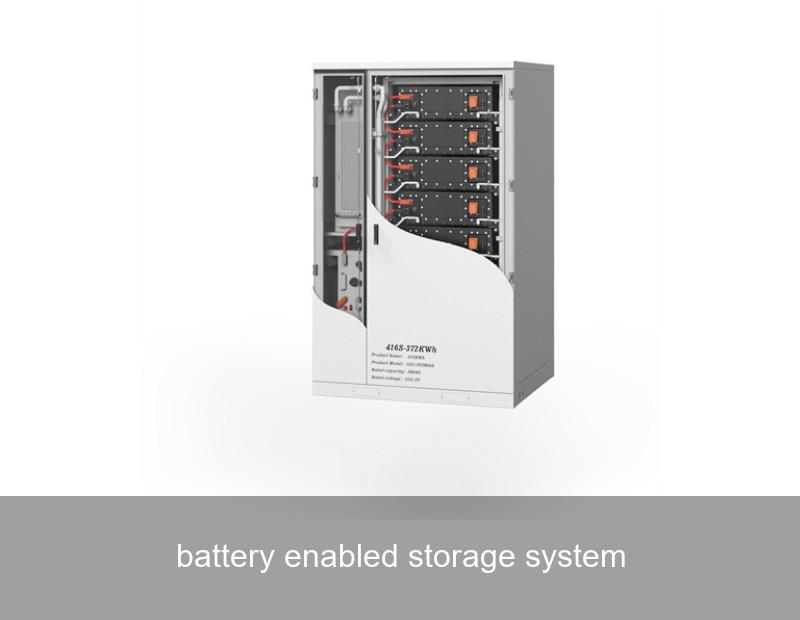
Have you ever wondered how businesses and homeowners can truly harness the power of the sun after it sets, or why some grids remain stable during peak demand while others buckle? The answer increasingly lies in a sophisticated core technology: the battery enabled storage system. More than just a bank of batteries, these are intelligent, integrated platforms that store electricity for when it's needed most, transforming renewable energy from an intermittent source into a reliable, on-demand power solution. For nearly two decades, Highjoule has been at the forefront of this revolution, engineering advanced battery enabled storage systems that empower commercial, industrial, and residential users across Europe and the U.S. to take control of their energy destiny.
Table of Contents
- The Phenomenon: From Variable Sun to Constant Power
- The Data: Why Storage is No Longer Optional
- Case Study: A German Manufacturing Plant's Resilience Story
- System Anatomy: What Makes a Storage System "Battery Enabled"?
- The Highjoule Approach: Intelligence Meets Durability
- Future Horizons and Your Next Step
The Phenomenon: From Variable Sun to Constant Power
We see it everywhere: solar panels glittering on rooftops, wind turbines turning on hillsides. Yet, the sun doesn't always shine, and the wind doesn't always blow. This fundamental mismatch between generation and consumption is the central challenge of the renewable age. Without a means to capture surplus energy, it's wasted. During a grid outage or a period of exorbitant "peak demand" charges, that clean generation might as well not exist. This is the problem a modern battery enabled storage system is designed to solve. Think of it not as a simple battery, but as the brain and brawn of your energy setup—a system that makes decisions, stores value, and delivers power with precision.
The Data: Why Storage is No Longer Optional
The momentum behind energy storage is driven by compelling economics and grid necessities. Let's look at the numbers:
- Cost Plunge: The cost of lithium-ion batteries, the core of most systems, has fallen by over 90% since 2010 (BloombergNEF, 2020).
- Grid Strain: In the U.S., power interruptions cost the economy an estimated $150 billion annually (U.S. Department of Energy).
- Price Arbitrage: In markets like California (CAISO) or Germany, the difference between low and high electricity prices can exceed $0.20/kWh, creating a significant opportunity for storage to buy low and discharge high.
These figures aren't abstract; they translate directly to operational savings, risk mitigation, and revenue potential for energy consumers. A battery enabled storage system is the tool that captures this value.

Image: A modern industrial battery storage installation. Source: Unsplash (Representative image)
Case Study: A German Manufacturing Plant's Resilience and Savings
Consider the real-world example of a mid-sized automotive parts manufacturer in Bavaria, Germany. Facing volatile energy prices, stringent sustainability targets, and the need for uninterrupted production, they turned to a tailored battery enabled storage system.
The Challenge: High peak-demand tariffs, vulnerability to grid fluctuations, and a desire to maximize their existing 500 kW rooftop solar array.
The Solution: Highjoule engineers deployed a 750 kWh battery enabled storage system integrated with their solar PV and building management system. The system's intelligent controller was programmed for peak shaving, solar self-consumption maximization, and backup power for critical loads.
The Results (18-month period):
| Metric | Result | Impact |
|---|---|---|
| Peak Demand Charges | Reduced by 40% | Direct, recurring cost savings |
| Solar Self-Consumption | Increased from 35% to over 80% | Greater ROI on solar assets |
| Grid Independence During Short Outages | Critical lines powered for up to 4 hours | Avoided production stoppages |
| CO2 Footprint | Reduced by an estimated 120 tonnes annually | Progress on sustainability goals |
This case underscores that a battery enabled storage system is a multi-faceted investment, paying dividends in financial, operational, and environmental terms.
System Anatomy: What Makes a Storage System "Battery Enabled"?
It's crucial to understand the components that elevate a basic battery to an enabled system:
- Battery Modules (The Muscle): Typically lithium-ion (like LFP for safety and longevity), these cells store the DC electrical energy.
- Battery Management System (BMS - The Nervous System): This critical software protects the battery by monitoring voltage, temperature, and state of charge, ensuring safety and prolonging life.
- Power Conversion System (PCS - The Interpreter): The bi-directional inverter converts DC from the batteries to AC for your building (and vice-versa for charging).
- Energy Management System (EMS - The Brain): This is the intelligent core. It analyzes energy prices, consumption patterns, weather forecasts, and grid signals to autonomously decide when to charge, discharge, or hold. This software is where the true "enablement" happens.
At Highjoule, we design our battery enabled storage systems with a deep focus on the synergy between the BMS and our proprietary EMS, ensuring every cycle is optimized for your specific financial and resilience goals.
The Highjoule Approach: Intelligence Meets Durability
Founded in 2005, Highjoule's philosophy is that hardware and software must be co-engineered for seamless performance. Our flagship product line, the H-Series, exemplifies this. These modular battery enabled storage systems are built with lithium iron phosphate (LFP) chemistry, renowned for its thermal stability and long cycle life—a non-negotiable for commercial applications.
What truly differentiates a Highjoule system is JouleMind AI™, our cloud-connected EMS platform. JouleMind doesn't just react; it learns and forecasts. It can integrate with local weather data to predict solar generation, sync with utility tariff schedules to avoid peak charges automatically, and even participate in grid-balancing programs like frequency regulation where available, creating a potential revenue stream for our clients. For our residential customers, our HomePower Hub offers this same intelligence in a sleek, integrated package, making energy independence simple and manageable.
Our services extend beyond the sale. We provide comprehensive site assessment, system design, grid interconnection support, and ongoing performance monitoring, ensuring your battery enabled storage system delivers value for its entire 15+ year lifespan.

Image: A residential battery storage unit integrated with a home solar system. Source: Unsplash (Representative image)
Future Horizons and Your Next Step
The evolution of battery enabled storage systems is accelerating. We're moving towards even safer chemistries, longer durations, and systems that act as virtual power plants, aggregating thousands of distributed assets to support the grid. The question is no longer if storage will be a standard part of energy infrastructure, but when and how you will integrate it.
Is your business or home simply consuming energy, or is it ready to actively manage it? What would a 40% reduction in your highest electricity bill line item do for your annual budget? We invite you to explore what a Highjoule battery enabled storage system, tailored to your unique load profile and ambitions, could start achieving for you as soon as this year.
 Inquiry
 Online Chat