


Which Solar Panels Are Currently the Best? A 2024 Expert Guide
As a product and technology expert at Highjoule, a global leader in advanced energy storage systems, I'm often asked a seemingly simple question: "Which solar panels are currently the best?" The truth is, the answer isn't one-size-fits-all. The "best" panel depends on your specific goals—maximizing roof space, achieving the highest efficiency, ensuring long-term durability, or getting the best return on investment. The solar market is dynamic, with rapid technological advancements. Let's cut through the noise and explore what truly makes a solar panel excel in today's market, and how pairing it with the right energy storage system unlocks its full potential.
Table of Contents
- The Efficiency Race: More Power from Your Roof
- Key Technologies Defining Modern Solar Modules
- Beyond the Spec Sheet: Durability & Warranty
- Real-World Performance: A German Case Study
- The Storage Imperative: Maximizing Your Solar Investment
The Efficiency Race: More Power from Your Roof
When we talk about the "best" panels, efficiency is the headline metric. It measures what percentage of sunlight hitting the panel is converted into usable electricity. Higher efficiency means you generate more kilowatt-hours (kWh) from the same roof area—a critical factor for space-constrained installations.
Currently, the market is segmented by technology:
- Monocrystalline Silicon (PERC, TOPCon, HJT): This is the dominant high-performance technology. Traditional PERC cells are being surpassed by TOPCon (Tunnel Oxide Passivated Contact) and HJT (Heterojunction) designs. These reduce electrical losses and boost efficiency, especially in warmer temperatures. Premium panels from leading brands now offer efficiencies exceeding 23%.
- Thin-Film (Cadmium Telluride - CdTe): Excels in real-world conditions like high heat, diffuse light, and partial shading. While slightly less efficient per square meter, its performance consistency can lead to comparable annual energy yield in certain climates.

Image: Modern high-efficiency solar modules. Source: Unsplash
The latest data from the National Renewable Energy Laboratory (NREL) chart shows lab cell efficiencies pushing past 26%, with TOPCon and HJT leading commercial adoption. For a homeowner, this translates to needing fewer panels to meet energy needs, offering both aesthetic and practical benefits.
Key Technologies Defining Modern Solar Modules
Efficiency isn't the whole story. Several underlying technologies define a panel's quality and longevity.
| Technology | What It Is | Benefit to You |
|---|---|---|
| Half-Cut Cells | Standard solar cells cut in half. | Reduces internal resistance and shading losses, increases energy output in low-light conditions, and improves reliability. |
| Multi-Busbar (MBB) & Smart Wire | Increasing the number of thin wires (busbars) on the cell surface from 5 to 12+. | Improves current collection, reduces stress on cells, and enhances the panel's durability and efficiency. |
| Bifacial Design | Panels that capture light from both the front and rear sides. | Can generate up to 15-30% more yield when installed over reflective surfaces (e.g., white gravel, flat commercial roofs). |
So, when evaluating "the best," look for panels that incorporate a combination of these features: TOPCon or HJT cell structure, half-cut design, and multi-busbar technology. This combination represents the current pinnacle of mass-market solar performance.
Beyond the Spec Sheet: Durability & Warranty
A panel's datasheet tells one story; its warranty tells another. The best panels back their performance with strong guarantees. Pay close attention to:
- Performance Warranty: A guarantee that the panel will still produce at least 92-94% of its original power after 25 years. Top-tier manufacturers now offer linear warranties, ensuring a slower, more predictable degradation.
- Product Warranty: Typically 12-15 years for materials and workmanship. Some premium brands extend this to 25 years, signaling immense confidence in their product's build quality.
- Degradation Rate: The best panels degrade as slowly as 0.3-0.5% per year, compared to the industry average of 0.7%. Over 25 years, this difference amounts to a significant amount of "lost" energy you could have used.
Think of it this way: you're not just buying a product for today, you're making a 25+ year infrastructure investment. The warranty is the manufacturer's promise on that future.
Real-World Performance: A German Case Study
Let's move from theory to practice. A 2023 analysis by a leading German energy institute compared the annual yield of different panel technologies across several installations in Bavaria. One commercial installation stood out: a 250 kW rooftop system using bifacial TOPCon modules was compared to a same-sized system using standard monocrystalline PERC panels.
The Findings: Over a full year, the TOPCon bifacial system generated 11% more total energy, thanks to its higher base efficiency and bifacial gain. More importantly, its performance ratio (a measure of real-world efficiency vs. lab conditions) was consistently higher on cloudy days and during peak summer heat. This directly translates to higher self-consumption and greater savings. This case underscores that the "best" panel in a catalog might not be the best performer on your specific roof, where factors like local climate and installation matter immensely.
The Storage Imperative: Maximizing Your Solar Investment
Here's a crucial insight we at Highjoule emphasize: The best solar panel is only as good as the system it's integrated into. Without storage, a significant portion of your self-generated, clean energy is fed back to the grid, often at a low feed-in tariff, while you buy expensive power in the evening.
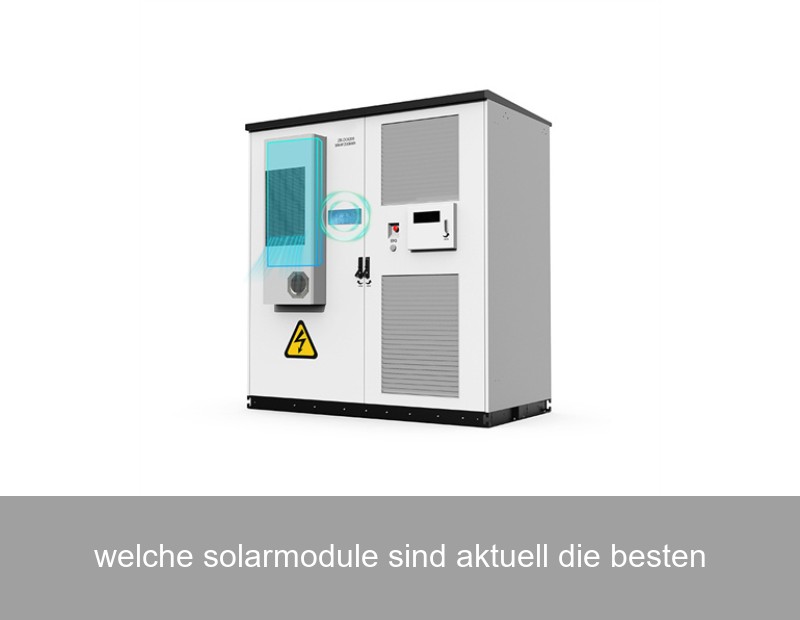
This is where intelligent energy storage systems (ESS) become non-negotiable. They capture surplus solar production for use when you need it most, dramatically increasing your energy independence. At Highjoule, with our nearly two decades of experience, we've designed our Helios-X Series residential and commercial battery systems specifically to complement high-performance solar arrays.
Our systems feature advanced lithium iron phosphate (LFP) chemistry for safety and longevity, integrated energy management software that learns your consumption patterns, and scalability to grow with your needs. By pairing top-tier solar panels with a Highjoule ESS, you can increase your self-consumption from 30-40% to 70-80% or more, creating a truly resilient and cost-effective home power plant.

Image: A modern home energy storage system installation. Source: Unsplash
Making Your Choice: A Framework for Decision
So, how do you decide? Ask these questions:
- What is my primary goal? (Maximize limited space? Achieve the lowest lifetime cost? Ensure the highest resilience?)
- What is my local climate? (Hot and sunny? Often cloudy? Prone to extreme weather?)
- What is my total system vision? (Are you planning to add storage now or later? Do you want to future-proof for EV charging?)
For most homeowners in Europe and the U.S. seeking a premium solution, the "best" choice in 2024 is a panel utilizing TOPCon or HJT technology, with a robust warranty, from a financially stable manufacturer. However, this must be part of a holistic design that includes quality inverters and, critically, an energy storage system.
We invite you to consider: If your solar panels are generating pristine, clean energy only for it to be sent away, are you truly realizing the full promise and potential of your investment? How could capturing and using every kilowatt-hour change your relationship with energy?
 Inquiry
 Online Chat