


Battery Energy Storage System Safety: Your Guide to Secure, Sustainable Power
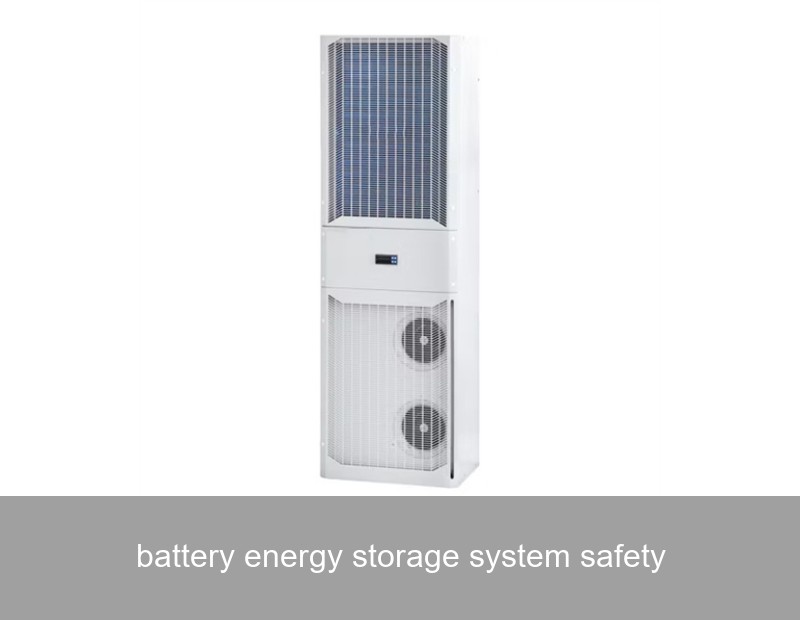
As the world accelerates its shift towards renewable energy, battery energy storage systems (BESS) have become the cornerstone of modern power resilience. From powering homes with solar to stabilizing national grids, their role is undeniable. But with great power comes a critical responsibility: battery energy storage system safety. Recent high-profile incidents have sparked necessary conversations. However, the narrative shouldn't be fear, but informed confidence. The truth is, with robust design, intelligent management, and stringent standards, modern BESS are engineered to be incredibly safe and reliable. This article cuts through the noise, exploring the multi-layered approach that ensures your investment in energy independence is also an investment in peace of mind.
Table of Contents
The Safety Imperative: Beyond the Headlines
Let's address the elephant in the room. Yes, there have been thermal runaway events at storage facilities. A 2023 report by the National Fire Protection Association (NFPA) highlights that while incidents are statistically rare compared to the vast number of deployments, each one is a learning opportunity for the entire industry. The phenomenon isn't new; it's a known engineering challenge. The real story is the dramatic evolution of safety protocols, technologies, and standards that have emerged in response. Think of it like aviation safety—each event leads to systemic improvements, making the technology safer for everyone. The key is proactive risk mitigation, not reactive fear.

Image: A well-designed BESS in a controlled environment. Source: Unsplash (Representative Image)
The Safety Triad: Design, Management, and Environment
True battery energy storage system safety is not achieved by a single magic bullet. It's a holistic, defense-in-depth strategy built on three interdependent pillars.
From Cell to System: Inherent Safety by Design
Safety begins at the most fundamental level: the battery cell chemistry and its enclosure. Manufacturers continuously develop more stable lithium-ion variants like Lithium Iron Phosphate (LFP), which offer higher thermal runaway thresholds and lower toxicity compared to older chemistries. But the cell is just the start. A safe system design includes:
- Robust Battery Management Systems (BMS): This is the first line of defense, constantly monitoring voltage, current, and temperature of each cell to prevent operation outside safe limits.
- Physical Segmentation and Barriers: Fire-rated enclosures and compartmentalization prevent a thermal event in one module from cascading to others.
- Thermal Management Systems: Active liquid cooling or advanced air cooling maintains optimal operating temperature, crucial for longevity and safety.
- Safety Disconnects and Fusing: These components instantly isolate electrical faults, both within the DC battery stack and at the AC interconnection point.
The Brain of the System: Active Safety Management
Beyond hardware, intelligence is key. The Energy Management System (EMS) and advanced monitoring platforms act as the central nervous system. They analyze data trends to predict potential issues long before they become hazards. For instance, subtle voltage imbalances or a gradual rise in internal resistance can be early warning signs. Modern systems like those from Highjoule incorporate AI-driven analytics that provide actionable insights and can automatically adjust operations or flag maintenance needs. This shift from reactive to predictive management is a game-changer for battery energy storage system safety.
Installation & Environment: The Final Layer
Even the safest system can be compromised by poor installation or an unsuitable environment. Adherence to codes like the NFPA 855 standard (in the US) and IEC 62933 series (internationally) is non-negotiable. Critical considerations include:
| Consideration | Safety Impact |
|---|---|
| Proper Clearances & Location | Ensures ventilation, service access, and limits fire spread. |
| Correct Wiring & Grounding | Prevents electrical faults, arcs, and shock hazards. |
| Environmental Controls | Protects from extreme temperatures, humidity, and flooding. |
| Signage & Emergency Response Plans | Ensures first responders are aware and prepared. |
Case in Point: Learning from Real-World Data
The 2019 incident at the McMicken Battery Energy Storage System in Arizona, USA, serves as a pivotal case study. An explosion occurred during utility response to a smoldering battery rack, injuring firefighters. The subsequent in-depth investigation by the Arizona Public Service (APS) and federal agencies yielded crucial lessons that have reshaped industry safety:
- Data Revelation: The investigation found the initial cell failure was likely due to an internal defect, but the severity was amplified by gaps in system design, emergency procedures, and first responder knowledge.
- Industry-Wide Impact: This event directly accelerated the development and adoption of NFPA 855, mandated clearer emergency shutdown procedures, and pushed for integrated fire suppression systems specifically designed for lithium-ion battery fires.
- The Positive Outcome: Today, systems are designed with explicit "first responder modes," enhanced venting and gas detection, and improved communication protocols. This case underscores that battery energy storage system safety is a shared responsibility between manufacturers, installers, utilities, and emergency services.
The Highjoule Approach: Safety Engineered into Every Layer
At Highjoule, with nearly two decades of experience powering commercial, industrial, and microgrid applications globally, safety isn't a feature—it's the foundation. Our product philosophy is built on the "Safety Triad," and it's embedded in solutions like our H-Series Commercial ESS and GridSynergy Microgrid Platform.
We start with UL 9540A tested LFP battery modules, housed in self-contained, fire-rated enclosures with built-in exhaust management. Our proprietary Sentinel BMS+ goes beyond monitoring; it employs predictive algorithms to assess cell health and can initiate a controlled, graceful shutdown if anomalies are detected. Furthermore, our Highjoule Horizon Cloud Platform provides 24/7 system-level visibility, offering our clients and authorized service partners real-time safety status reports and early warning notifications.
For us, safety extends to the project lifecycle. Our technical team ensures every installation complies with the strictest local and international codes, and we provide comprehensive documentation and training for both operators and local first responders. This end-to-end commitment transforms battery energy storage system safety from a promise into a verifiable, operational reality.

Image: Continuous monitoring is central to modern BESS safety. Source: Unsplash (Representative Image)
The Future of BESS Safety: What's Next?
The journey doesn't stop. Research is booming in areas like solid-state batteries, which promise even greater inherent stability. Advanced, non-toxic fire suppression aerosols and immersion cooling are gaining traction. Perhaps most importantly, the industry is moving towards standardized digital "safety passports" for systems, where all critical safety data and history are instantly accessible via QR code for responders. The goal is a future where BESS are as unremarkably safe as any other critical infrastructure in our homes and cities.
As you consider integrating a battery energy storage system into your home, business, or community energy project, what specific safety certifications or operational data would give you the utmost confidence in your choice?
 Inquiry
 Online Chat