


Battery for ESS for Home: Your Complete Guide to Energy Independence
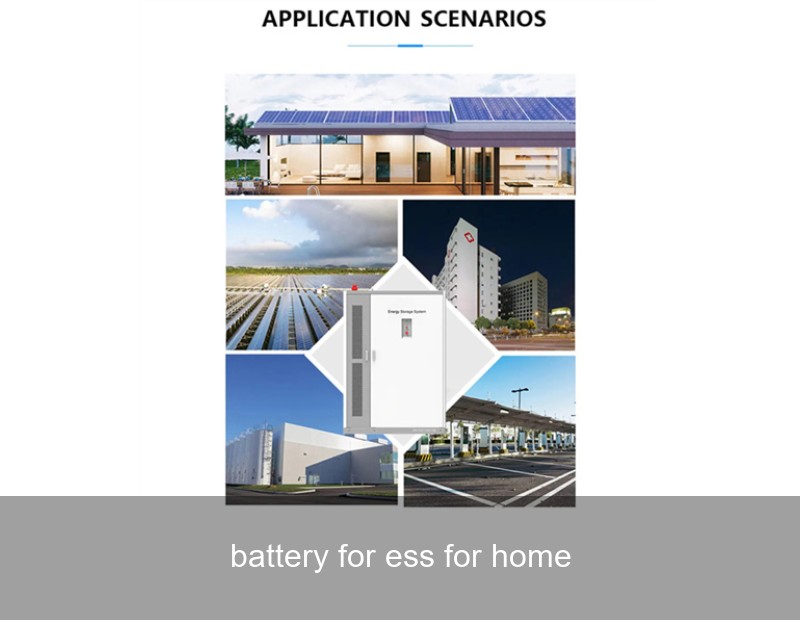
It's a stormy evening, the grid goes down in your neighborhood, but your lights stay on, your fridge hums quietly, and your family's routine remains undisturbed. This isn't magic; it's modern energy resilience powered by a battery for ESS (Energy Storage System) for home. For homeowners in Europe and the US, this technology is rapidly shifting from a luxury to a central pillar of a smart, sustainable, and secure household. But with so much information available, how do you navigate this decision? Let's demystify the home battery and explore how it can transform your relationship with energy.
What is a Home Battery for ESS?
At its core, a home battery system is more than just a battery. It's an integrated Energy Storage System (ESS) designed to store electricity for later use in your home. Think of it as a sophisticated energy bank. Most commonly paired with solar panels, it stores excess solar energy produced during the sunny afternoon for use at night or during peak tariff periods. However, its role has expanded dramatically. Modern systems provide critical backup power during outages, optimize energy consumption to reduce bills, and even support the stability of the local grid.
A complete home ESS typically includes:
- The Battery Modules: The physical cells (often Lithium Iron Phosphate or LFP for safety and longevity) that store DC electricity.
- The Battery Management System (BMS): The "brain" that protects the battery, ensuring safe operation, balancing cells, and maximizing lifespan.
- The Hybrid Inverter or Power Conversion System (PCS): The "translator" that converts DC electricity from your solar panels and battery into usable AC power for your home, and vice-versa for charging.
- Energy Management Software: The intelligent controller that decides when to charge, discharge, or hold based on your habits, electricity rates, and weather forecasts.

Image Source: Unsplash - A visual representation of a modern home energy system.
Why Now? The Perfect Storm for Home Energy Storage
The surge in home battery adoption isn't accidental. It's driven by a powerful convergence of factors affecting homeowners directly.
The Phenomenon: Rising energy costs, increasing grid instability, and a growing desire for self-sufficiency are pushing homeowners to seek control.
The Data: According to the International Energy Agency (IEA), global residential battery storage capacity surged by over 50% in 2023, with Europe and the United States leading the charge. In markets like Germany and California, pairing solar with a battery is becoming the standard, not the exception. Why? Time-of-use electricity rates can make peak-hour power 2-3 times more expensive than off-peak power. A home battery lets you avoid buying expensive grid power.
The Underlying Shift: Beyond economics, there's a resilience imperative. The U.S. Energy Information Administration notes that major power outages are becoming more frequent. A home battery provides a seamless, automatic backup, keeping essential circuits running for hours or even days. It's the ultimate insurance policy in an uncertain climate.
Key Considerations When Choosing Your Home Battery System
Not all home ESS solutions are created equal. Here’s a logical framework to evaluate your options:
| Consideration | Key Questions to Ask | Why It Matters |
|---|---|---|
| Capacity & Power | What is the usable energy (kWh)? What is the continuous power output (kW)? | Capacity determines how long you can power your home. Power determines how many appliances you can run at once (e.g., starting a heat pump or well pump). |
| Safety & Chemistry | Is it Lithium Iron Phosphate (LFP)? What safety certifications does it have? | LFP chemistry is renowned for thermal stability and long cycle life, making it the preferred choice for home installations. Look for UL 9540 certification in the US and relevant CE marks in Europe. |
| Integration & Scalability | Does it seamlessly work with my existing or planned solar? Can I add more batteries later? | A system that is difficult to integrate can lead to higher costs and suboptimal performance. Modular designs allow you to start small and expand as your needs grow. |
| Intelligence & Software | Can it learn my usage patterns? Can it respond to time-of-use rates or grid signals? | Smart software is what transforms a simple battery into an intelligent energy manager, maximizing your financial return and system utility. |
| Warranty & Lifespan | What is the warranty period (years)? What is the throughput or cycle warranty? | A strong warranty (e.g., 10+ years) with a guaranteed end-of-warranty capacity (e.g., 70%+) protects your investment and signals manufacturer confidence. |
Real-World Impact: A Case Study from California
Let's move from theory to practice. The Thompson family in San Diego, California, installed a 10 kW solar array in 2020. Despite having solar, they were still paying high "non-bypassable charges" and had no protection from Public Safety Power Shutoffs (PSPS).
The Solution & Data: In early 2023, they added a 13.5 kWh home battery system. The results over one year were telling:
- Energy Bill Reduction: Their annual electricity cost dropped from ~$1,800 to a net $210 credit by strategically storing solar excess and avoiding peak rates (4 pm - 9 pm).
- Backup Security: During three grid outages totaling 32 hours, their home's essential loads (lighting, refrigeration, internet, and a small HVAC zone) operated uninterrupted.
- Self-Consumption: Their ability to use their own solar generation jumped from 40% to over 85%, dramatically increasing the value of their solar investment.
The Insight: For the Thompsons, the battery wasn't just about backup; it became the central tool for financial optimization. The system paid for itself in under 7 years, a figure accelerated by California's specific incentives and high electricity costs. Their story exemplifies the dual-value proposition: resilience with a return.
The Highjoule Home Solution: Engineered for Peace of Mind
As a global leader in advanced energy storage since 2005, Highjoule has distilled decades of commercial and industrial expertise into our residential product line: the Highjoule H-Series Home ESS. We understand that a system for your home must be safe, simple, and smart above all else.
Our H-Series is built on three foundational pillars:
- Uncompromising Safety: We use only Lithium Iron Phosphate (LFP) chemistry in a proprietary, thermally managed enclosure. Our systems are designed to exceed international safety standards, providing you and your family with absolute confidence.
- Seamless Intelligence: The Highjoule Energy Hub learns your home's patterns and integrates with local utility programs. Our app gives you clear visibility and control, allowing you to set preferences like "Maximize Savings" or "Maximize Backup" with a single tap.
- Future-Ready Design: The modular H-Series starts at 10 kWh and can be expanded in 5 kWh increments. Whether you're starting with solar or adding storage to an existing array, our systems are designed for straightforward integration and long-term adaptability.

Image Source: Unsplash - Example of a clean home battery installation.
Beyond the hardware, Highjoule provides a comprehensive service network across Europe and North America. From initial design consultation by our certified partners to installation support and long-term monitoring, we ensure your journey to energy independence is smooth and supported.
Your Home's Energy Future: Questions to Ponder
The technology for taking control of your home's energy is here, proven, and more accessible than ever. The decision to invest in a battery for ESS for home is ultimately a personal one, rooted in your values, needs, and local context.
So, we leave you with this open question to consider: What would energy independence look like for your household? Would it be the peace of mind during a storm, the satisfaction of watching your net energy costs approach zero, or the quiet pride of powering your life with clean, self-generated electricity? The first step to answering that question is understanding your options.
What's the biggest factor holding you back from exploring a home battery system for your own energy needs?
 Inquiry
 Online Chat