


Battery Hòa Lưới Bám Tải: The Smart Grid's New Best Friend
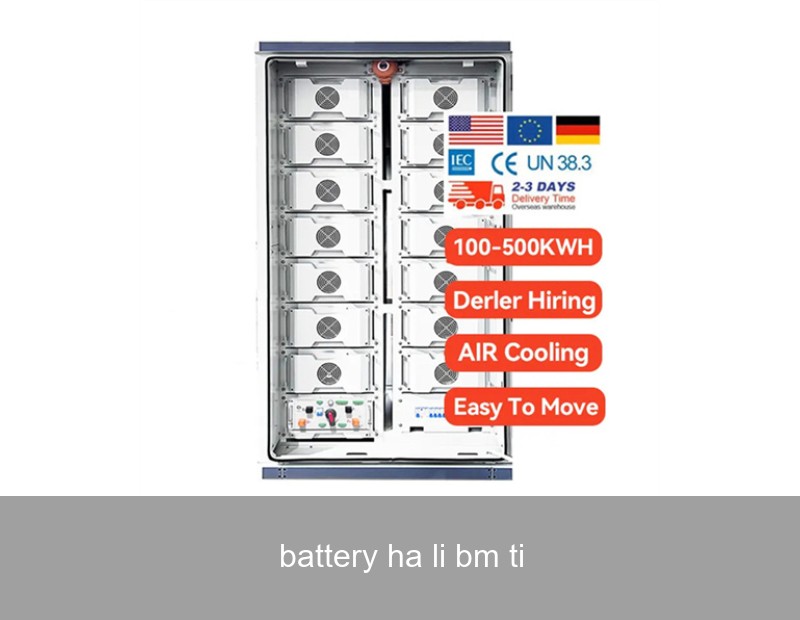
You've likely heard about solar batteries and home energy storage. But there's a smarter, more grid-responsive technology emerging that's crucial for a stable renewable future. It's known as battery hòa lưới bám tải, or in English, load-following grid-tied battery storage. Unlike simple backup systems, these intelligent systems don't just store energy—they actively communicate with the grid, predict consumption patterns, and release power in perfect harmony with real-time demand. For businesses and communities in Europe and the US facing volatile energy prices and grid constraints, mastering this technology isn't just an option; it's becoming a strategic necessity.
Table of Contents
- The Problem: Our Grids Aren't Built for Today's Energy Reality
- The Data: Why "Set-and-Forget" Batteries Fall Short
- The Solution: How Load-Following (Bám Tải) Technology Works
- Highjoule's Intelligent Approach to Grid Harmony
- Case Study: A German Manufacturing Plant's Success Story
- The Future: Your Role in a More Resilient Grid
The Problem: Our Grids Aren't Built for Today's Energy Reality
Picture the traditional electricity grid as a one-way street. Power flows from large, centralized plants (like coal or gas) to your home or factory. It was designed for predictability. Now, imagine adding thousands of solar rooftops and wind farms—intermittent, decentralized sources—onto that street. The flow becomes two-way and wildly unpredictable. This causes two major headaches for grid operators: overgeneration (too much solar at noon) and evening ramping (a huge spike in demand as the sun sets and solar production plummets).
This volatility leads to grid instability, frequency fluctuations, and, for you, the energy consumer, exorbitant "peak demand" charges. A standard grid-tied battery can help by storing solar excess, but if it discharges all at once without regard to the grid's immediate needs, it can ironically exacerbate these peaks. This is where the simple concept of "hòa lưới" (grid-tied) evolves into the sophisticated intelligence of "bám tải" (load-following).

Source: Unsplash - The traditional grid infrastructure is adapting to new energy flows.
The Data: Why "Set-and-Forget" Batteries Fall Short
Let's talk numbers. In California (CAISO grid), the notorious "duck curve" illustrates the net demand dip in the afternoon and the sharp evening ramp. In 2022, the three-hour evening ramp requirement reached over 20,000 MW—equivalent to the output of about 40 large power plants needing to come online rapidly. For a commercial facility, utility demand charges can constitute 30-50% of the total electricity bill, based on the single highest 15-minute power draw in a billing cycle.
A non-optimized battery might discharge to cover base load in the early afternoon, leaving no capacity to shave the critical 6 PM peak. The financial and grid-stability benefits are lost. This mismatch between battery operation and actual grid/load conditions is the precise gap that battery hòa lưới bám tải systems are engineered to fill.
The Solution: How Load-Following (Bám Tải) Technology Works
Think of a load-following battery system as a brilliant, proactive energy manager. It doesn't just react; it anticipates. Here's its core logic:
- Real-Time Monitoring: Continuously tracks your facility's power consumption, on-site generation (solar/wind), and grid import/export.
- Forecasting & Prediction: Uses AI and weather data to predict solar generation for the next 24-48 hours and understands your historical load patterns.
- Dynamic Optimization: Instead of a fixed discharge schedule, it calculates the optimal moment to charge and discharge to:
- Flatten your load profile and minimize peak demand charges.
- Provide grid services (like frequency regulation) when needed.
- Maximize self-consumption of renewable energy.
In essence, it makes your battery a collaborative player in the broader energy ecosystem, not just an isolated asset.
Highjoule's Intelligent Approach to Grid Harmony
At Highjoule, with nearly two decades of experience since 2005, we've moved beyond providing mere battery hardware. We deliver intelligent energy platforms that embody the true principle of battery hòa lưới bám tải. Our flagship solution, the Highjoule Synergy Platform, integrates three key components:
| Component | Function | Bám Tải Benefit |
|---|---|---|
| High-Density Lithium-Ion Battery Banks | Provides the core storage capacity with industry-leading cycle life and safety. | The reliable "muscle" that executes the intelligent charge/discharge commands. |
| Adaptive Power Conversion System (PCS) | Manages the bi-directional flow of energy between DC battery and AC grid. | Enables millisecond-fast response to grid signals or load changes. |
| Neuron Energy Management System (EMS) | The AI-powered "brain" that performs forecasting, optimization, and control. | Continuously learns and adapts to ensure your system is always operating at peak financial and operational efficiency. |
Whether for a large commercial warehouse, an industrial plant, or a community microgrid, the Synergy Platform turns a static storage asset into a dynamic grid partner. It allows our clients in Europe and North America to not only save significantly on energy costs but also to participate in grid service programs, creating an additional revenue stream.

Source: Unsplash - Commercial and industrial sites are prime candidates for intelligent storage.
Case Study: A German Manufacturing Plant's Success Story
Let's look at a real-world application. A mid-sized automotive parts manufacturer near Stuttgart, Germany, faced steep demand charges and wanted to increase the utilization of its 500 kW rooftop solar array. They were exporting excess solar at low midday prices but buying expensive power from the grid during morning and evening peaks.
The Challenge: Reduce grid dependency, cut peak demand charges, and improve ROI on solar.
The Highjoule Solution: A 750 kWh / 500 kW Synergy Platform installation with load-following (bám tải) optimization.
The Results (12-month period):
- Peak Demand Reduction: Reduced the facility's peak grid draw by 42%, slashing demand charges.
- Self-Consumption Increase: Increased solar self-consumption from 55% to over 90%.
- Grid Service Revenue: By participating in the German primary control reserve market, the system generated approximately €28,000 in ancillary service revenue in one year.
- Payback Period: The combined savings and revenue streams achieved a projected payback period of under 5 years.
This case perfectly illustrates the triple win: major cost savings for the business, enhanced integration of renewables, and direct support for national grid stability.
The Future: Your Role in a More Resilient Grid
The transition to a decarbonized grid is a collective effort. Technologies like battery hòa lưới bám tải empower you, whether a factory owner, a hospital administrator, or a municipal leader, to be an active part of the solution. Your energy storage system becomes a node of intelligence and resilience in a more distributed network.
As we see regulations evolve, like FERC Order 2222 in the US encouraging distributed resource aggregation, the value of having a "grid-aware" asset will only increase. The question is no longer just "Should I get a battery?" but rather "How intelligent and grid-integrated can my storage system be?"
What specific load profile challenge or sustainability goal could an intelligent, load-following storage system help solve for your operation?
 Inquiry
 Online Chat