


Unlocking Potential: How a Smart Battery Power Management System Maximizes Your Energy Storage
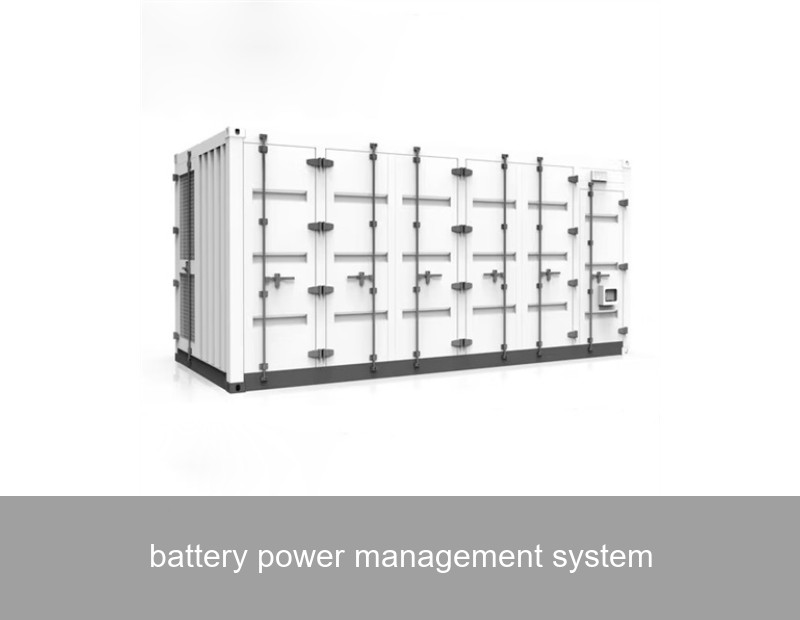
Imagine buying a high-performance sports car, but the engine computer only knows how to drive at a single, constant speed. Frustrating, right? This is precisely the challenge many face with modern energy storage. The battery pack is the engine, but without an intelligent battery power management system (BPMS), you're leaving safety, longevity, and a significant return on investment on the table. For businesses and homeowners navigating the energy transition, understanding the BPMS is key to unlocking the full value of their storage solution.
What is a Battery Power Management System (BPMS)?
At its core, a Battery Power Management System is the brain of any energy storage system (ESS). It's a sophisticated suite of hardware and software that continuously monitors, controls, and optimizes the performance of battery cells. Think of it as the central nervous system, ensuring every part of the battery works in perfect harmony. While often mentioned alongside BMS (Battery Management System), a true battery power management system often encompasses a broader scope, integrating not just cell balancing and health monitoring, but also advanced grid interaction, energy forecasting, and sophisticated dispatch algorithms to meet specific financial or resilience goals.
At Highjoule, our approach to a BPMS is holistic. We don't just see it as a protective circuit; we see it as the intelligence layer that transforms stored kilowatt-hours into strategic assets. Our Highjoule Neuron™ Platform is the embodiment of this philosophy—a cloud-connected battery power management system that provides real-time analytics, remote updates, and adaptive control to ensure our commercial and industrial storage systems deliver optimal performance year after year.

Image Source: Unsplash - A modern control interface is the visible tip of a sophisticated BPMS.
Why a Sophisticated BPMS Matters: The Heart of Your Energy Investment
You might ask, "My battery has a built-in BMS, isn't that enough?" For basic safety, perhaps. But for maximizing economic and operational value, the difference is night and day. Let's break down the consequences of a weak management system versus a smart one.
The Phenomenon: The Hidden Inefficiencies
Without advanced management, batteries suffer from accelerated degradation, inaccurate state-of-charge readings, and suboptimal charging/discharging. This leads to a phenomenon known as "capacity fade"—you bought a 100 kWh system, but within a few years, it only delivers 70 kWh reliably.
The Data: Quantifying the Loss
Studies indicate that poor thermal management and charging strategies can increase degradation rates by up to 30% under stressful conditions. For a commercial system, this isn't just a technical hiccup; it's a direct hit to your payback period and total cost of ownership.
The Highjoule Insight: Prolonging Life, Maximizing Value
Our Highjoule Neuron™ BPMS employs AI-driven cycling strategies. It doesn't just react to conditions; it learns from them. By analyzing historical usage patterns, local weather, and grid tariff structures, it proactively adjusts charging cycles to minimize stress on the battery chemistry. This can extend the operational life of a battery system by several years, protecting your capital investment. For our residential EverHome Series, this means the BPMS seamlessly integrates solar production, home consumption, and time-of-use rates to automatically choose the most economical moments to charge or discharge.
Key Components of a Modern Battery Power Management System
A best-in-class BPMS integrates several critical layers of functionality:
- Core Battery Monitoring (BMS): Voltage, current, and temperature sensing at the cell and module level to ensure safe operating windows.
- State Estimation Algorithms: Accurately calculating State of Charge (SoC) and State of Health (SoH), which are crucial for reliable operation.
- Thermal Management Control: Actively managing cooling and heating systems to maintain the ideal temperature range.
- Power Conversion System (PCS) Integration: Directly commanding the inverter/charger on how much power to draw or supply.
- Energy Management System (EMS) Layer: The strategic brain that sets objectives—like "maximize self-consumption" or "participate in grid frequency response."
| BPMS Component | Primary Function | Direct Benefit to User |
|---|---|---|
| Cell Balancing | Equalizes charge across all cells | Prevents premature failure, maximizes usable capacity |
| Predictive Analytics | Forecasts battery degradation and performance | Enables proactive maintenance, accurate financial forecasting |
| Grid Service Interface | Communicates with grid operators for market programs | Creates new revenue streams (e.g., frequency regulation) |
From Theory to Practice: A Real-World Case Study
Let's move beyond theory and look at a concrete example. Highjoule recently deployed a 2 MWh containerized battery storage system for a mid-sized manufacturing plant in Bavaria, Germany.
The Challenge
The plant faced steep peak demand charges (capacity tariffs) and wanted to increase the consumption of its on-site solar PV. Their existing setup had minimal management, leading to the battery often being fully charged by midday and unavailable to shave the evening peak load.
The Highjoule Solution
We installed our Industrial Cube system, governed by the advanced Highjoule Neuron™ battery power management system. The BPMS was programmed with a dual objective: first, maximize self-consumption of solar; second, aggressively target peak load shaving based on forecasted production and consumption.
The Data-Driven Results
Within the first year of operation:
- Peak Demand Charges Reduced by 28%: The BPMS's predictive algorithms ensured reserved battery capacity was always available for the highest consumption periods.
- Solar Self-Consumption Increased from 55% to 82%: Dynamic charging thresholds prevented "clipping" and stored excess midday energy for later use.
- Degradation Below Projections: The system's State of Health (SoH) remained 2.5 percentage points above the standard warranty curve, thanks to adaptive, stress-reducing cycles.
This case, typical in European and U.S. industrial settings, shows how an intelligent battery power management system translates technical prowess into direct, measurable financial savings and enhanced sustainability.

Image Source: Unsplash - Engineers monitoring performance data from a field-deployed system.
Choosing the Right Battery Power Management System
Not all BPMS are created equal. When evaluating a storage provider, the intelligence of the management system should be a top criterion. Here are key questions to ask:
- Is it adaptive and updatable? Can the system receive software updates to improve algorithms or adapt to new grid rules? (Our Highjoule Neuron™ platform is designed for over-the-air updates).
- How does it handle multi-objective optimization? Can it seamlessly balance between saving money, providing backup, and generating revenue?
- What is the data visibility? Do you get clear, actionable insights into system health, savings, and performance, or is it a "black box"?
- Does it have proven grid interoperability? For commercial projects, check if the system is certified to participate in local ancillary service markets (like FFR in the UK or FREC in the US).
The Future of Battery Power Management
The evolution of the battery power management system is accelerating. We are moving towards truly decentralized energy networks. Imagine a future where your home's EverHome system, via its BPMS, automatically collaborates with your neighbor's system and the local utility to form a virtual power plant (VPP), stabilizing the grid during a heatwave while earning you income. This isn't science fiction; it's the next frontier of grid-edge intelligence. Standards like OpenADR are paving the way for this communication.
Furthermore, integrating AI for predictive failure and even more granular chemistry-aware management will push efficiencies further. The BPMS will become less of a dedicated controller and more of an autonomous energy agent, making real-time economic decisions on your behalf.

Image Source: Unsplash - The future BPMS will enable seamless Virtual Power Plant participation.
So, as you consider an energy storage system for your home or business, what specific energy challenge—be it unpredictable bills, resilience concerns, or a sustainability goal—would you want your battery's intelligence to solve first?
 Inquiry
 Online Chat