


Unlocking True Value: Why Your Commercial Solar Project Needs Intelligent Storage
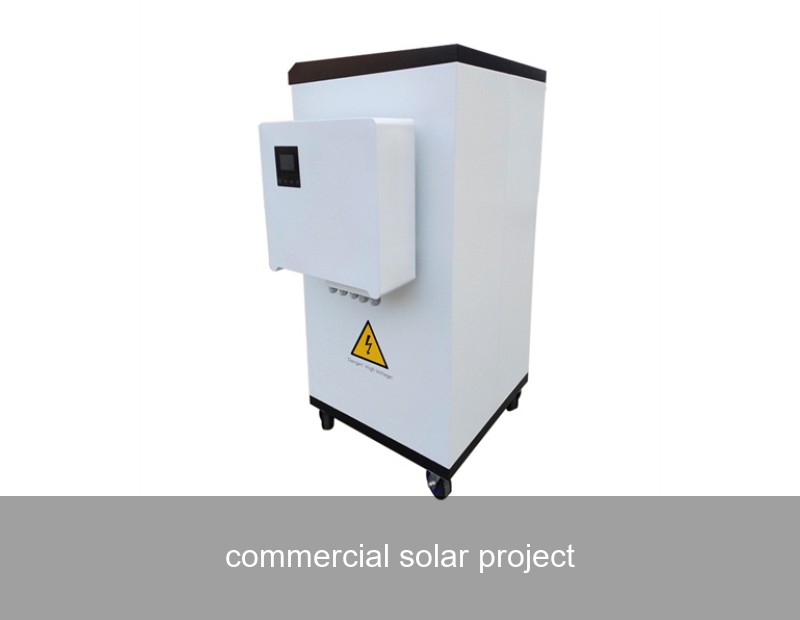
For years, the proposition of a commercial solar project seemed straightforward: install panels, reduce grid electricity consumption, save money. And while that logic holds true, a more complex energy landscape is revealing a critical gap in this equation. The sun, wonderfully predictable in its rhythms, doesn't align with the peak operational and financial demands of most businesses. This misalignment is where the true evolution of commercial solar is happening—not just in generating power, but in intelligently controlling it. Let's explore why the next generation of commercial solar isn't just about collection, but about orchestration.
The New Reality: More Than Just Panels on a Roof
Gone are the days when solar was a simple set-and-forget sustainability badge. Today, facility managers, CFOs, and business owners are looking at solar as a strategic financial asset. The goal has shifted from mere "green" credentials to hard ROI, energy independence, and resilience. A modern commercial solar project is now a core part of operational infrastructure. However, its effectiveness is inherently limited by one factor: time. Solar generation peaks in the middle of the day, but for many businesses—from manufacturing plants working overnight shifts to retail stores with evening lighting loads—energy consumption and peak utility charges often occur when the sun is down.

Credit: Photo by American Public Power Association on Unsplash. A commercial solar array at sunset, highlighting the disconnect between generation time and typical evening energy demand.
The Data Dilemma: Sunlight Isn't a 9-to-5 Employee
Let's look at the numbers. According to the U.S. Energy Information Administration, the commercial sector's electricity demand often shows distinct morning and evening peaks (source: EIA). A solar-only system might cover 30-50% of a facility's total annual usage, but its instantaneous coverage can be 100% at noon and 0% after sunset. This creates two problems:
- Underutilized Asset: Excess solar energy produced at midday is often sold back to the grid at low, wholesale rates (feed-in tariffs or net metering credits), which are frequently far lower than the retail rate you pay to buy power back later.
- Persisting Demand Charges: For commercial clients, a significant portion of the electricity bill comes from "demand charges"—fees based on the highest 15-30 minute power draw from the grid each month. A solar-only system does little to reduce these peaks if they occur outside of sunny hours.
This is the fundamental economic leakage in a standalone commercial solar project.
The Storage Imperative: Unlocking True Commercial Solar Potential
This is where battery energy storage systems (BESS) transform the equation. Think of storage as a high-performance "energy bank" for your solar power. Instead of exporting surplus midday energy for pennies, you store it onsite in a battery system. Then, you dispatch that stored energy during your most expensive periods: during peak grid rate hours or during those moments of highest power draw that trigger demand charges.
The integration is key. A simple battery tacked onto an existing solar array isn't enough. It requires an intelligent energy management system (EMS) that makes real-time decisions based on electricity prices, consumption patterns, weather forecasts, and your operational priorities. This integrated "solar-plus-storage" system turns a variable generator into a predictable, dispatchable power source.
The Highjoule Approach: Intelligence at the Core
At Highjoule, with nearly two decades of experience since 2005, we design solutions that address this exact challenge. We don't just provide batteries; we provide intelligent energy resilience. Our approach to a commercial solar project is holistic:
- Highjoule H-Series Commercial Storage Systems: Our scalable, lithium-iron-phosphate (LFP) battery solutions are engineered for safety, longevity (with industry-leading cycle life), and high round-trip efficiency, ensuring you get the most out of every kilowatt-hour your solar panels produce.
- Orion Energy Management Platform: This is the brain of the operation. Orion uses AI-driven forecasting and real-time optimization to autonomously decide when to charge the batteries (from solar or the grid during low-cost periods), when to discharge to shave peak demand, and when to provide backup power. It seamlessly integrates with your existing solar PV and building management systems.
- Tailored Financial Modeling: Our experts analyze your utility bills, solar production data, and load profiles to model the precise financial impact of adding storage, projecting ROI, demand charge savings, and payback periods with clarity.
For businesses, this means transforming a solar installation from a cost-saving measure into a strategic, revenue-protecting asset.
Case Study: From Grid Dependency to Energy Resilience
Consider the real-world example of a medium-sized chilled warehouse distribution center in Southern California. The facility had a 500 kW rooftop solar array, but its highest energy demands occurred in the late afternoon and early evening as refrigeration compressors cycled and loading bays operated, coinciding with peak Time-of-Use (TOU) rates from the utility.
| Metric | Before Highjoule Storage | After Highjoule Storage Integration |
|---|---|---|
| Monthly Demand Charge Reduction | Baseline | ~62% |
| Solar Self-Consumption | ~45% | Over 90% |
| Grid Import During Peak TOU Periods | High | Reduced by ~80% |
| Backup Power for Critical Cooling | Diesel Generator Only | Seamless 4-hour battery backup + generator |
By integrating a 750 kWh Highjoule H-Series battery system managed by the Orion platform, the facility could store excess midday solar and release it during the 4-9 pm peak window. The result was a dramatic cut in both energy costs and demand charges. Furthermore, the system provided critical backup power to maintain refrigeration during grid outages, protecting inventory worth millions. This case exemplifies the multi-faceted ROI of a modern commercial solar project with intelligent storage.

Credit: Photo by ThisisEngineering on Unsplash. A technician inspecting a containerized battery storage system, similar to commercial-scale solutions.
Beyond Savings: The Strategic Value of Smart Solar+Storage
The benefits extend beyond the monthly utility bill. In regions like Europe and the U.S., grid stability is a growing concern. Intelligent storage provides:
- Enhanced Resilience: Power through short-term outages without operational disruption, a feature increasingly valued in sectors like data centers, healthcare, and cold storage.
- Grid Services Participation: In some markets, aggregated storage systems can provide frequency regulation or capacity services to the grid, creating an additional revenue stream. Platforms like Highjoule's Orion are designed with such future capabilities in mind.
- Sustainability Leadership: Maximizing self-consumption of renewable energy significantly deepens your carbon reduction impact, moving beyond procurement to actual 24/7 clean energy operation.
FAQs: Commercial Solar Projects with Storage
Isn't adding storage prohibitively expensive?
Costs have decreased over 80% in the last decade. When paired with solar and optimized for financial incentives like the U.S. Investment Tax Credit (ITC) or similar European grants, the combined system payback period is often attractive—typically between 5-8 years for many commercial applications, with a system lifespan of 15-20 years.
How do I know if my business is a good candidate?
Key indicators include: high demand charges on your utility bill, operation during evening hours, time-of-use electricity rates, a desire for backup power, and existing or planned solar PV. A detailed load profile analysis, which Highjoule provides, is the first step.
Can storage be added to an existing solar array?
Absolutely. Retrofitting storage is a common and highly effective project. The key is ensuring proper integration and controls, which is where a provider with deep system integration expertise like Highjoule is critical.
The landscape of commercial energy is shifting from passive consumption to active management. The question is no longer just "Should we install solar?" but "How do we build an intelligent, resilient, and maximally efficient energy ecosystem for our operations?"
What single energy cost or risk factor keeps you up at night, and how could controlling the timing of your power consumption transform your business's bottom line and operational security?
 Inquiry
 Online Chat