


Choosing the Right Battery to Use with Your Energy Storage Cabinet
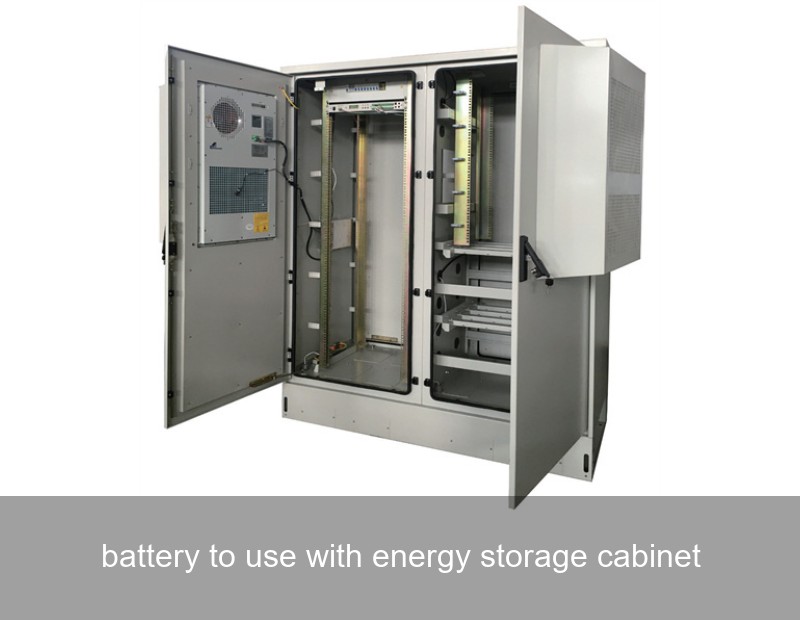
So, you've decided to invest in an energy storage system. You've got your cabinet, your inverter, and your plans for greater energy independence. But here's the million-dollar question: which battery to use with your energy storage cabinet is the best choice for your specific needs? This single decision is the heart of your system, dictating its performance, lifespan, and return on investment. Let's demystify the process and explore how the right battery technology can transform your energy storage from a simple backup into a powerful, intelligent asset.
Table of Contents
- The Core Challenge: It's More Than Just a Box
- By the Numbers: What Defines a Superior Battery?
- Chemistry Showdown: LFP vs. NMC Explained
- Beyond the Cell: The Critical Role of System Integration
- Case Study: A U.S. Manufacturing Plant's Success Story
- Looking Ahead: The Intelligent Battery Ecosystem
- What's Your Energy Storage Goal?
The Core Challenge: It's More Than Just a Box
Many businesses and homeowners approach energy storage with a component-focused mindset: buy a cabinet, buy a battery, and connect them. However, this often leads to suboptimal performance. The true challenge isn't just selecting a battery; it's selecting a battery that is optimally engineered to work in unison with the specific management, thermal controls, and software of its storage cabinet. A mismatch can lead to reduced efficiency, faster degradation, and even safety risks. Think of it like a high-performance engine: you wouldn't put low-grade fuel in a race car and expect peak results. Your energy storage cabinet is the engine, and the battery is its fuel. They must be perfectly matched.

Credit: ThisisEngineering Raeng / Unsplash
By the Numbers: What Defines a Superior Battery?
To make an informed choice, you need to speak the language of battery specs. Here are the key metrics that should guide your decision when choosing a battery to use with your energy storage cabinet:
| Metric | What It Means | Why It Matters | Ideal Range for Commercial/Industrial Use |
|---|---|---|---|
| Cycle Life | Number of full charge/discharge cycles before capacity drops to 80%. | Directly impacts long-term cost and ROI. More cycles = longer useful life. | 6,000+ cycles |
| Depth of Discharge (DoD) | Percentage of battery capacity that can be safely used. | Higher DoD means more usable energy from the same physical battery. | >90% |
| Round-Trip Efficiency | Percentage of energy put in that you can get back out. | Higher efficiency reduces energy losses, saving money. | >95% |
| Thermal Runaway Risk | Potential for overheating leading to fire. | Critical for safety, insurance, and facility requirements. | Minimal to None |
For instance, a battery with a 90% DoD and 95% efficiency gives you far more usable, cost-effective energy than one with 70% DoD and 85% efficiency. This is where Highjoule's integrated approach shines. We don't just supply batteries; we engineer complete Intelligent Battery Storage (IBS) systems where the battery chemistry, battery management system (BMS), and cabinet thermal controls are co-designed. This ensures our commercial systems consistently achieve over 95% round-trip efficiency and a 10,000-cycle design life, maximizing your investment from day one.
Chemistry Showdown: LFP vs. NMC Explained
The two leading battery chemistries for stationary storage are Lithium Iron Phosphate (LFP) and Nickel Manganese Cobalt (NMC). Your choice fundamentally shapes your system's profile.
- LFP (Lithium Iron Phosphate): The reigning champion for safety and longevity. It has an inherently stable chemistry, making thermal runaway extremely rare. It excels in cycle life, often exceeding 6,000 cycles. While slightly less energy-dense than NMC, its safety, long life, and falling costs have made it the preferred choice for most commercial and residential applications. The U.S. Department of Energy notes its growing dominance in stationary storage due to these factors.
- NMC (Nickel Manganese Cobalt): Offers higher energy density, meaning more storage capacity in a smaller footprint. This can be crucial for space-constrained sites. However, it generally has a lower cycle life and a higher risk profile regarding thermal stability, requiring more sophisticated (and costly) cooling and safety systems.
At Highjoule, our core technology is built around advanced LFP chemistry. We've made this strategic choice because safety and total cost of ownership are non-negotiable for our clients. Our IBS cabinets leverage this stable chemistry, allowing for simpler, air-cooled thermal management that reduces complexity and maintenance while guaranteeing a safer installation for schools, hospitals, factories, and homes.
Beyond the Cell: The Critical Role of System Integration
Choosing a high-quality LFP cell is only 30% of the solution. The remaining 70% lies in system integration. A battery in a cabinet needs a brain and a nervous system.
- The Battery Management System (BMS): This is the brain. A superior BMS doesn't just monitor voltage and temperature; it performs active cell balancing, state-of-health estimation, and communicates seamlessly with the inverter and energy management software. Highjoule's proprietary BMS operates at the cell level, ensuring every individual cell performs uniformly, which is the secret to achieving that promised 10,000+ cycle life.
- Thermal Management: The nervous system. Even LFP batteries need optimal temperature ranges. Our cabinets feature intelligent, adaptive cooling that responds to load and ambient conditions, minimizing parasitic energy use while maximizing battery life.
- Grid-Forming Capability: This is the future. Advanced systems like Highjoule's can "form" a grid, providing voltage and frequency stability. This is vital for microgrids and is increasingly valued by utilities for grid resilience, as highlighted in a 2023 NREL report on inverter-based resources.
Case Study: A U.S. Manufacturing Plant's Success Story
Let's look at a real-world application. A mid-sized automotive parts manufacturer in Ohio faced two problems: crippling peak demand charges from their utility and a need for backup power to prevent costly production halts.
The Solution: They installed a 500 kWh Highjoule Intelligent Battery Storage (IBS) cabinet with integrated LFP batteries, coupled with their existing rooftop solar.
The Results (Data from 12-month operation):
- Demand Charge Reduction: By discharging the battery during predictable daily peak periods, they reduced their peak power draw from the grid by 40%, saving over $42,000 annually.
- Solar Self-Consumption: Increased on-site use of solar generation from 30% to over 80%, slashing their energy purchases.
- Reliability: The system provided seamless backup during two grid outages, preventing an estimated $150,000 in lost production and spoiled materials.
- Performance Tracking: The system's cloud-based monitoring showed a consistent round-trip efficiency of 96.2%, with minimal capacity degradation.
This case demonstrates that the right battery to use with the energy storage cabinet—one chosen for its integration, intelligence, and chemistry—delivers tangible financial and operational returns.

Credit: Possessed Photography / Unsplash
Looking Ahead: The Intelligent Battery Ecosystem
The future of energy storage isn't just about storing kWh. It's about intelligence, connectivity, and value stacking. The next-generation battery cabinet is a grid-interactive asset. Highjoule's systems, for example, come with HIQ Energy OS software that can automatically optimize for multiple value streams: maximizing self-consumption of solar, participating in utility demand response programs (common in both the US and European markets like the UK's frequency response), and providing backup power—all without manual intervention.
This transforms your storage from a cost center into a revenue-generating or cost-avoidance asset. The battery becomes the physical enabler, but the intelligence built into the cabinet unlocks its full economic potential.
What's Your Energy Storage Goal?
Are you looking to simply cut your electricity bill, or are you aiming to build a resilient microgrid for your community? Do you need to shave peak demand charges that eat into your profitability, or ensure your data center never experiences a millisecond of downtime? The specific goal dictates the scale, configuration, and intelligence required from your battery and cabinet system.
We invite you to consider: What is the single most important outcome you want from your energy storage investment? Share your priority, and let's explore what the ideal system for your challenge looks like.
 Inquiry
 Online Chat