


Finding the Best All in One Solar Charge Controller Inverter for Your Energy Independence
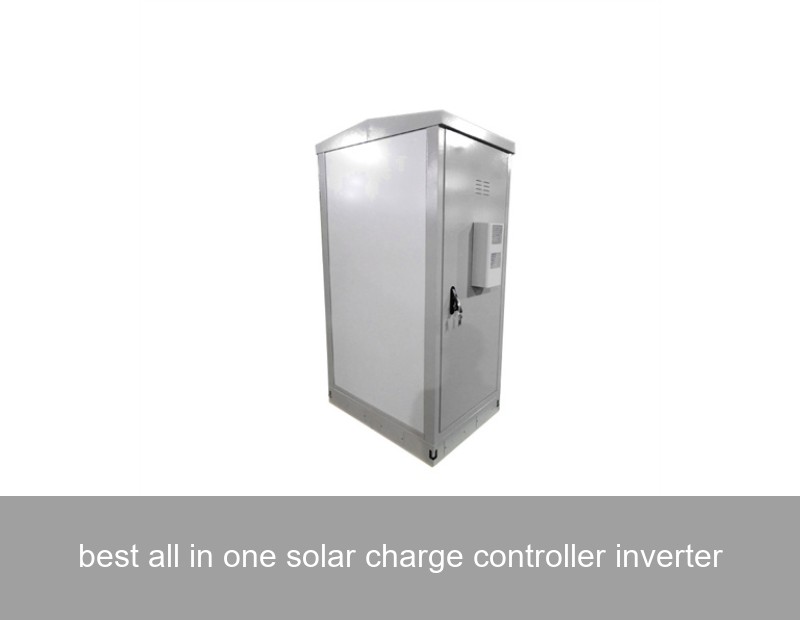
Have you ever looked at your rooftop solar panels and wondered if you're getting every last watt of power they're capable of producing? Or perhaps you've been puzzled by the tangle of components—solar panels, a separate charge controller, a bulky inverter, and a battery bank—that make up a typical solar storage system. This complexity isn't just an installation headache; it can lead to efficiency losses and a system that's harder to monitor and manage. This is where the quest for the best all in one solar charge controller inverter begins. This integrated device, often called a hybrid inverter or a multi-mode inverter, is revolutionizing how we harness and use solar energy by combining critical functions into a single, intelligent unit. For homeowners and businesses across Europe and the US, it represents a leap towards simpler, more efficient, and more resilient energy independence. As a leader in advanced energy storage, Highjoule has been at the forefront of this integration, designing smart systems that maximize the value of every sunbeam that hits your roof.
Table of Contents
- The Complexity Problem: Why Traditional Systems Fall Short
- What is an All-in-One Solar Charge Controller Inverter?
- Key Benefits of an Integrated System
- Choosing the Best System: A Buyer's Guide
- The Highjoule Solution: Engineered for Simplicity & Performance
- A Real-World Case: Resilience in the American Southwest
- Your Energy Future: Integrated, Intelligent, Independent
The Complexity Problem: Why Traditional Systems Fall Short
For decades, off-grid and backup solar systems were built like a puzzle. Each piece had its own box, its own wiring, and its own communication protocol. You had the solar charge controller to regulate power from the panels to the batteries, the inverter to convert battery DC power to household AC power, and often a separate battery management system (BMS). This "componentized" approach creates several pain points:
- Efficiency Losses: Energy is lost as it travels between multiple devices, with each conversion and connection shaving off a percentage of your hard-won solar yield.
- Installation & Space Challenges: More components mean more wiring, more wall space, and higher installation labor costs.
- Monitoring Mayhem: Trying to get a unified view of your system's health often requires juggling multiple apps or displays, making it difficult to spot issues or optimize performance.
This fragmentation is precisely what the integrated all in one solar charge controller inverter aims to solve. By unifying these core functions, it streamlines the entire energy pathway from panel to plug.

Image Source: Unsplash - A compact all-in-one unit simplifies installation and saves space.
What is an All-in-One Solar Charge Controller Inverter?
Let's break down this powerhouse device. At its heart, a top-tier all-in-one unit combines three essential roles:
- Maximum Power Point Tracking (MPPT) Charge Controller: This is the brain of your solar input. It continuously adjusts the electrical operating point of your solar panels to extract the absolute maximum power possible under any weather condition, be it bright sun or cloudy haze.
- High-Efficiency Battery Inverter/Charger: This component is a two-way street. It converts DC power from the batteries to clean, stable AC power for your home (inverting). It also converts AC power from the grid or a generator to properly charge your batteries (charging).
- Advanced System Manager: This is the seamless intelligence that orchestrates everything. It decides, based on your settings and real-time conditions, whether to power your home from solar, batteries, or the grid, and when to sell excess power back if permitted.
This integration isn't just about putting circuits in one box. It's about creating a synergistic system where communication is instantaneous, efficiency is optimized across the board, and control is centralized.
Key Benefits of an Integrated System
Choosing the best all in one solar charge controller inverter brings tangible advantages to any solar-powered home or business.
| Benefit | Explanation | Impact |
|---|---|---|
| Higher Overall System Efficiency | Reduced energy loss between components and optimized internal power conversion. | More usable power from the same solar array, leading to faster ROI and greater energy independence. |
| Simplified Design & Installation | One unit replaces 2-3 separate devices, with pre-engineered internal wiring. | Lower installation costs, less wall space required, and a cleaner, more professional appearance. |
| Unified Monitoring & Control | A single app or display provides a holistic view of solar production, battery status, home consumption, and grid interaction. | Easy system management, proactive troubleshooting, and data-driven decisions to reduce energy bills. |
| Enhanced Reliability & Scalability | Fewer external connections mean fewer potential points of failure. Many units allow for easy stacking or battery expansion. | A more robust system and the ability to start small and grow your storage capacity as needs or budget allow. |
Choosing the Best System: A Buyer's Guide
Not all integrated inverters are created equal. When evaluating options for the European or North American market, consider these critical factors:
- Power Ratings (Continuous & Surge): Ensure the inverter's continuous output (e.g., 5kW, 10kW) can handle your home's base load, and that its surge power can start large appliances like air conditioners or well pumps.
- Battery Compatibility & Voltage: The unit must be compatible with your chosen battery chemistry (LiFePO4 is now the industry standard for safety and longevity) and voltage (e.g., 48V). Some are locked to proprietary batteries, while others, like Highjoule's systems, are designed with open communication protocols for flexibility.
- Grid Interaction & Off-Grid Capability: Do you need pure off-grid, grid-tie with backup, or a hybrid that can do both? Verify the unit's certifications for grid-connection (like UL 1741-SA in the US) which are essential for safety and permission to operate.
- Software & Monitoring Ecosystem: This is often the differentiator. The best platforms offer intuitive, real-time monitoring, customizable operating modes (e.g., "Maximize Self-Consumption," "Time-of-Use Optimization"), and remote firmware updates.
The Highjoule Solution: Engineered for Simplicity & Performance
At Highjoule, we've spent nearly two decades refining the concept of integrated energy management. Our HPS Series Hybrid Power Station embodies what we believe is the best all in one solar charge controller inverter solution for residential and commercial applications. We moved beyond simply combining components to re-engineering the power conversion pathway itself.
The HPS Series features our patented bidirectional inverter technology, which achieves peak efficiency of 97.5%. Its integrated MPPT controller boasts a 99.9% tracking efficiency, ensuring you capture virtually all available solar energy. What truly sets it apart is the Highjoule Energy Operating System (EOS). This AI-driven software doesn't just react; it learns your energy consumption patterns, forecasts weather, and intelligently dispatches energy—prioritizing solar self-consumption, optimizing battery cycles, and even responding to grid demand signals where available, all to maximize your economic and energy resilience.
Our systems are designed for the realities of the European and American markets, coming pre-configured with the necessary grid standards and offering seamless integration with a wide range of leading lithium-ion battery brands, providing our customers with choice and future-proofing.

Image Source: Unsplash - Integrated monitoring puts energy control at your fingertips.
A Real-World Case: Resilience in the American Southwest
Let's look at a concrete example. A small veterinary clinic in Arizona, USA, was facing two major challenges: skyrocketing summer cooling costs due to peak demand charges and an increasing frequency of short grid outages that disrupted their critical refrigeration and medical equipment.
Phenomenon: High energy costs and unreliable power threatened business operations.
Data & Solution: In 2023, they installed a 15kW solar array paired with a Highjoule HPS-10 hybrid inverter and 25kWh of lithium-iron-phosphate (LFePO4) storage. The system was configured for maximum self-consumption and backup.
Results (Case Data):
- Energy Bill Reduction: The system offset 92% of their annual electricity consumption, eliminating peak demand charges. Their calculated annual savings exceeded $4,200.
- Outage Protection: During a planned utility outage that lasted 6 hours in the summer of 2024, the clinic operated normally on battery power, preserving thousands of dollars worth of vaccines and medicines. The transition to backup power was seamless and instantaneous.
- Performance Insight: The clinic's manager noted the simplicity of the single-app monitoring: "I can see at a glance if we're running on sun, battery, or grid. It gives us incredible peace of mind and control over a major operational cost."
This case underscores that the right integrated system isn't just a piece of hardware; it's an active financial and operational asset. For deeper insights into grid resilience trends, organizations like the Smart Grid Information Clearinghouse provide valuable context.
Your Energy Future: Integrated, Intelligent, Independent
The evolution towards all-in-one solar systems mirrors a broader shift in energy: from passive consumption to active, intelligent management. As grid dynamics change and the desire for sustainability grows, the technology you choose today forms the foundation of your energy resilience for the next 15-20 years.
When you consider the lifecycle cost—purchase, installation, maintenance, and energy yield—the value proposition of a high-quality, integrated system becomes clear. It’s about investing in a cohesive ecosystem, not a collection of parts. As battery technology continues to advance, as seen in research from institutions like the National Renewable Energy Laboratory (NREL), the role of the intelligent inverter as the central brain will only become more critical.
So, as you evaluate your path to energy independence, ask yourself this: Is your goal merely to install solar components, or is it to own a streamlined, intelligent energy system that works as one harmonious unit to power your life reliably and efficiently? What single energy challenge—be it a high bill, a frequent outage, or a sustainability goal—would you want your ideal system to solve first?
 Inquiry
 Online Chat