


Understanding the Standard Size Solar Panel: Your Key to Efficient Solar Energy
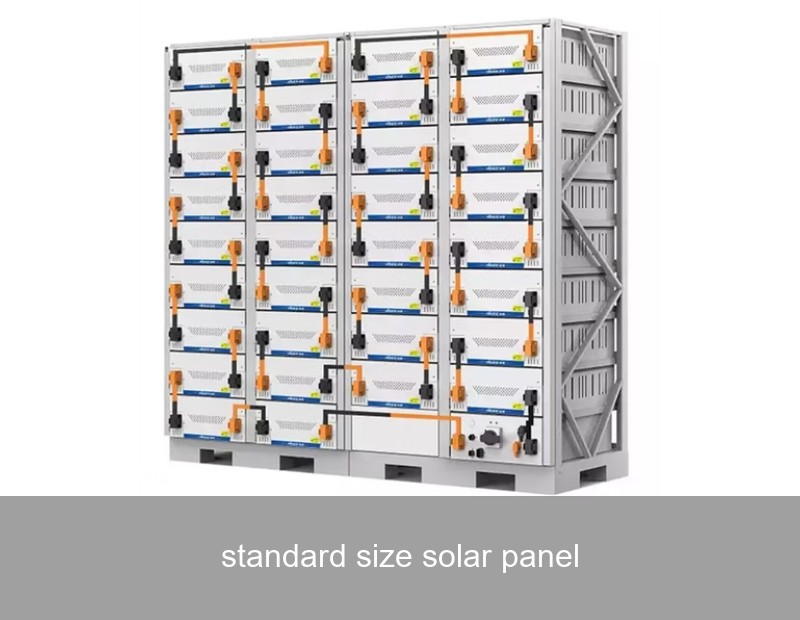
If you're considering solar power for your home or business, you've likely encountered the term "standard size solar panel." But what does that really mean, and why is it so important for your project's success? In this guide, we'll demystify the dimensions, power ratings, and practical implications of standard panels. More importantly, we'll explore how choosing the right system—one that pairs these panels with intelligent energy storage—is the true secret to maximizing your energy independence and return on investment.
Table of Contents
- What is a "Standard Size" Solar Panel Today?
- Why Panel Size and Efficiency Matter for Your Installation
- Beyond the Panels: The Critical Role of Energy Storage
- Real-World Impact: A Case Study from Germany
- Future Trends: Smarter Systems, Not Just Bigger Panels
- Making the Right Choice for Your Energy Needs
What is a "Standard Size" Solar Panel Today?
Gone are the days of one rigid panel size. Today, "standard size" refers to a common range of dimensions and power outputs that dominate the residential and commercial markets, making system design and installation more predictable. While variations exist, most manufacturers have consolidated around a few key formats.
The most prevalent "standard" for residential systems is the 60-cell or 72-cell panel, typically configured in a 6x10 or 6x12 layout. Their physical dimensions are remarkably consistent:
| Panel Type | Approximate Dimensions (inches) | Approximate Dimensions (cm) | Typical Power Output (Watts) |
|---|---|---|---|
| 60-cell (Residential) | 66" x 39" | 168cm x 100cm | 350W - 400W |
| 72-cell (Commercial/Residential) | 78" x 39" | 198cm x 100cm | 450W - 550W |
This standardization is a boon for installers and consumers. It simplifies racking system design, reduces installation complexity, and allows for accurate energy production modeling. As a global leader in advanced energy storage, Highjoule designs its Harmony Home Battery Systems and GridSynergy Commercial Storage solutions to integrate seamlessly with these standard-sized panel arrays, ensuring compatibility and optimizing the flow of solar energy into storage or your building.
The Shift to Higher Wattage
Notice that while physical size has stabilized, power output has not. A standard-size panel five years ago produced around 250-300 watts. Today, thanks to advances in cell technology (like PERC and half-cut cells), you can get over 400 watts from a similarly sized frame. This means you can generate more power from the same precious roof space—a crucial factor for maximizing ROI.
Why Panel Size and Efficiency Matter for Your Installation
Choosing standard-sized, high-efficiency panels isn't just about technical specs; it directly impacts your project's feasibility, cost, and long-term performance.
- Roof Real Estate: Most homes have limited, often irregularly shaped roof space. Standard-sized panels allow installers to create a layout that maximizes coverage and energy production without costly custom solutions.
- Logistics & Cost: Panels within the standard size and weight range are easier to handle, ship, and install. This keeps labor costs down. Non-standard panels can require special equipment or mounting hardware, adding unexpected expenses.
- System Scalability: Using standard components makes it easier to expand your system in the future. If you start with 10 panels and want to add 5 more in a few years, matching the original standard size and specification is far simpler.

Image Source: Unsplash - Professional installation of standard-sized panels.
Beyond the Panels: The Critical Role of Energy Storage
Here's a pivotal insight: the solar panels are only half the story. They generate electricity only when the sun shines. But energy demand peaks in the early morning and evening, often when solar production is low. This mismatch is the fundamental challenge of solar power.
This is where companies like Highjoule transform a simple solar generator into a true 24/7 power solution. Pairing your standard size solar panel array with an intelligent battery storage system like the Highjoule Harmony Series unlocks the full potential of your investment:
- Store Surplus, Not Sell It Cheap: Instead of exporting excess midday solar energy to the grid for minimal feed-in tariffs, you store it for your own use during peak, high-rate periods.
- Energy Security: Maintain power during grid outages. A standard solar-only system shuts off for safety during a blackout. With Highjoule storage, your essential loads stay powered.
- Grid Support: For commercial clients, Highjoule's GridSynergy systems can provide services like peak shaving, reducing demand charges that form a significant portion of utility bills.
Real-World Impact: A Case Study from Germany
Let's look at concrete data from a real project. A medium-sized bakery in Bavaria, Germany, installed a 50 kW rooftop system using 125 standard 400W panels. Their goal was to reduce soaring energy costs and ensure refrigeration stability.
The Phenomenon: Despite a large solar array, their monthly energy bill remained high because they baked in the early morning (before sunrise) and used heavy refrigeration all night, drawing expensive grid power.
The Data: An analysis showed 65% of their daytime solar production was being exported to the grid, while they simultaneously bought power from the grid at night at a rate 40% higher.
The Highjoule Solution: They integrated a Highjoule GridSynergy 50 battery storage system (50 kWh capacity). The system was programmed to prioritize charging the batteries with solar surplus and then discharging during peak evening hours and throughout the night to run refrigeration.
The Result: Within one year:
- Grid electricity consumption reduced by 78%.
- Self-consumption of solar power increased from 35% to over 90%.
- Projected payback period for the combined solar + storage system shortened to under 7 years, thanks to Germany's high electricity prices and favorable regulations for self-consumption.
This case clearly illustrates that the value of a standard size solar panel installation is dramatically amplified by the right storage technology. You can read more about Germany's energy transition policies on the Clean Energy Wire authority site.
Future Trends: Smarter Systems, Not Just Bigger Panels
The industry is moving towards system-level intelligence. While panel efficiency will continue to creep upward, the next leap is in integration and software. Highjoule's NeuroGrid AI platform exemplifies this trend. It doesn't just manage battery charge/discharge; it learns your energy usage patterns, forecasts weather and solar yield, and can even integrate with dynamic electricity tariffs to buy grid power at the cheapest times and use your solar storage when it's most expensive.

Image Source: Unsplash - A modern energy management interface.
Furthermore, the rise of Virtual Power Plants (VPPs) means that your standard solar panel system with Highjoule storage could soon be a participating asset in stabilizing the community grid, potentially creating a new revenue stream for you.
Making the Right Choice for Your Energy Needs
So, when planning your solar journey, start with the right questions:
- What is my true energy goal? Just lower bills, or also backup power and sustainability?
- How does my energy consumption pattern align with solar production? (A detailed bill analysis is key).
- Have I evaluated storage as a core component, not an add-on?
Highjoule, with nearly two decades of experience since 2005, specializes in crafting these holistic solutions. We don't just sell batteries; we provide intelligent, efficient, and sustainable power ecosystems that ensure the electricity from your standard size solar panel array works harder for you, your business, and the grid.
Your Next Step
Given that the financial and resilience benefits of adding storage are now clearer than ever, what specific energy consumption pattern in your home or business would make you consider an integrated solar-plus-storage system today?
 Inquiry
 Online Chat