


Solar Energy Storage Cabinet and Panels: Your Complete Guide to Energy Independence
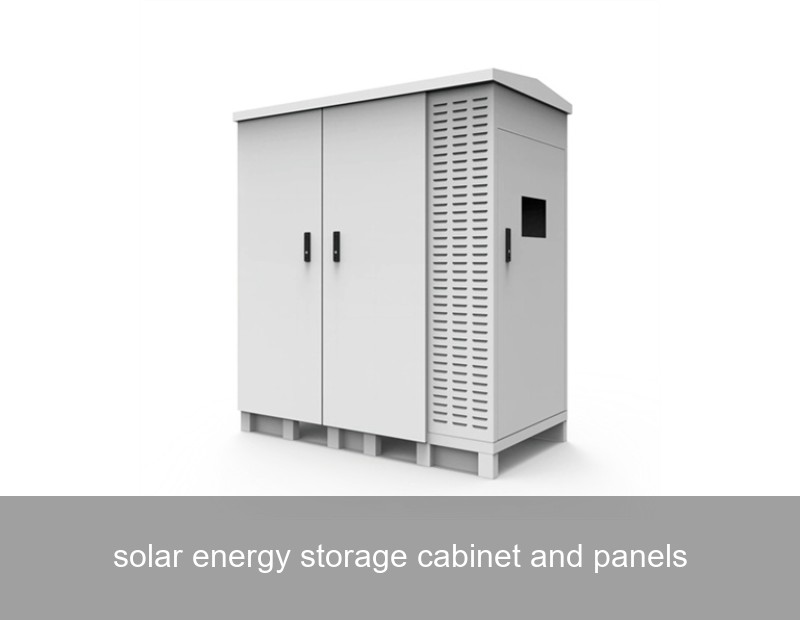
You've seen the sleek, dark arrays on rooftops and in fields—solar panels hard at work capturing the sun's bounty. But have you ever wondered what happens to all that energy when the sun sets or on a cloudy day? This is where the solar energy storage cabinet enters the picture. Think of your solar panels as a prolific energy generator, and the storage cabinet as its intelligent partner: a sophisticated battery system that holds onto surplus power for when you truly need it. Together, they form the backbone of a modern, resilient, and cost-effective home or business energy system, moving you from simply consuming green energy to strategically managing it.
What is a Solar Energy Storage Cabinet and How Do Panels Work With It?
A solar energy storage cabinet is a compact, integrated unit that houses the core components for storing electricity, primarily lithium-ion batteries, along with critical safety and management systems. Its primary job is to store the direct current (DC) electricity generated by your solar panels during peak sunlight hours. An inverter, often housed within or alongside the cabinet, then converts this stored DC power into the alternating current (AC) that powers your home or business appliances.
This partnership creates a virtuous cycle:
- Daytime: Solar panels produce electricity. Priority is given to powering your property in real-time.
- Excess Generation: Any surplus energy not immediately used is directed to charge the batteries in the storage cabinet.
- Nighttime or High Demand: When solar production stops or your energy usage spikes, the system automatically draws power from the storage cabinet, reducing or eliminating your need to pull expensive electricity from the grid.

Image: A modern home solar and storage setup. Credit: Unsplash.
The Grid Challenge: Why Solar Panels Alone Aren't Enough
Here's a common phenomenon: a homeowner installs a solar panel system, dramatically cutting daytime electricity bills. However, they're often frustrated to find they still receive a significant bill because they're buying power from the utility in the evening. The data is clear: residential electricity demand typically peaks between 4 PM and 9 PM, well after solar production has peaked. This mismatch is the fundamental "duck curve" challenge facing modern grids.
Without storage, excess solar energy produced at midday often gets fed back to the grid for minimal compensation (through net metering, which is becoming less generous in many regions). Then, just a few hours later, you're purchasing energy back at a premium rate. A solar energy storage cabinet solves this temporal disconnect, allowing you to time-shift your solar energy for maximum financial and practical benefit.
Inside the Cabinet: Key Components of a Modern Storage System
Not all storage cabinets are created equal. A high-quality system integrates several key technologies:
| Component | Function | Why It Matters |
|---|---|---|
| Lithium-Ion Battery Bank | The core energy reservoir, using chemistry similar to EVs. | High energy density, long cycle life, and efficient charge/discharge. |
| Battery Management System (BMS) | The "brain" that monitors cell voltage, temperature, and health. | Ensures safety, maximizes battery lifespan, and prevents damage. |
| Hybrid or AC-Coupled Inverter | Converts DC from batteries/panels to AC for home use. | Enables seamless switching between solar, battery, and grid power. |
| Thermal Management System | Active cooling or heating to maintain optimal battery temperature. | Critical for performance, safety, and longevity in varied climates. |
| System Controller & Software | The user interface and intelligent logic for energy decisions. | Allows for customization (e.g., backup priority, rate arbitrage) and monitoring. |
Real-World Impact: A Case Study from California
Let's move from theory to tangible results. Consider a mid-sized winery in Sonoma County, California—a region prone to Public Safety Power Shutoffs (PSPS) to prevent wildfires. Their challenge was twofold: protect sensitive fermentation processes from costly grid outages and reduce staggering demand charges on their commercial electricity bill.
The Solution: They installed a 250 kW solar canopy system paired with a 500 kWh solar energy storage cabinet solution. The system was programmed for dual purposes: daily demand-charge management by discharging the battery during peak operational hours, and providing full backup power for critical loads during grid failures.
The Data-Driven Outcome: In the first year of operation:
- Energy Bill Reduction: 68% decrease in overall electricity costs, largely by slashing demand charges.
- Outage Protection: Successfully rode through 5 grid outages, the longest being 14 hours, with no disruption to refrigeration or production.
- ROI: Projected payback period of under 6 years, factoring in state incentives (like SGIP) and federal tax credits.
Choosing the Right System for Your Home or Business
Selecting a system isn't just about picking the biggest battery. It requires a careful audit of your needs:
- Primary Goal: Is it bill savings, backup power, or both?
- Energy Usage Patterns: Analyze your hourly load profile. How much power do you use after sunset?
- Solar Production: How large is your existing or planned solar array? Storage should be sized to capture meaningful excess.
- Local Regulations & Incentives: Programs like the U.S. Federal Investment Tax Credit (ITC) or specific European Union grants can drastically affect economics.
Professional design is crucial. An undersized system won't meet your goals, while an oversized one offers diminishing returns.
Highjoule's Integrated Approach to Solar Energy Storage
At Highjoule, with nearly two decades of expertise since 2005, we view the solar energy storage cabinet not as a standalone product, but as the heart of an intelligent energy ecosystem. Our HPS Series commercial and industrial storage cabinets and HomePower residential units are engineered for seamless integration with both new and existing solar panels.
What sets our systems apart is the Highjoule Energy Operating System (EOS). This proprietary AI-driven software doesn't just store and release energy; it learns your consumption patterns, forecasts weather and solar production, and integrates with real-time utility rate data. For our customers in Europe and the U.S., this means the system automatically dispatches stored energy during the most expensive peak rate periods or even participates in grid services programs where available, creating an additional revenue stream.

Image: Interior of a modular, industrial-scale battery energy storage system. Credit: Unsplash.
Our cabinets are built with a modular design, allowing for scalable capacity and easy maintenance. Safety is paramount, featuring multi-layer protection including cell-level fusing, advanced thermal runaway detection, and UL 9540 certification. For businesses exploring microgrids, Highjoule systems are designed to be the foundational asset, enabling energy independence and stability.
The Future of Solar Energy Storage Cabinets and Panels
The technology is advancing rapidly. We are moving towards even higher-density batteries, like lithium iron phosphate (LFP) chemistry, which offers enhanced safety and longer life. Furthermore, the concept of virtual power plants (VPPs) is gaining traction, where thousands of distributed solar energy storage cabinet systems are aggregated to act as a single, grid-stabilizing power plant. This not only benefits the grid but can provide direct financial rewards to system owners.
The integration is also becoming more holistic. Future systems will likely manage not just electricity from solar panels, but also coordinate with electric vehicle charging, heat pumps, and smart appliances, creating a fully optimized, low-carbon home or facility.
Is your current solar investment working as hard as it could be, or is a significant portion of its potential still slipping back to the grid on your behalf? What would total energy security during the next storm or blackout be worth to your family or business operations?
 Inquiry
 Online Chat