


Unlocking Grid Stability and Energy Independence: The Power of 3 1MW Energy Storage Cabinets
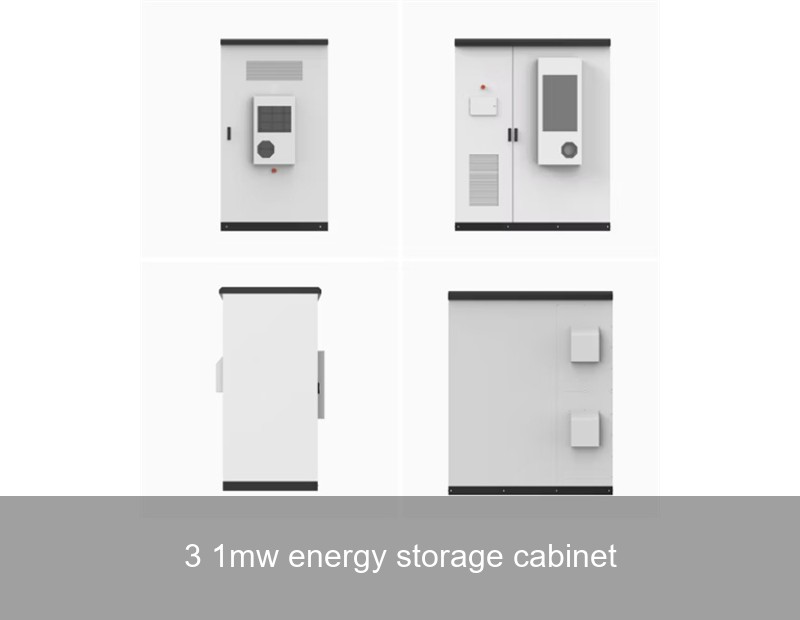
As Europe and the U.S. accelerate their transition to renewable energy, grid operators and commercial energy users face a common, pressing challenge: how to manage the inherent intermittency of solar and wind power. The solution is increasingly found in modular, scalable energy storage. A configuration gaining significant traction is the deployment of 3 1MW energy storage cabinets. This setup offers a robust, near 3-megawatt solution ideal for commercial, industrial, and utility-scale applications. But what makes this specific configuration so effective? Let's delve into the data, real-world applications, and the technology that makes it a cornerstone of modern energy management.
The Modular Powerhouse: Why 3 x 1MW?
Think of a 1MW energy storage cabinet as a fundamental building block of power. Each cabinet is a self-contained unit, typically integrating battery racks, a thermal management system, power conversion systems (PCS), and control units. Deploying three of these units in parallel creates a system with approximately 3MW of power output and, crucially, scalable energy capacity (often ranging from 6-12+ MWh, depending on the battery chemistry and configuration).
This modular approach offers unparalleled advantages:
- Scalability: Start with a single cabinet and expand as your energy needs or budget grows.
- Redundancy & Reliability: If one cabinet requires maintenance, the other two can continue to operate, ensuring higher system uptime.
- Logistical & Installation Ease: Standardized, containerized or cabinet-based units are easier to transport and install than a single, massive bespoke system.
- Flexible Siting: Multiple cabinets can be positioned to fit challenging site layouts, unlike a single large footprint.

Image: A modular energy storage installation. Source: Unsplash (Representative image)
Key Components Inside a 1MW Energy Storage Cabinet
To understand the value, it's helpful to know what's inside. A high-quality 1MW cabinet from a provider like Highjoule is more than just batteries.
| Component | Function | Highjoule's Approach |
|---|---|---|
| Battery Modules (Li-ion NMC or LFP) | Core energy storage medium. LFP chemistry is prized for safety and long cycle life. | Utilizes UL 9540A certified, cell-to-pack LFP technology for enhanced safety and energy density. |
| Battery Management System (BMS) | Monitors cell voltage, temperature, and state of charge for safety and longevity. | Features a multi-level, AI-enhanced BMS for predictive diagnostics and optimal performance. |
| Power Conversion System (PCS) | Bi-directional inverter that converts AC to DC for charging and DC to AC for discharging. | Integrated, high-efficiency (>98.5%) PCS with advanced grid-forming capabilities for stability. |
| Thermal Management | Maintains optimal battery temperature for performance and safety. | Liquid cooling system for precise temperature control, quieter operation, and higher efficiency. |
| Energy Management System (EMS) | The "brain" that controls when to charge/discharge based on algorithms and market signals. | Highjoule's proprietary GridSynergy EMS enables automated peak shaving, demand response, and microgrid control. |
The PAS Framework: Problem, Agitation, Solution
Problem
A manufacturing facility in Bavaria, Germany, or a data center in Texas, USA, faces volatile energy costs and increasing demand charges from their utility. Their growing on-site solar PV system produces excess energy at midday that is often sold back to the grid at low rates, but they lack power in the evening peak when rates are highest. This mismatch erodes their ROI on solar and exposes them to grid instability.
Agitation
Without a buffer, they are entirely at the mercy of the grid. According to the U.S. Energy Information Administration (EIA), commercial electricity prices can vary by over 300% during peak events. In Europe, the 2022 energy crisis starkly highlighted the financial risks of price volatility. Furthermore, grid congestion and aging infrastructure can lead to reliability issues, threatening operational continuity. Simply adding more solar doesn't solve the timing problem.
Solution
This is where a configured system of 3 1MW energy storage cabinets comes in. It acts as a "time machine" for energy. It stores cheap, abundant solar energy (or off-peak grid power) and dispatches it precisely during expensive peak hours. This flattens the facility's load profile, slashing demand charges and providing backup power during outages. The modular 3MW scale is often the "sweet spot" for large commercial and industrial users, offering sufficient power to make a substantial financial impact without the complexity of a utility-scale project.
Case Study: Peak Shaving for a German Manufacturing Plant
Client: A mid-sized automotive parts manufacturer in Baden-Württemberg, Germany.
Challenge: High "Netzbezug" (grid draw) peaks leading to crippling capacity charges (€/kW per month), and an underutilized 2MW rooftop PV system.
Solution: Highjoule designed and deployed a turnkey system comprising three 1MW energy storage cabinets, each with 2.5 MWh of LFP battery capacity (7.5 MWh total). The system was integrated with their existing PV and controlled by Highjoule's GridSynergy EMS.
- Demand Charge Reduction: Peak grid draw reduced by 82%, saving over €180,000 annually in capacity charges.
- Solar Self-Consumption: Increased from 35% to over 90%, dramatically reducing purchased energy.
- ROI: Projected payback period of under 5 years, considering savings and available EU funding mechanisms for energy storage.
- Grid Services: The system is now enrolled in the German primary control reserve market, generating additional revenue by providing frequency regulation services to the national grid.

Image: Monitoring energy storage performance. Source: Unsplash (Representative image)
The Highjoule Advantage: Intelligent Storage Solutions
At Highjoule, we don't just supply cabinets; we deliver intelligent, outcome-driven energy systems. Our H-Series 1MW Cabinet is the foundation for configurations like the 3MW solution discussed. What sets it apart?
- Cell-to-Pack LFP Technology: Eliminates module-level components, increasing energy density by 15% and improving thermal consistency for longer life.
- Grid-Forming Inverters: Our cabinets can "island" and form a stable microgrid, providing backup power that behaves like a traditional grid—critical for sensitive industrial processes.
- AI-Powered Fleet Management: For operators with multiple sites, our cloud platform can aggregate and optimize fleets of storage cabinets across regions, participating in wholesale markets and balancing services autonomously.
- Full Lifecycle Support: From initial feasibility studies and financial modeling to installation, commissioning, and long-term performance guarantees, Highjoule is a single point of responsibility.
Whether for a single site using 3 1MW energy storage cabinets or a distributed microgrid network, our technology ensures resilience, sustainability, and a stronger bottom line.
The Future Outlook for Modular Storage
The trend is clear. As noted by research from sources like the National Renewable Energy Laboratory (NREL), the future grid will be decentralized and flexible. Modular storage blocks are the perfect tool to build this grid. We are moving towards ecosystems where thousands of these distributed assets are aggregated to form virtual power plants (VPPs), providing clean, reliable capacity without the need for new fossil-fuel peaker plants.
For a business leader or energy manager today, the question is no longer if energy storage is needed, but how to implement it strategically. The modular 1MW cabinet approach offers a future-proof, scalable path forward.
Is your organization ready to analyze how a modular 3MW energy storage system could transform your energy costs, carbon footprint, and operational resilience? What would a 20% reduction in your annual energy spend mean for your competitive edge?
 Inquiry
 Online Chat